Everyone on the Challenge devises a route that must be reviewed and approved by a team of omniscient hill walkers known as the “vetters.” Only then can they do the walk.
My approved route had me leaving Drumnadrochit on the Great Glen Way, a popular and well-maintained path like the Affric Kintail Way I’d come into town on.
The Great Glen Way made a westward-facing semi-circle along the shore of Loch Ness before heading northeast toward Inverness. I saw a way to avoid that semicircle by walking on what was essentially a chord across it. It would require climbing a steep single-lane road through three hamlets before heading into the hills on a farm track, and then on footpaths over a couple of hills and back to the Great Glen Way.
This was a small modification. It would cut some distance–and perhaps some time–but would alter only one-third of the day’s route. The weather was good and the elevation low; it seemed a safe (and spoiler alert: was!) change.
However, it was freelancing in the sense that if I collapsed and died my body woudn’t be where the coordinators would first come looking for it.
I got to the end of the paved road, unlatched the gate, and headed down the farm track.
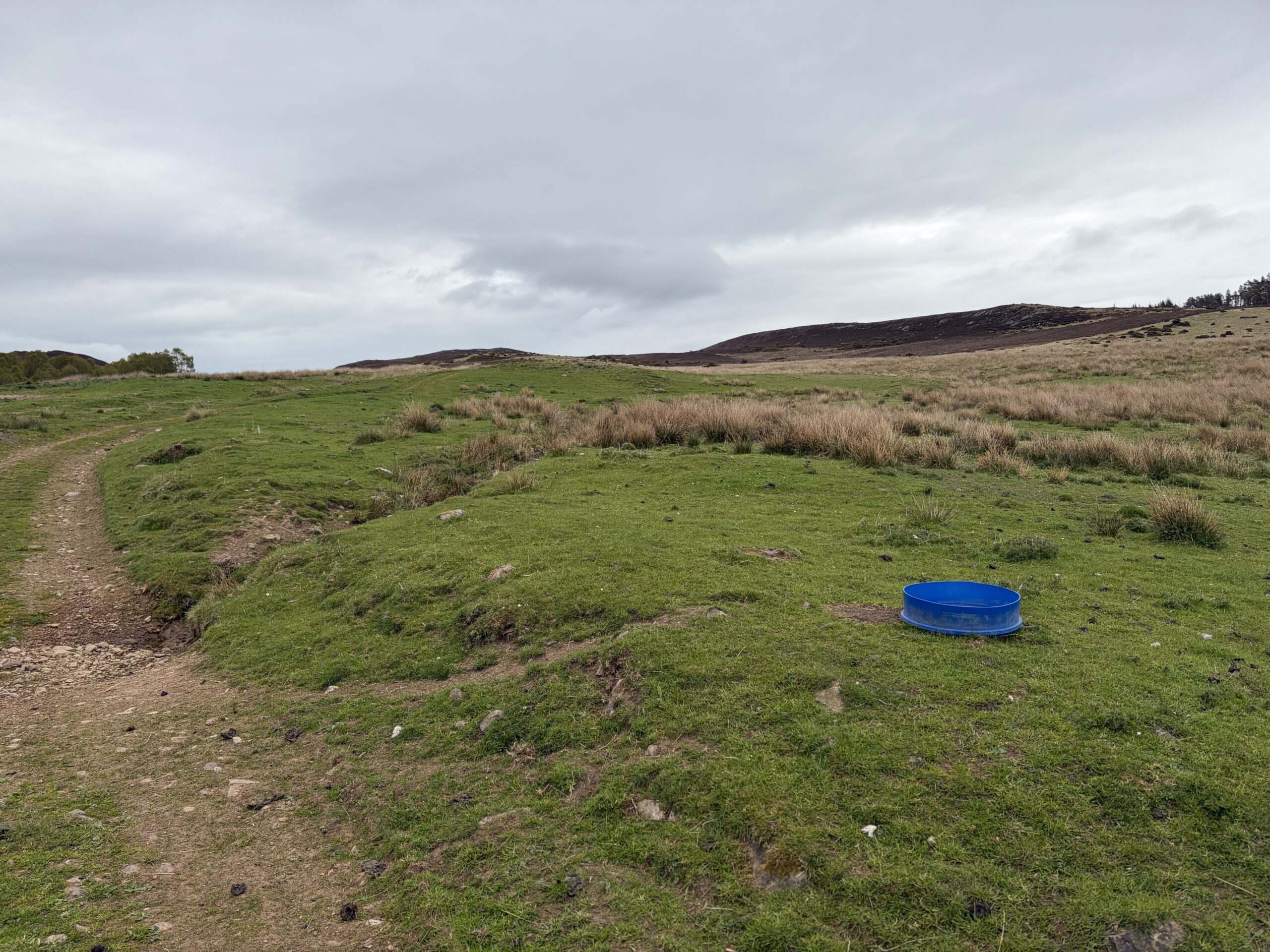
The footpath I was looking for was supposed to intersect the track, but I couldn’t find it. However, I knew where I needed to go–thatta way.
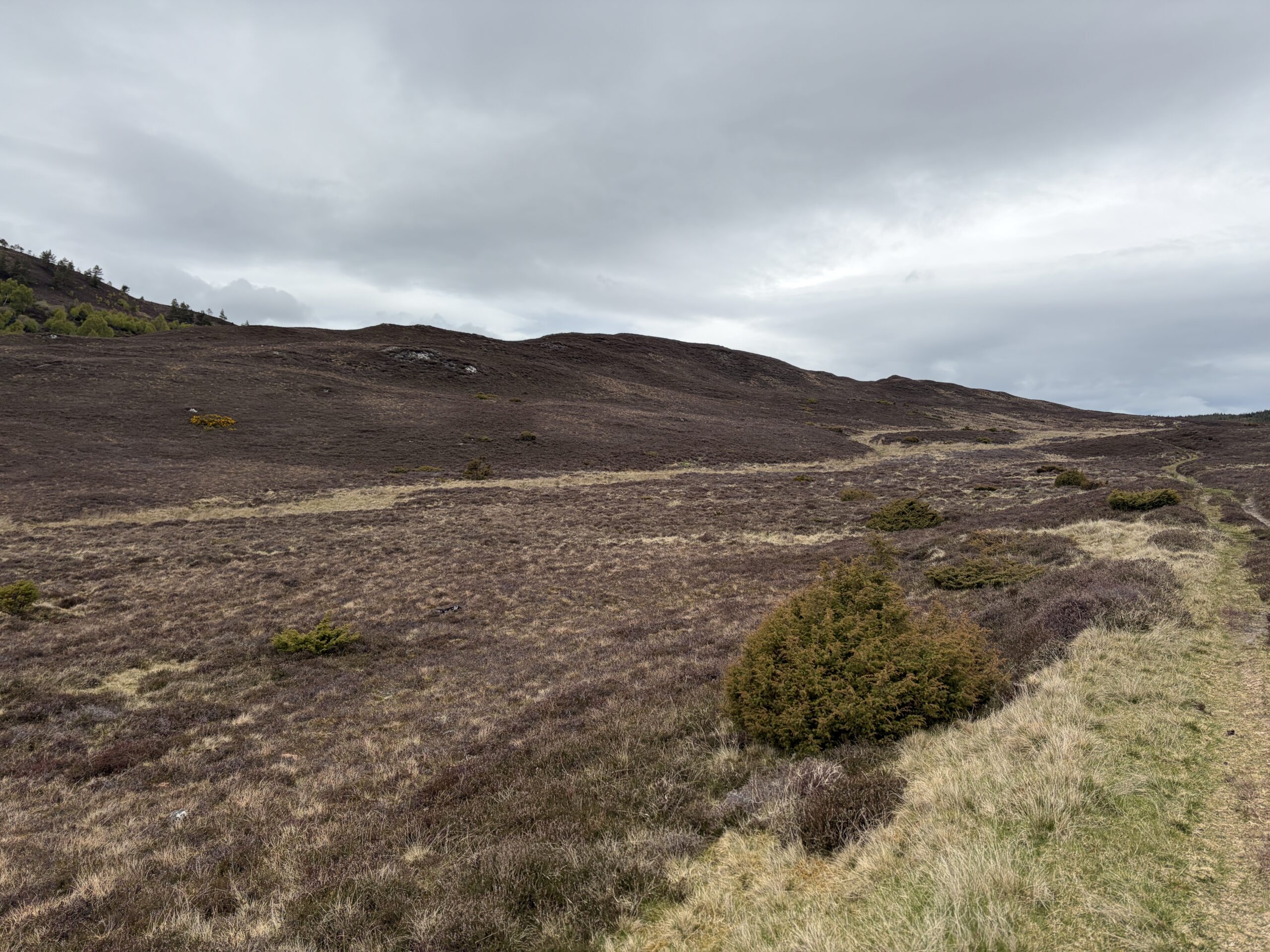
I headed across the heather and grass and eventually came across a path going my way. But it didn’t last long.
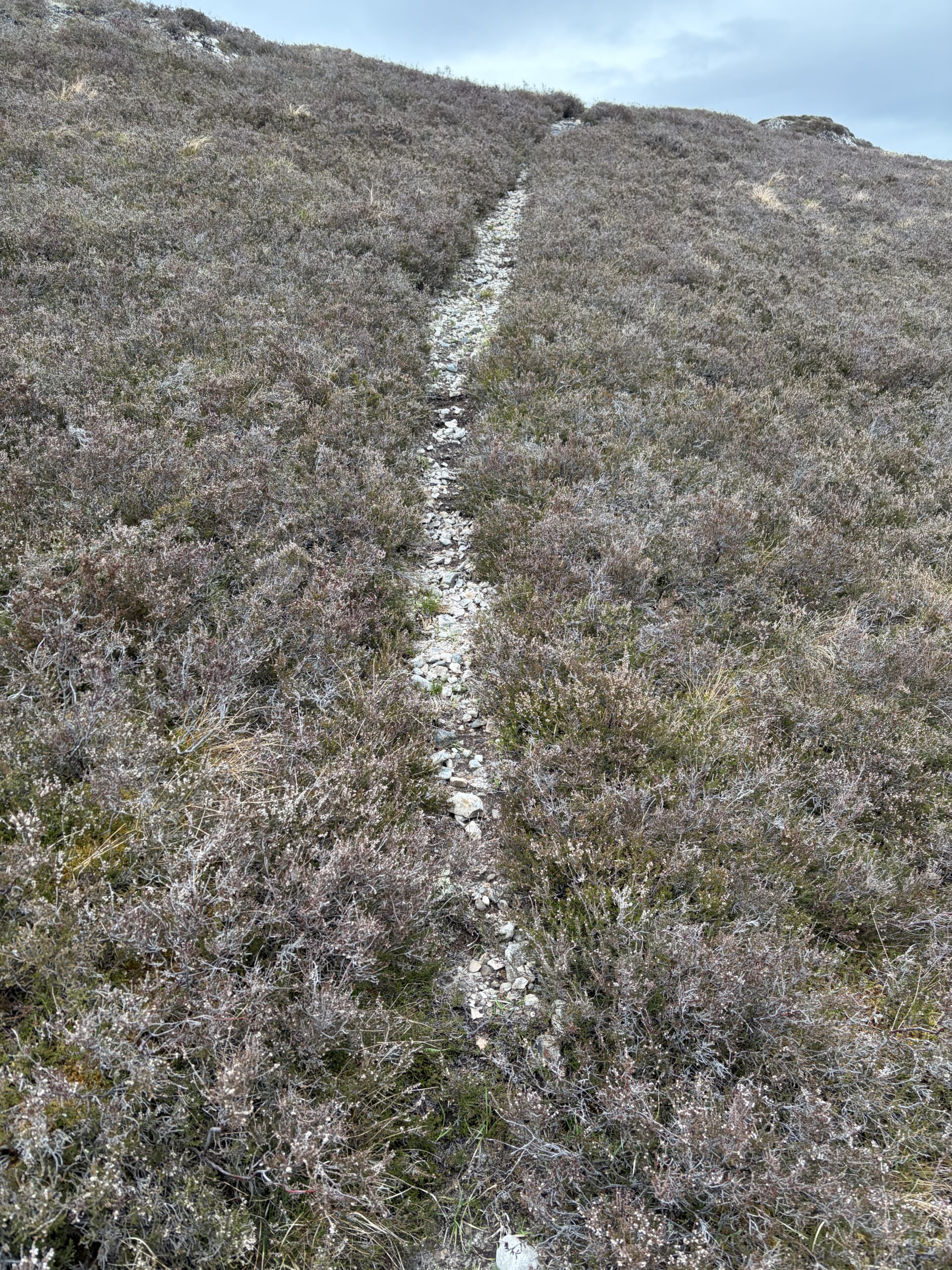
Soon I was back on open ground, which it should be noted is harder to get across because it’s soft underfoot and wet in places.
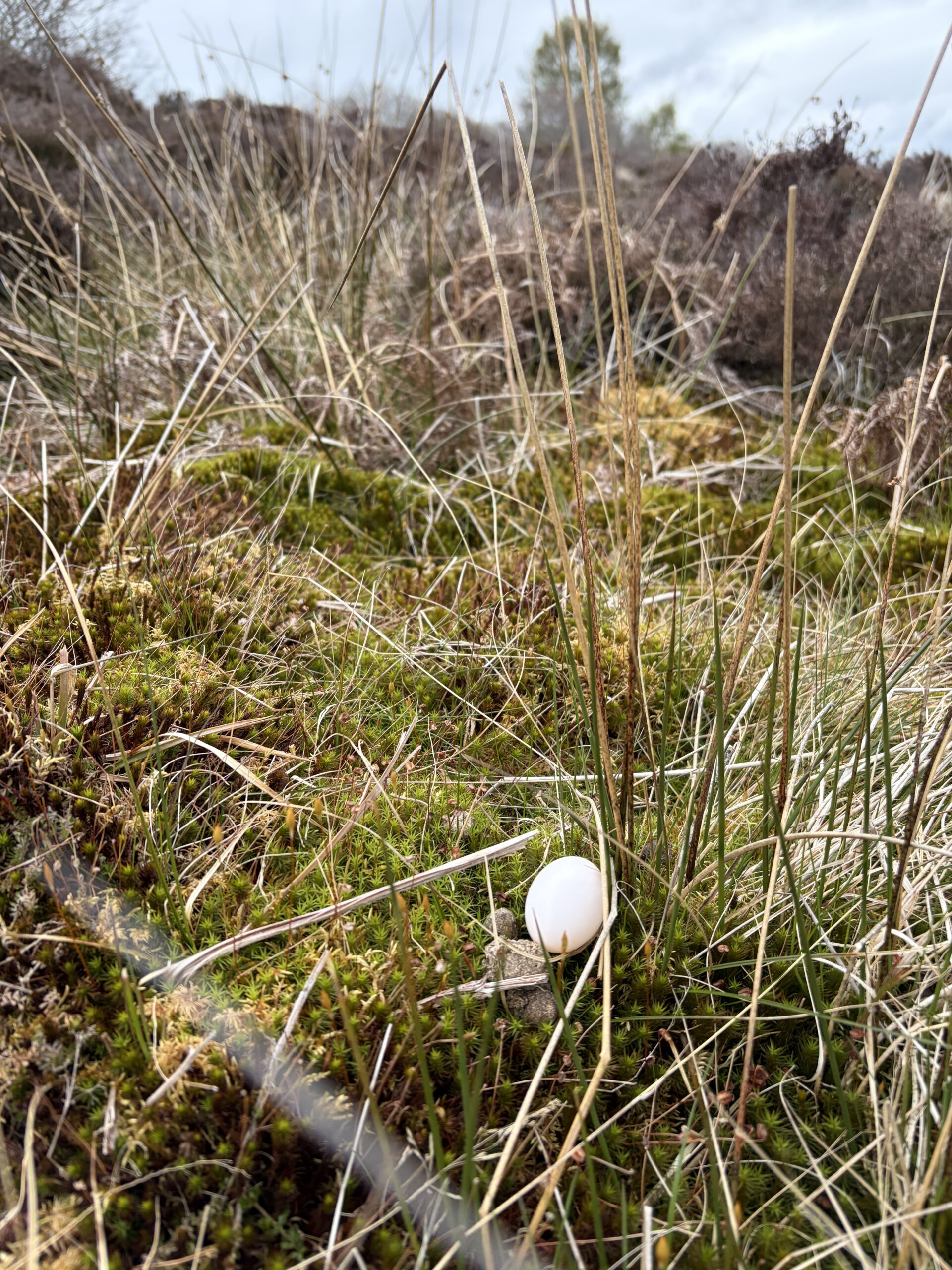
I came across a single egg lying on a bed of moss, a long way from where it should be and destined never to hatch.
A bad sign?
I knew from the map that I had to go on the left (west) side of a little loch, and was happy to see it to my right as I came over a hill and got a view.
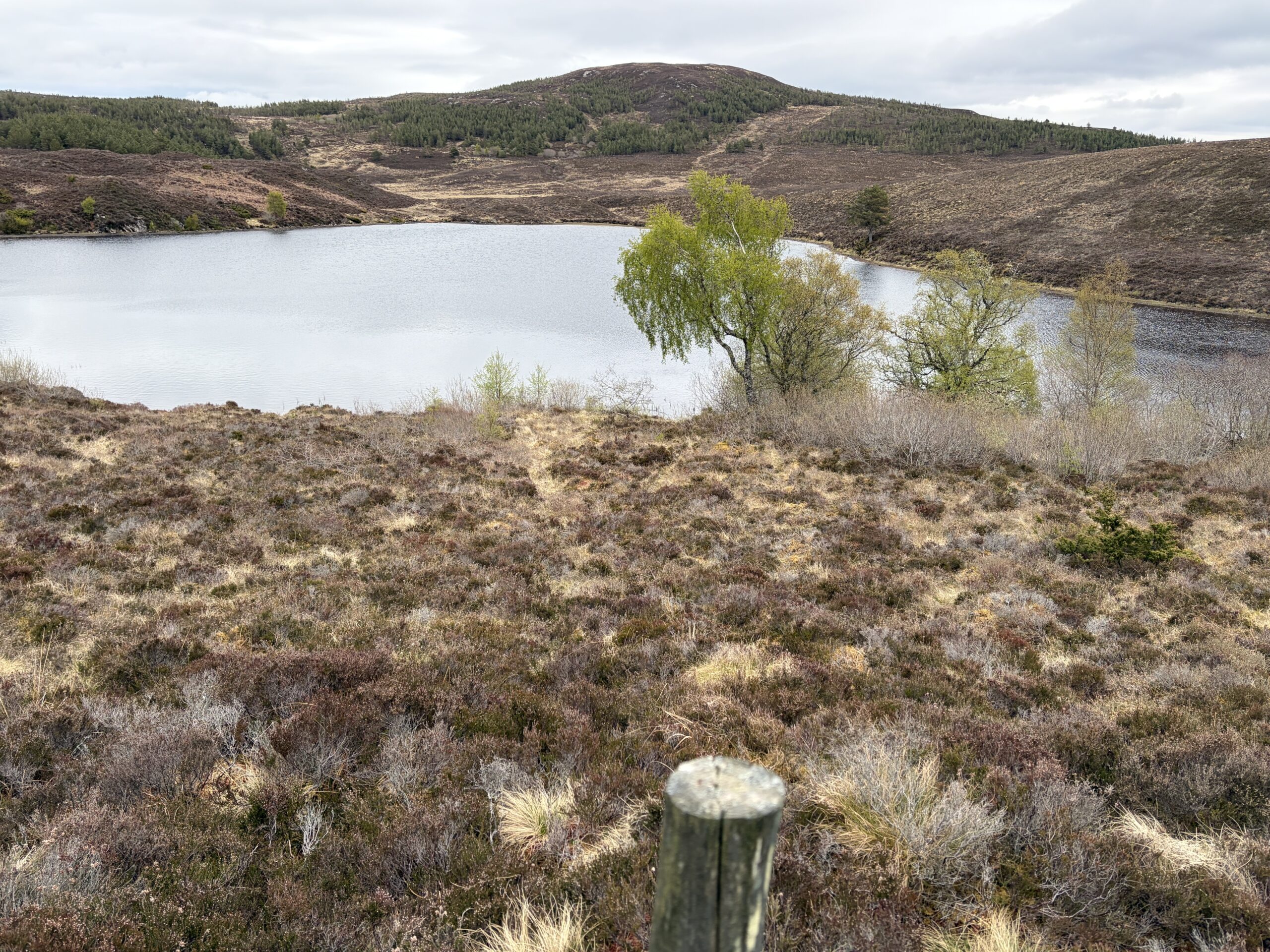
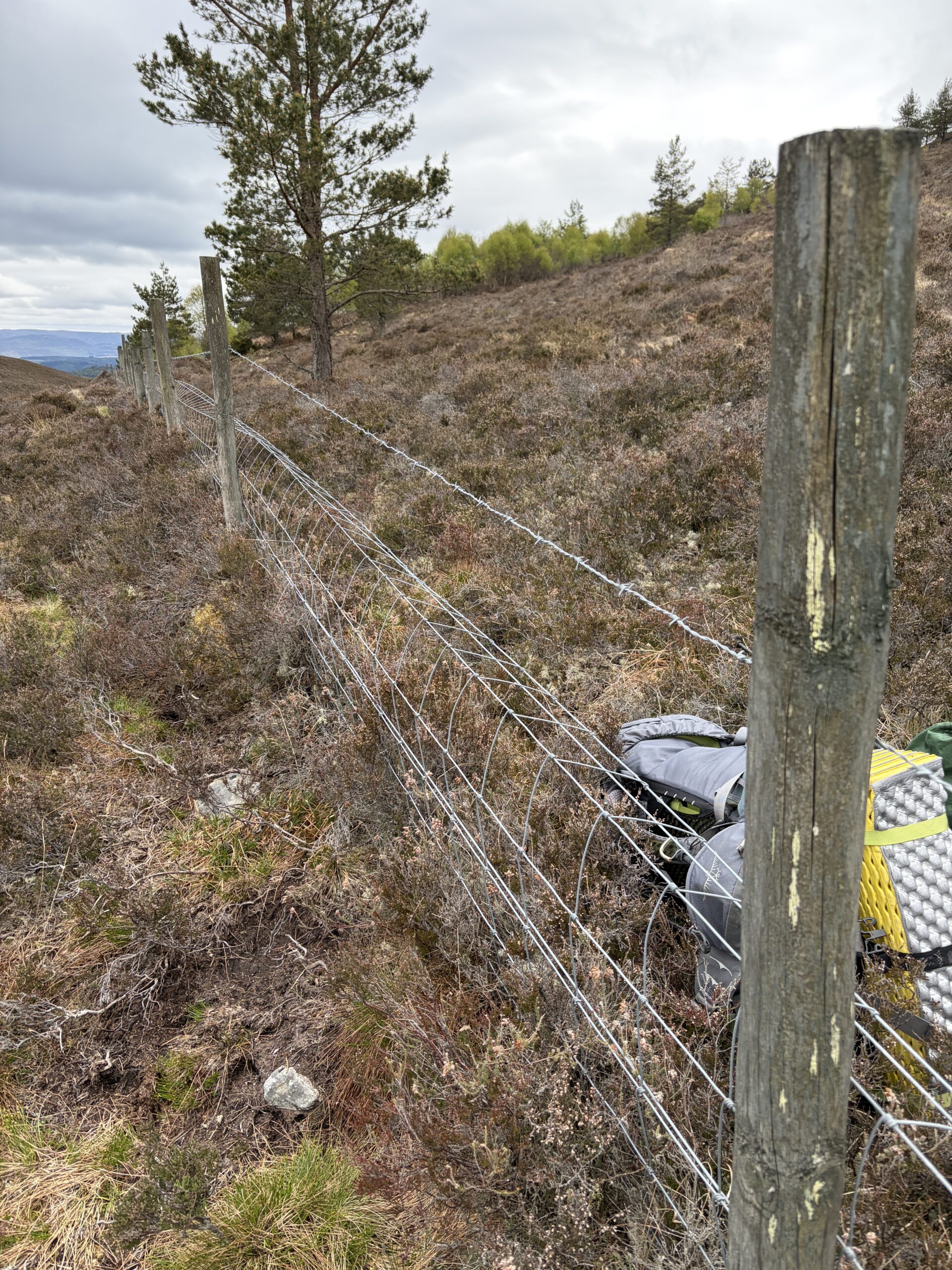
A fence went along hill. My GPS signal put my location on the wrong side of the fence from where the path was on the map, although I was starting to conclude the path, rarely used by man or animal, had been reclaimed by nature.
However, I knew where I was heading and that I’d eventually need to be on the other side of the fence. So over I went, pack first. Luckily it had only a single strand of barbed wire (on top, of course).
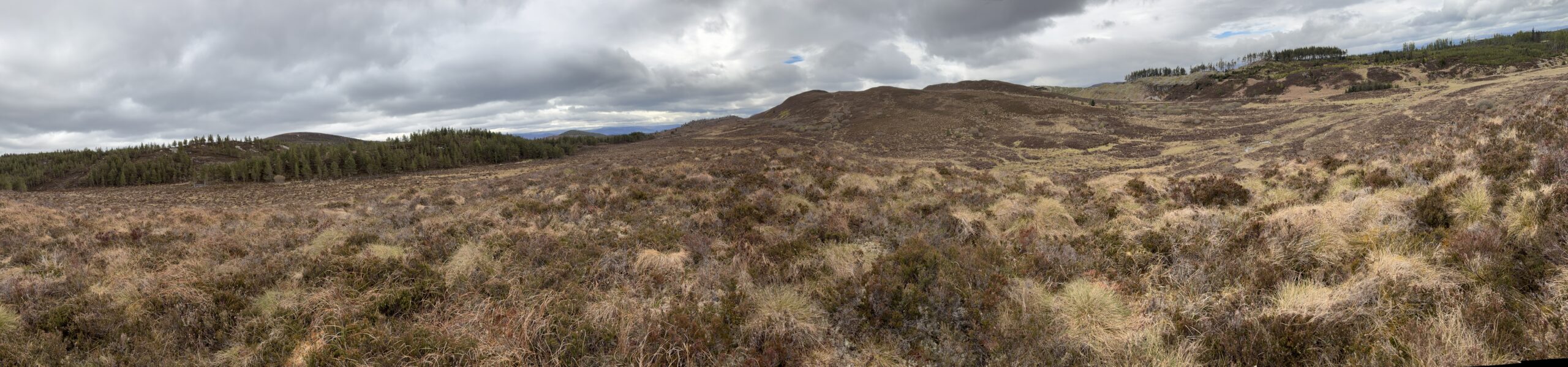
When I got to the top of the final hill and saw the farm buildings next to the Great Glen Way, I turned around and took a panoramic shot of the direction I’d come from.
It looks bigger and wilder than it was. Nevertheless, pathless walking is always a bracing exercise. Like al fresco dining, which turned out to be the theme of the afternoon.
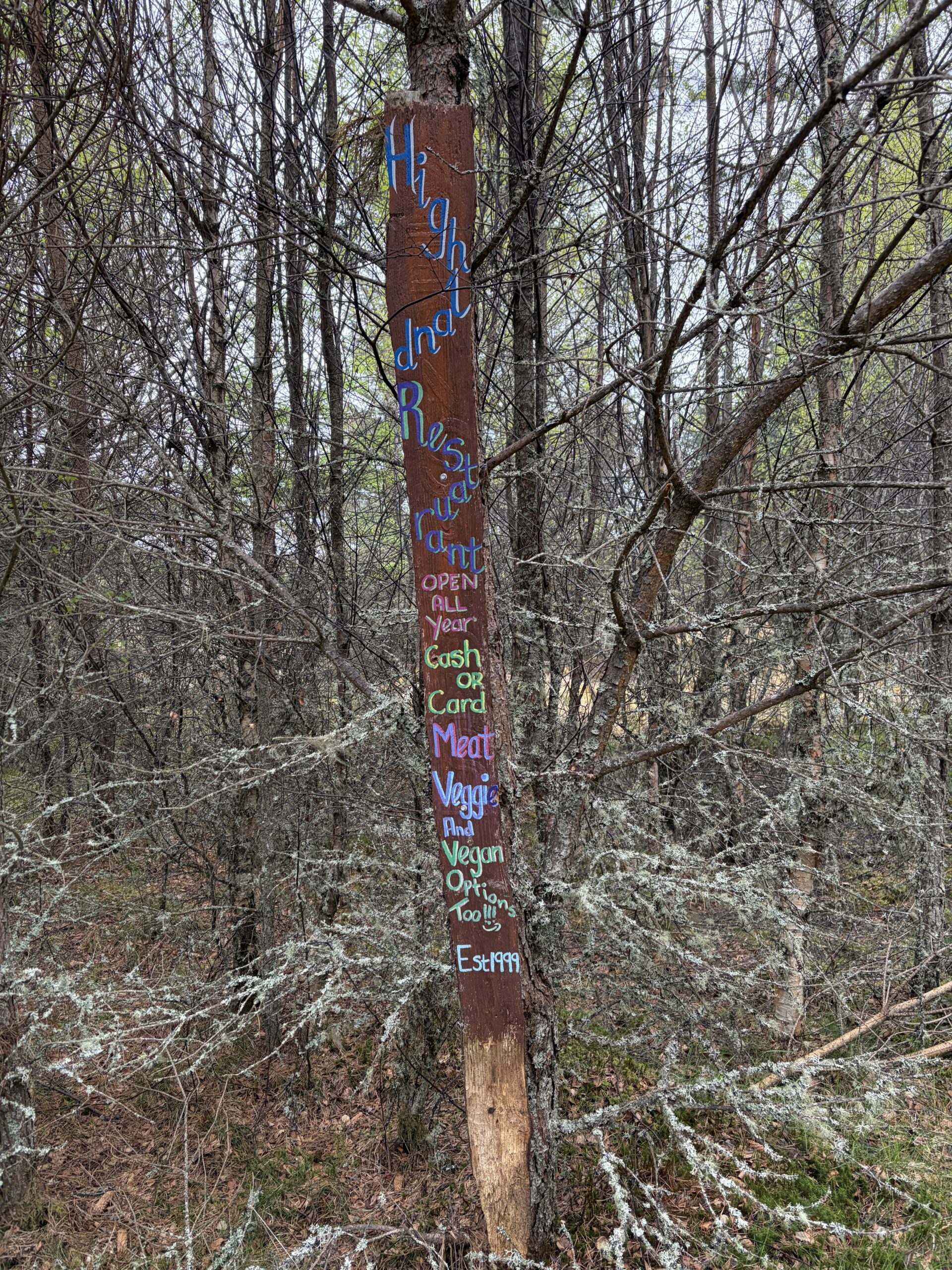
The Great Glen Way went through a pretty forest of mixed hardwoods and conifers. Out of nowhere appeared this vertical, hand-painted sign advertising a restaurant. “Open all year . . . Cash or card . . . Vegan options too.”
I must have passed 10 more over the next two miles. They all said the same thing, but none said where the restaurant was.
Eventually I came to a turnoff from the Way. There were different signs. The pathway was soon paved in freshly ground wood chips.
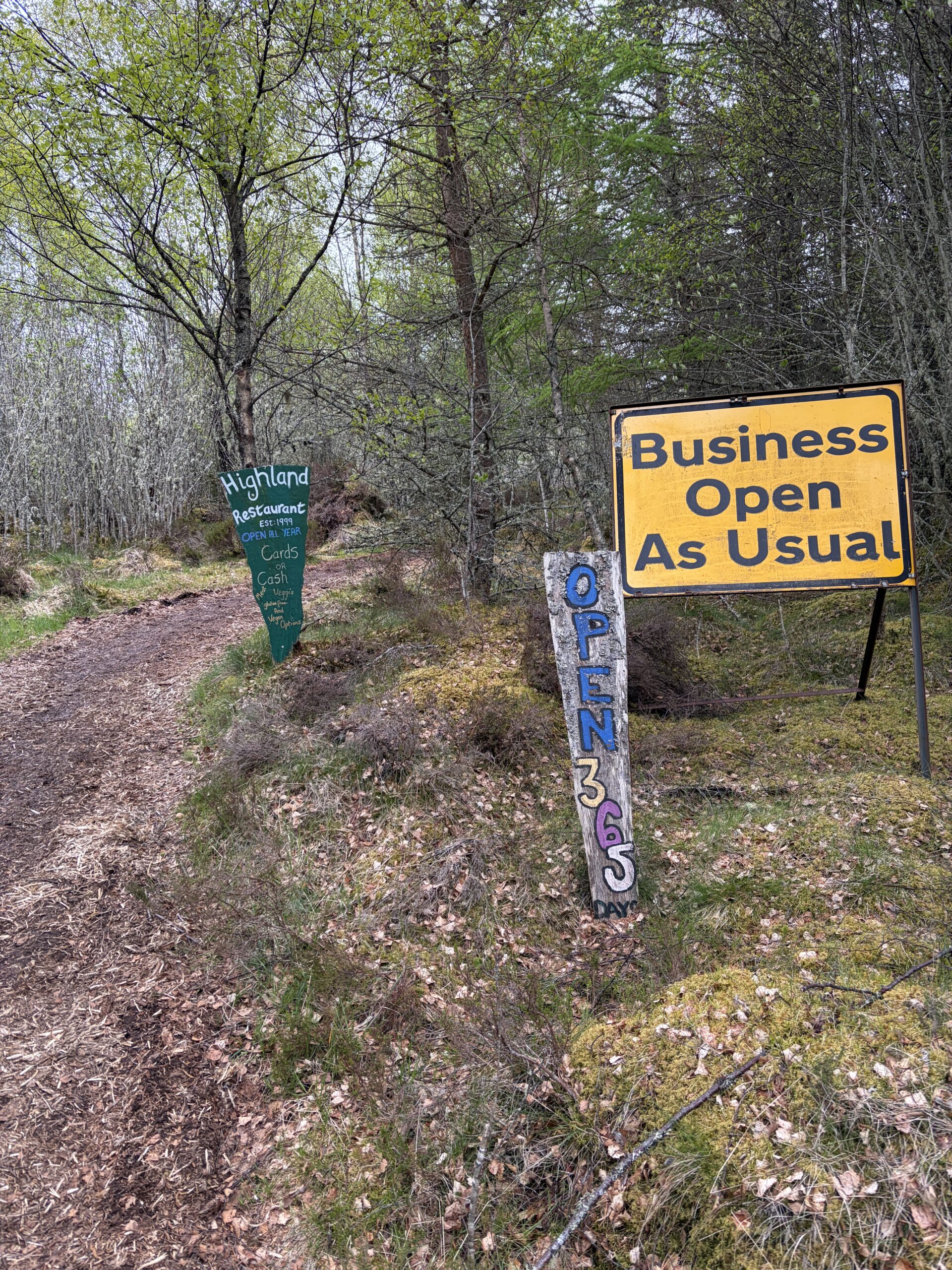
I passed a derelict building, a few picnic tables, and stacks of newly cut rounds of tree trunk. I eventually got to a fence with a brass bell hanging from a post, and a sign instructing potential customers to ring an electric doorbell above it.
I pushed the button, heard a dog bark, smelled woodsmoke, and waited. A woman in an apron appeared.
What I really needed was to fill two water bottles because my camping destination for the night was not near a water course, which is pretty unusual in Highland Scotland. I was happy to buy a cup of coffee and a scone, however, so as not to just be asking for favors.
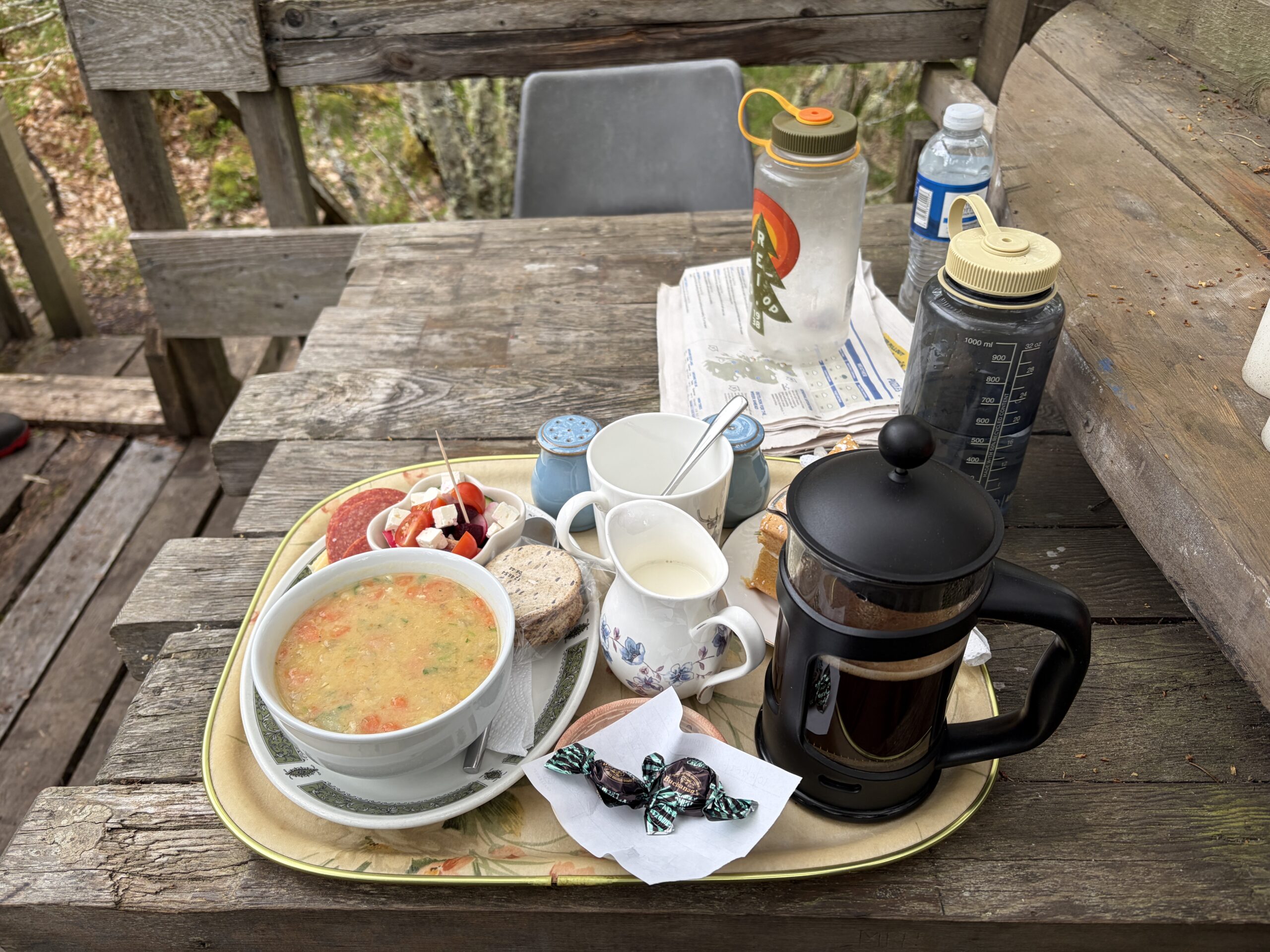
The woman said the restaurant wasn’t a coffee shop, but that it did sell “a light meal” that might appeal to me. This was comprised of a bowl of soup, a small salad of cucumbers and olives, a packet of oatcakes, a piece of lemon cake, and a hot drink of one’s choice.
It was more than I wanted, but I said yes. In the meantime, where could I fill my water bottles? I asked.
“We’re off the grid here,” she said. “I’ll bring you some water with the food.”
She asked me where I was from, we bantered a little, she saying “you must be sweet enough” when I told her I needed only cream, no sugar, with my coffee.
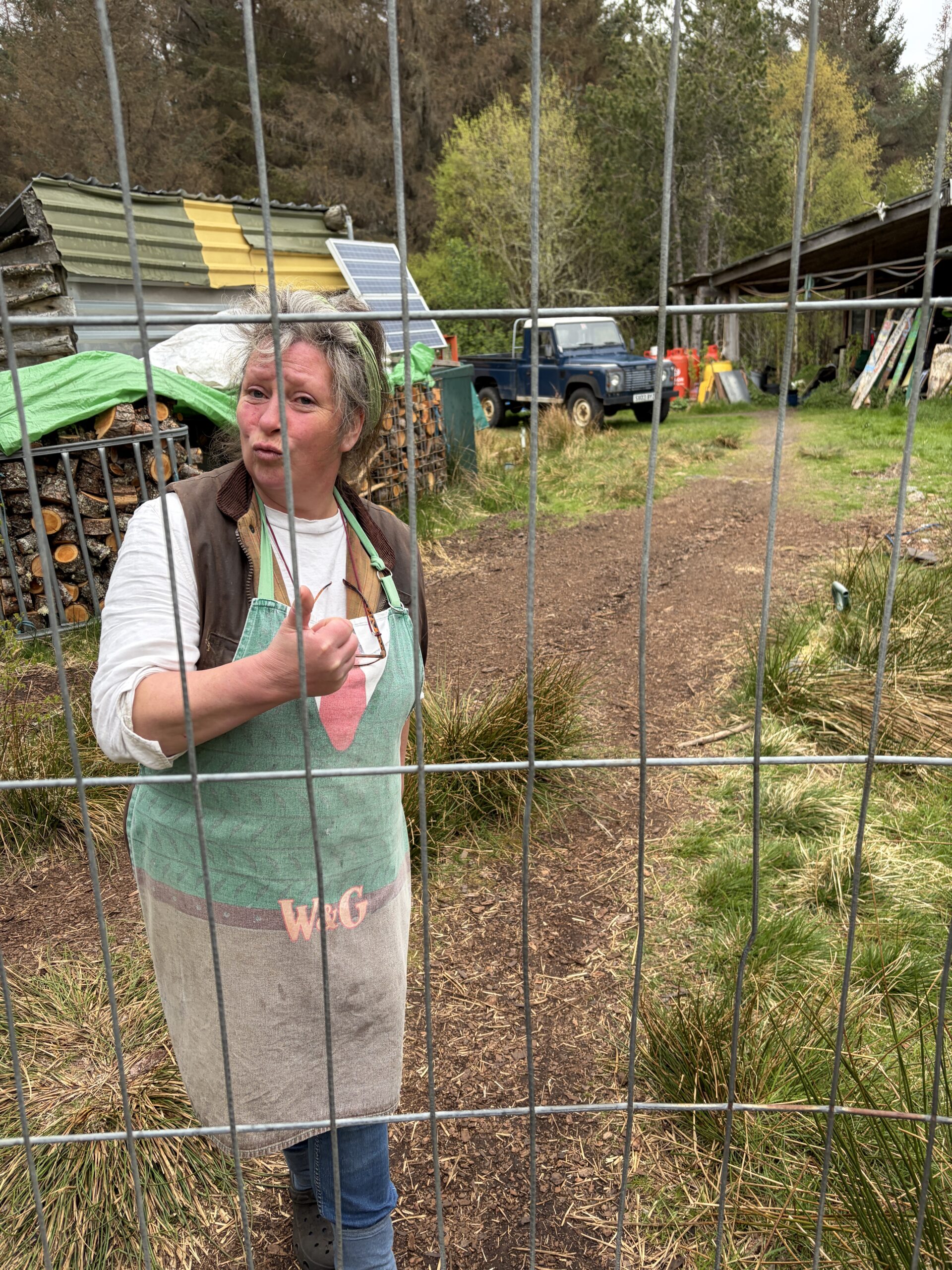
In a few minutes a man with a white beard appeared from out of the house and walked to the fence.
“This gentleman will show you where to sit.”
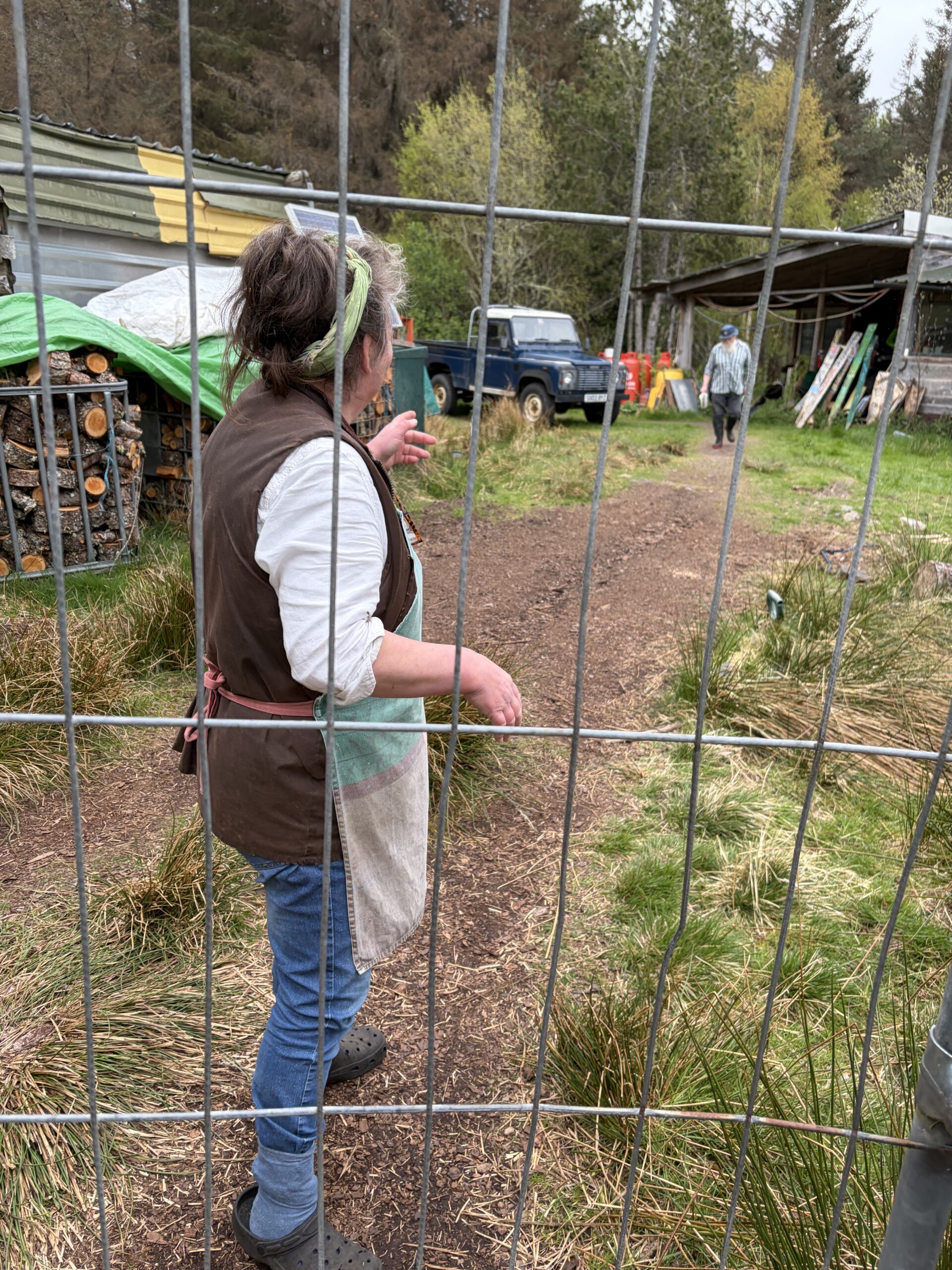
The man walked through a gate in the fence that wasn’t obvious and walked ahead of me down the path I’d come in.
“This weather is going to turn, so I’ll get you under cover,” he said. A minute later he asked, “Were you ever in the navy?”
“No,” I said. I may have missed something with the accent and lack of hearing aids. Or perhaps not.
He led me back to the derelict building, which looked a little better up close, and to a back porch under a plastic roof. Tibetan prayer flags, worse for wear, adorned it. He put down several folded tabloid newspapers.
“Here’s something to read if you’d like. I’ll bring you your food when the ladies are finished preparing it.”
I introduced myself and asked his name.
“It’s Howie,” he said. “That’s short for Howard.”
We talked briefly and I managed to learn the woman was his wife, her name was Sandra, and that they were in their seventies. I figured I’d get a second chance when he came back.
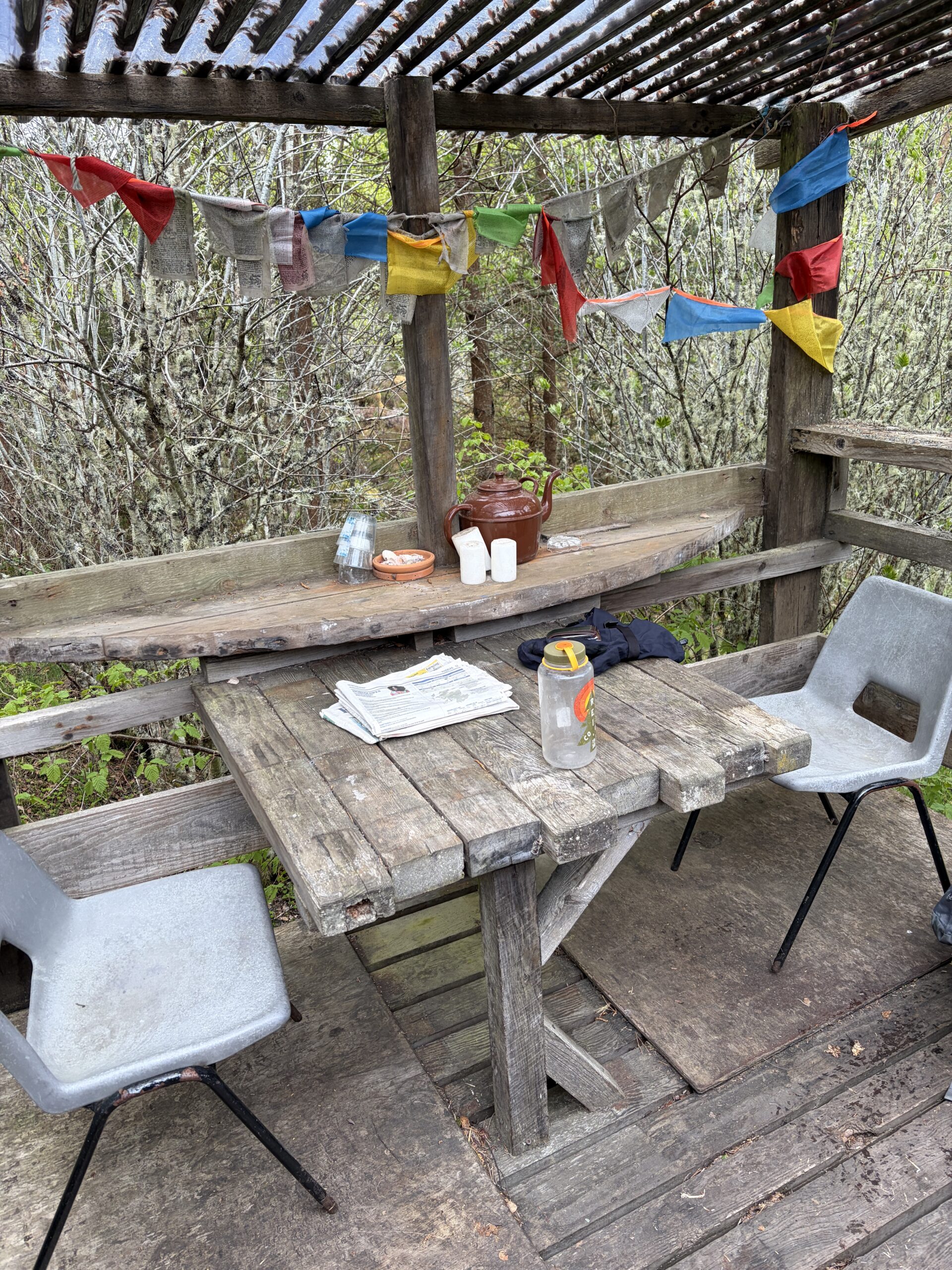
To my surprise I didn’t even look at the newspapers. There was no WiFi, but I had a cell phone signal and read e-mail instead. It was getting cold and I was looking forward to the coffee and soup, if nothing else.
In about 15 minutes later I saw Howie coming down the woodchip path carrying a tray.
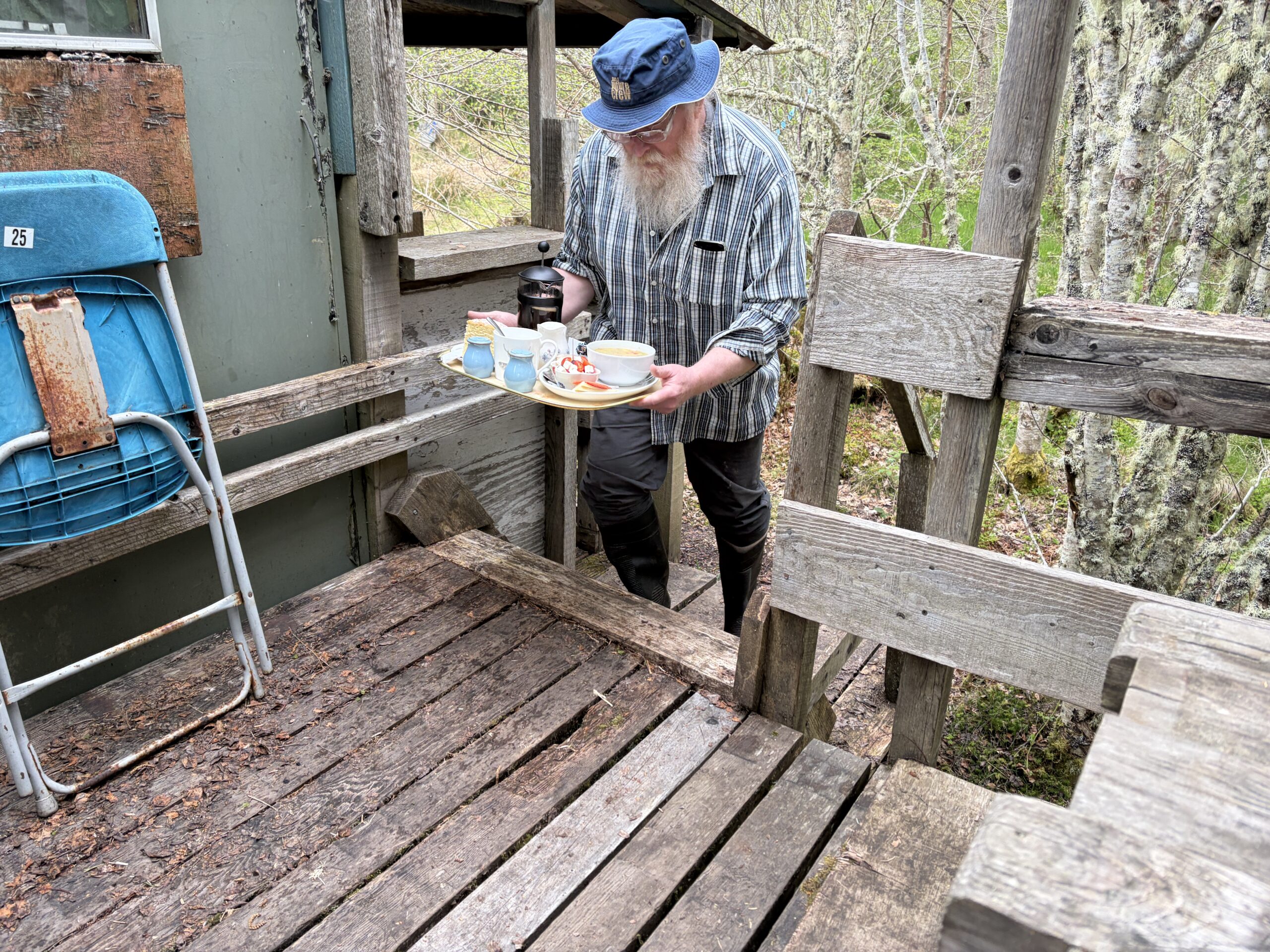
It was an amazing spread. No plastic, everything homemade, not too much of anything (except perhaps the piece of lemon cake, which was huge), nothing missing. It reminded me of my own entertainment Standards & Practices.
There was also a half-liter bottle of water. Whatever the couple’s water source was they weren’t sharing it with customers for some reason. There’d be no filling my Nalgenes, but it was better than nothing.
As Howie plunged the French press I started to ask him questions. He graciously answered. I told him enough about myself to keep him from feeling interrogated.
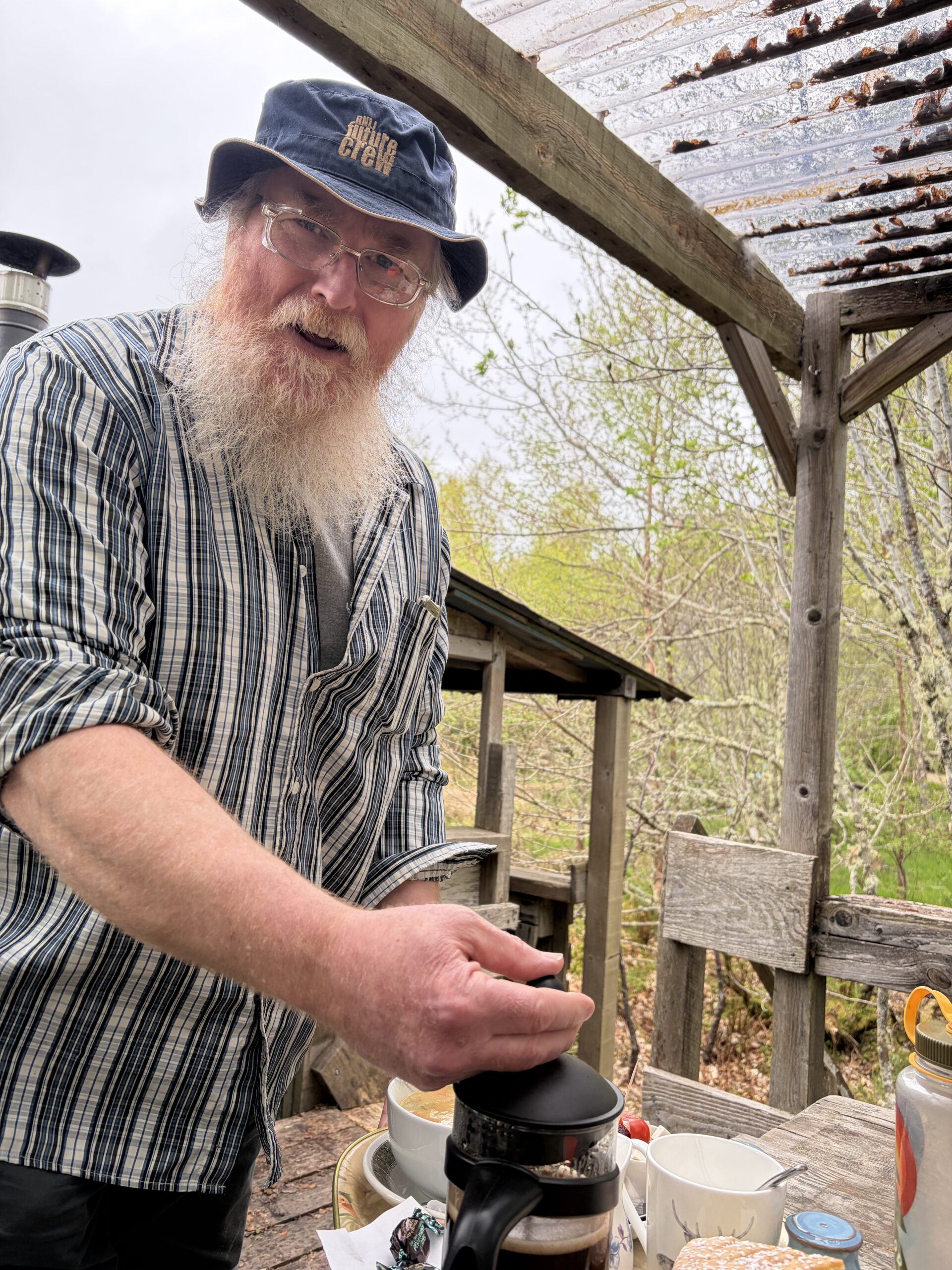
He used to be a coxswain in the Royal National Lifeboat Institution, a sort of coast guard.
“I spent a lot of time going out to sea at times when everyone else was coming in.” After a pause he said, “It was founded in 1824, about the time of the Texas Republic.”
“I’m curious, how do you know what year Texas was founded?” (It was 1836.)
“We send a lot of engineers to Texas to work in the oil fields, and we stay in touch.”
This was not a preposterous assertion. In the 19th and early 20th centuries Scotland produced more engineers, mathematicians, and inventors than it could employ at home. They were lured to Canada, the United States, Australia, and New Zealand to work. It’s not by chance the engineer on the Starship Enterprise was named “Scotty.”
Their al fresco restaurant “is not a hobby,” Howie said. “We have to make a living.” It’s part of a 279-acre farm, where they raise cows, pigs, and chickens. (“No sheep,” he added emphatically.)
“We’re lucky. We own our farm. Most of our neighbors are renters and subsidized by the government,” he said. “Some of the richest people around are Bolsheviks supported by the government We’re capitalists here!”
He asked if he could take a picture of me for the restaurant’s Facebook page, and of course I said yes. I asked how I could pay for the beautiful lunch.
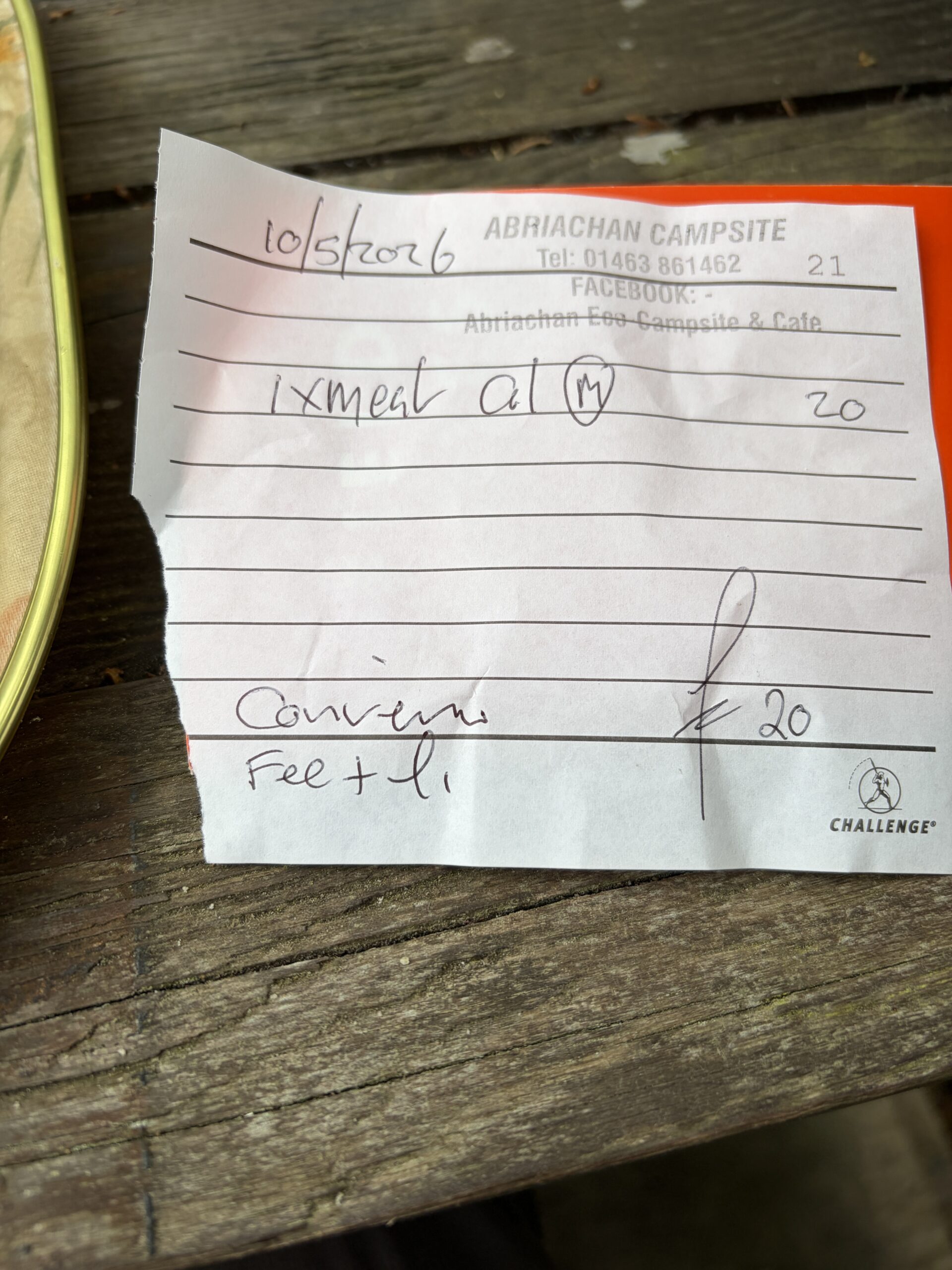
“If you pay in gold, leave it on the table. If you pay by card, come up to the house and the lady will take care of it.” He pointed to the bill face-down on a saucer, and then withdrew.
The tariff was 20 pounds; I left 30.
As I left I took a better look at the building where I’d been sitting. It had slogans painted on it, and an orange life ring, perhaps a relic from Howie’s maritime service.
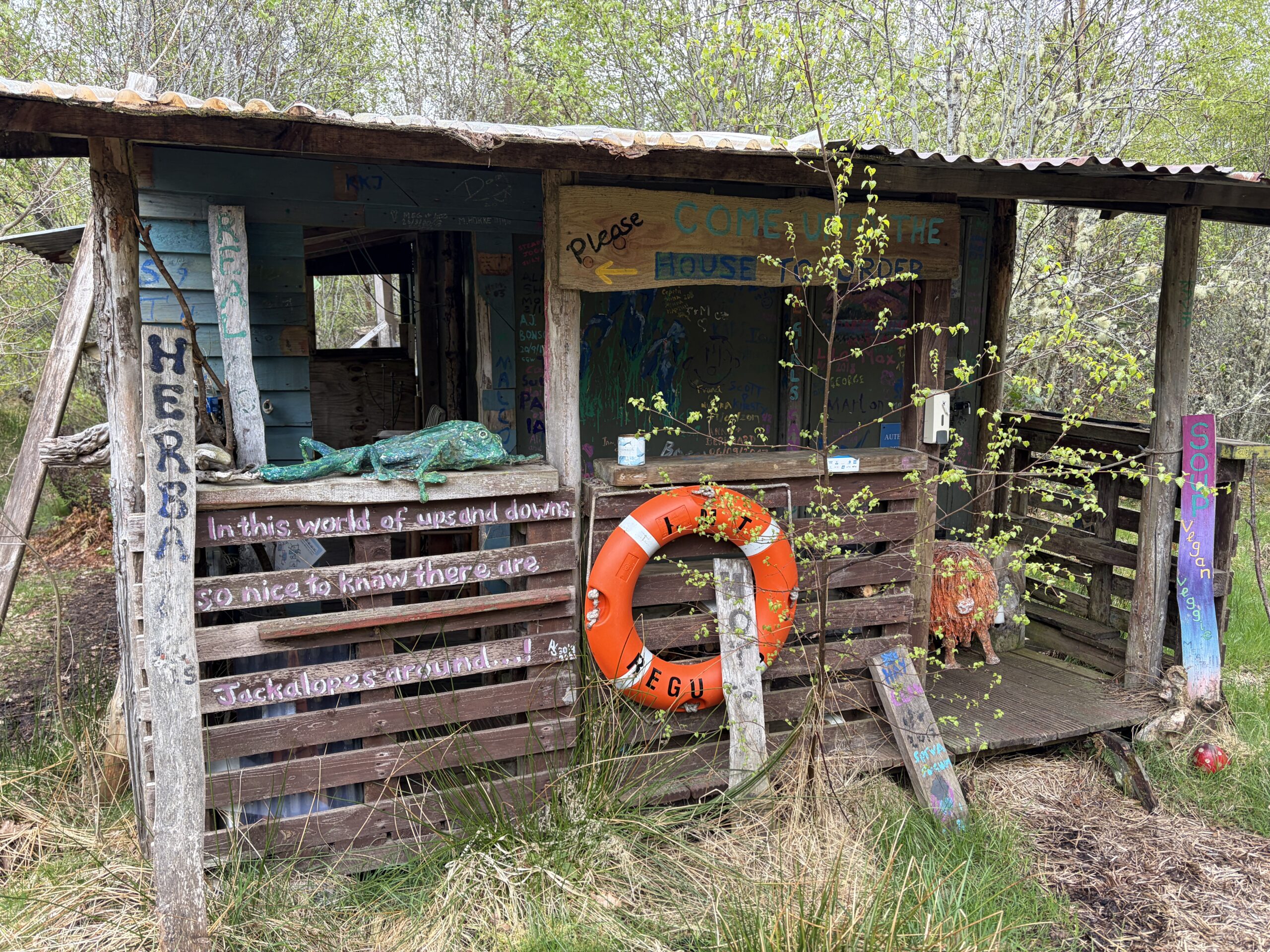
I hoisted the pack and walked away from this benign Grimms fairy tale, as interpreted by the Whole Earth Catalog.
I wandered on a few more hours to my destination, finding no place to pitch a tent until one miraculously appeared.
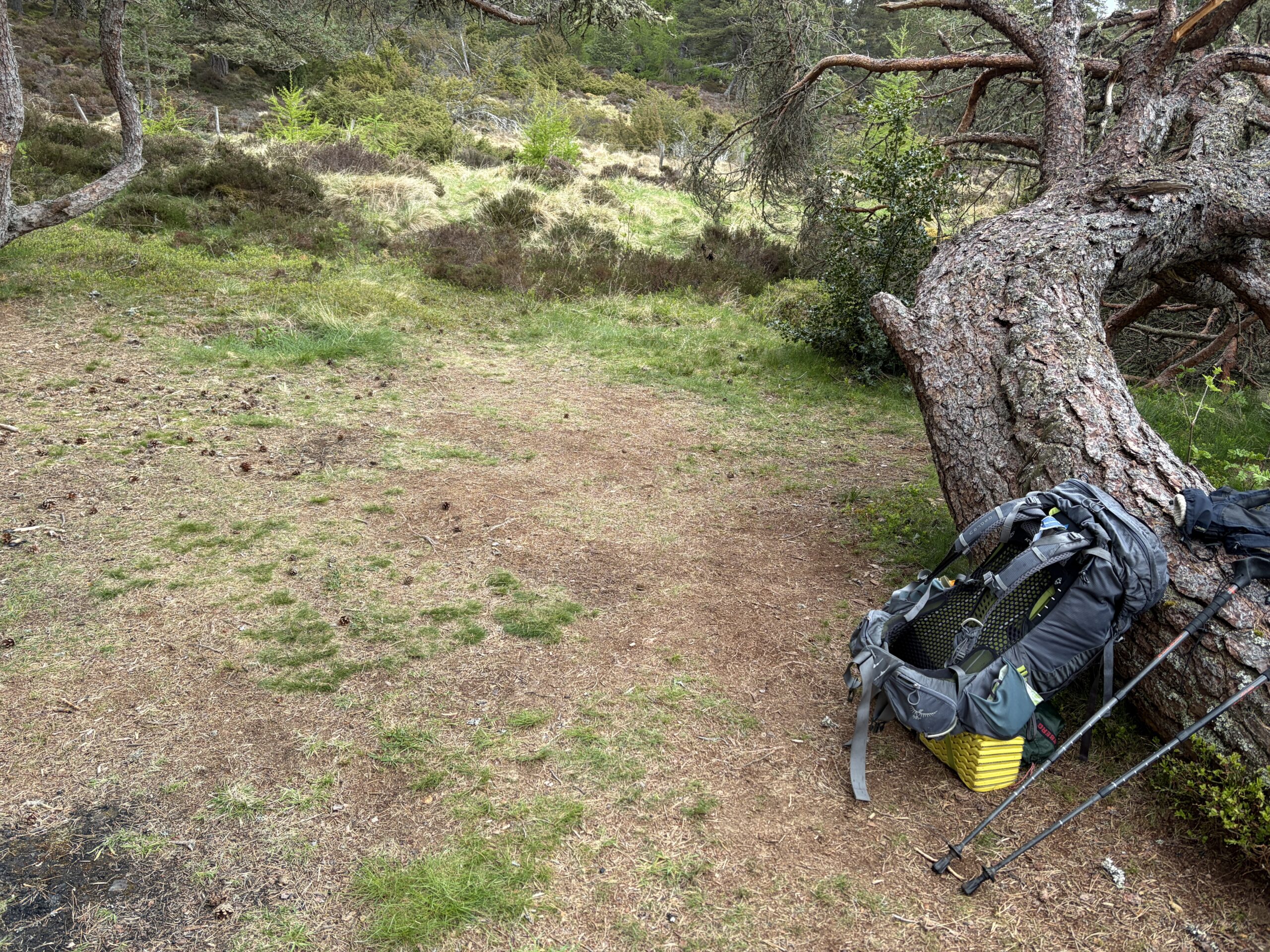
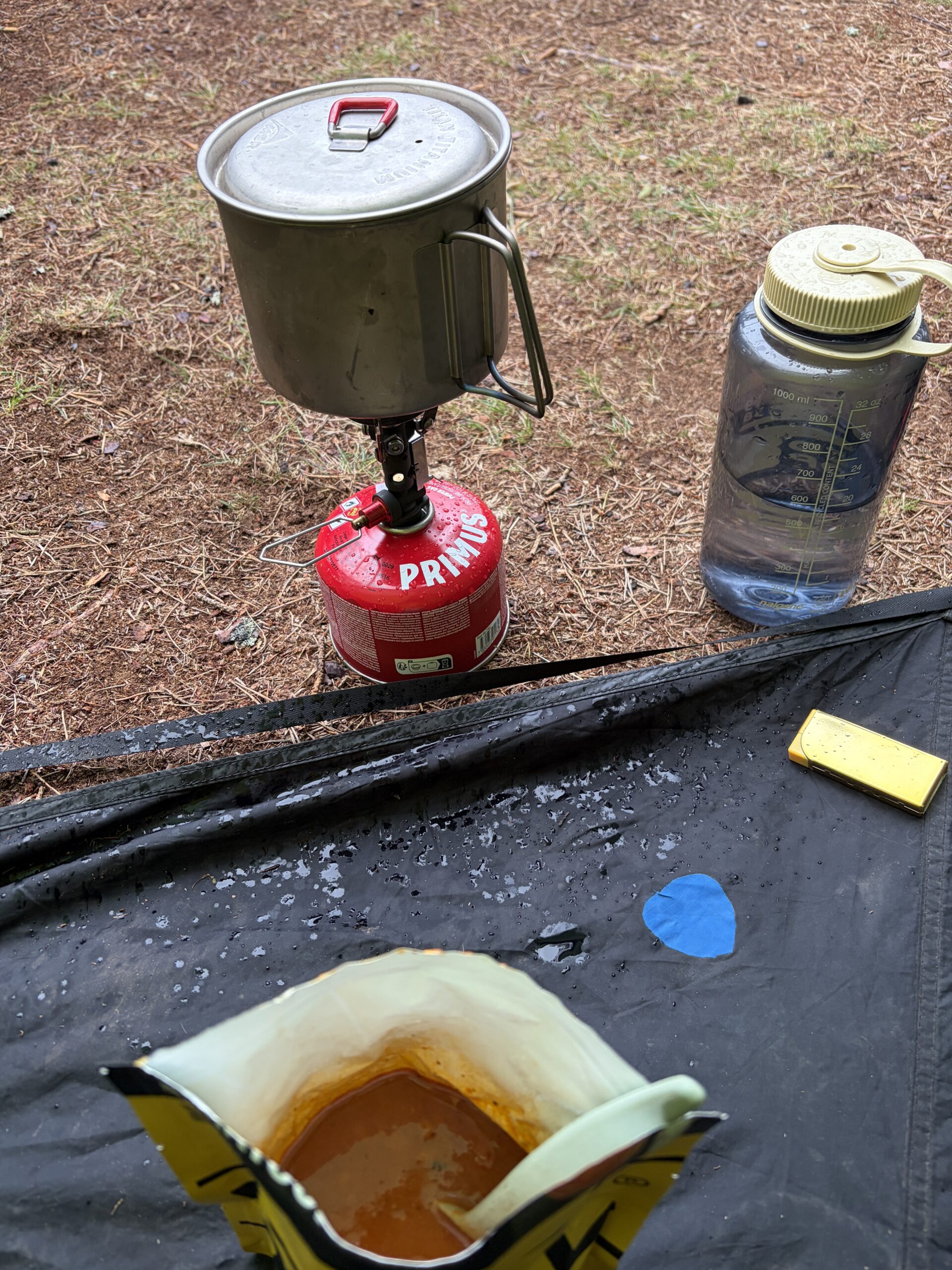
I put up the tent and crawled inside. It started to lightly rain. I wasn’t very hungry so I had only tomato soup, which I ate inside looking out, demi-al fresco.
Your very own “entertainment Standards & Practices” demonstrated in an otherworldly realm. This magical meal out of thin air seems almost like a dream. A beautiful piece. We wish you a fine wind and a following sea on the rest of the journey.
Jeez, that’s as much as I pay for a dinner here in America. I guess you were paying for the ambiance.
The unexpected joys of a wee walk. A lovely repast and WiFi too. Wonder how often they get customers.