One of the reasons I chose the route I’m on was so I could visit Culloden, the most famous battlefield in Scotland.
A few miles east of Inverness, it’s the place where Jacobite rebels (most of them Scots) who’d been fighting the government of England for half a century were defeated for the last time.
The details of Jacobitism are a mind-clouding mess of monarchs named James, Frenchified pretenders, Protestants who supported Catholics and Catholics who enlisted austere Presbyterians to fight beside them, tartan-wearing clans going at each other with broadswords, and other non-intuitive alliances and hatreds.
By the time I first heard the name “Culloden” all I could deduce was that it evoked a sort of “Lost Cause” Scottish resistance. It dinged a faint bell in Scotland’s campaign for independence, which was in the air when I did my first Challenge in May 2014. (The vote, on September 18 that year, failed; Scotland remains in the United Kingdom.)
Personally, I like visiting battlefields.
In the most self-conscious strategy of father-son bonding my father ever executed, the two of us spent the spring vacations of my 7th- and 8th-grade years visiting Civil War battlefields in Virginia, Maryland, and Pennsylvania. These included Richmond, Petersburg, the Wilderness, Cold Harbor, Appomattox, Antietam, and Gettysburg. I’ve visited many others since then.
In the last three years I’ve gone to Antietam, Gettysburg, Petersburg, and the Little Big Horn battlefields. In keeping with the trend of more sophisticated interpretation of historical sites, all are fairer, more interesting, and more evocative than when I walked on them 50 years ago. I’m curious to see how Culloden compares.
I will leave it to interested readers to research the full backstory of Culloden. The minimum a person should know is that it was the last stop of a feckless campaign by Prince Charles Edward Louis John Casimir Sylvester Severino Maria Stuart, known to friends as Charles Stuart and to pamphleteers and historians as “Bonnie Prince Charlie.”
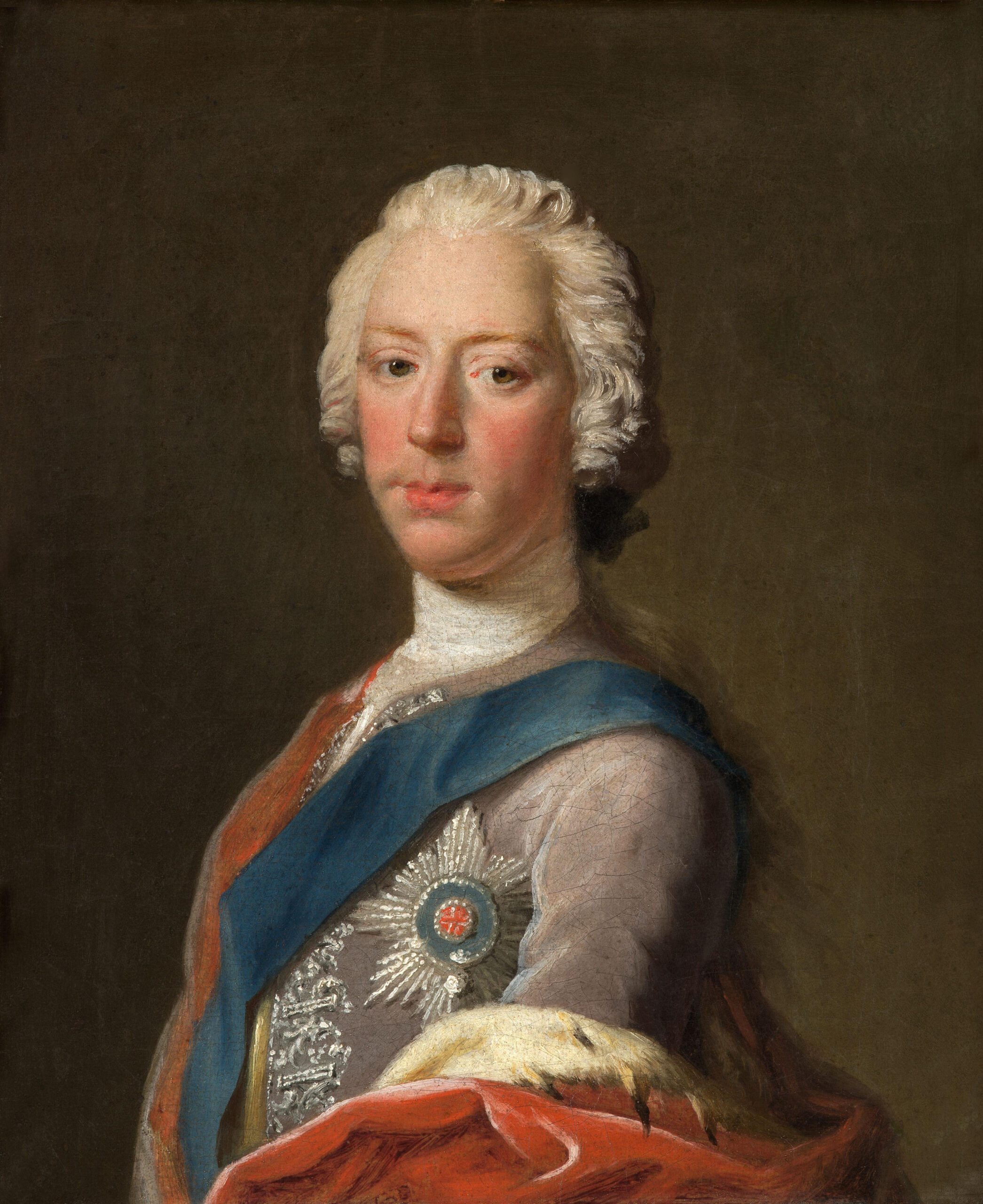
“Prince Charles Edward Stuart” by Allan Ramsay (ca. 1745)
He was the great-great-great grandson of the Catholic Mary, Queen of Scots, the great-great grandson of a man who was both King James VI of Scotland and King James I of England, the great-grandson of King Charles 1 of England and Scotland, and the grandson of James VII and II. This was the “House of Stuart” line of succession.
The increasingly Protestant aristocracy and parliamentary establishment forced the Catholic James VII and II from the throne in 1688–an event that became known as the “Glorious Revolution.” The king and his wife fled to France with their infant son, also named James, who became the Pretender to the throne when his father died. His son was “Bonnie Prince Charlie.”
The Latin word for James is Jacobus; the people who wanted to restore these Jameses to the English and Scottish thrones became known as “Jacobites.”
They launched invasions in 1715 and 1719, which were not successful. In August 1745 they tried again. Bonnie Prince Charlie landed in the Hebrides off the west coast of Scotland with a small number of men. (A larger ship carrying most of the weaponry had been fired upon by a Royal Navy ship on the passage from France and had to return for repairs.) They were soon joined by 2,000 Highland Scots.
On the side of the English crown was Prince William Augustus, also known as the Duke of Cumberland (by which he was commonly known). He was the younger son of the sitting king, George II, who was of the “House of Hanover” line. The son, one historian wrote, was not “softened by gentle persuasive arguments by which gentlemen, particularly those of a British constitution, must be governed.”
Inexplicably, by late September Bonnie Prince Charlie’s shoestring army had beaten an English force outside Edinburgh and captured the city. The English army got suddenly serious as Jacobite forces–which had lost fewer than 50 men–headed south into England. London was 150 miles away.
What followed was a dispute over strategy in the Jacobite leadership that was to recur several times over the next year. Charlie wanted to forge ahead; his generals favored retreat to the Highlands to recruit more soldiers and consolidate power. With 5,000 troops to the crown’s more than 16,000, the prince reluctantly agreed to the latter plan.
What followed was several months of pursuit, with the Jacobite army taking and abandoning cities (as it had with Edinburgh), capturing one fort and putting another to siege, as the government forces followed it. The Jacobites also employed guerrilla tactics, angering the English army, which fought in ranks.
By the spring of 1746 the armies were milling around Inverness, where the Jacobites had stored supplies. A full-scale battle was inevitable, and it was shaping up to occur on a boggy piece of land six miles east of Inverness near the River Nairn. It was not a great place to fight.
The Jacobite army markedly worsened its chances by launching–and then aborting–a sneak attack on the Duke of Cumberland’s army, which was camped 10 miles away and celebrating the duke’s 25th birthday with extra rations and brandy. (Military commanders were young back then, and vain.)
In three columns over uncertain routes, they marched in the darkness and rain, with a plan to attack at 2 a.m. However, they didn’t proceed at the same pace, and three miles from the duke’s encampment the commander of the lead column realized an organized surprise was impossible. He called off the attack, the Jacobite troops turned around, and were back at Culloden at dawn, wet, hungry, and unrested.
The duke’s forces attacked, engaging the Jacobites shortly before noon.
It was Prince Charlie’s first battlefield command. It showed; parts of his army were attacked from three sides. In less than an hour in the afternoon of April 16, 1746, the Battle of Culloden was over. The duke lost 50 men killed and 260 wounded. The Jacobite army had 1,500-2,000 casualties, with the exact number killed uncertain.
The Duke closed off the battlefield. The wounded Jacobite troops were left to die or helped along with bayonet thrusts. Thirty-six government deserters to the Jacobite army were hanged on the battlefield the next day.
It’s a testament to how little agency ordinary people had over their lives in that era that clan leaders could easily round up thousands of men to fight for a foreign would-be royal who believed in the divine right of kings. And that the English government could easily round up thousands of men to fight them. And with death often coming from an edged weapon.
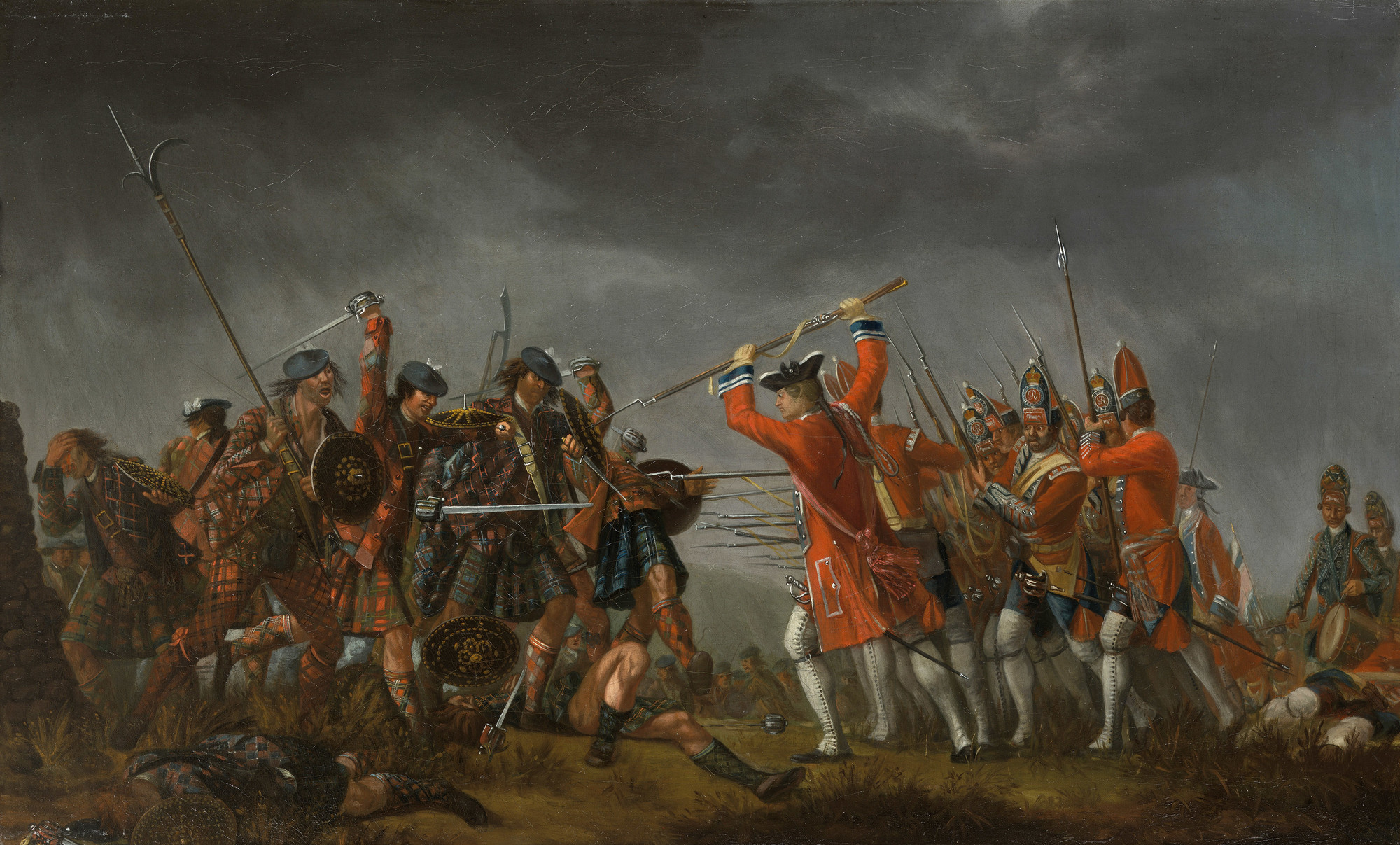
“The Battle of Culloden” by David Morier (between 1746–1765)
The significance of Culloden was not the battle itself, but what followed it. (Perhaps that’s true of every battle.)
The Jacobite army initially fled south to a designated rendezvous point, Ruthven Barracks, which they’d recently captured from the government. It’s a striking stone complex I’ve walked past on two of my Challenge crossings. About 1,500 Jacobite troops got there; many others, however, simply disappeared into the Highlands, heading home.
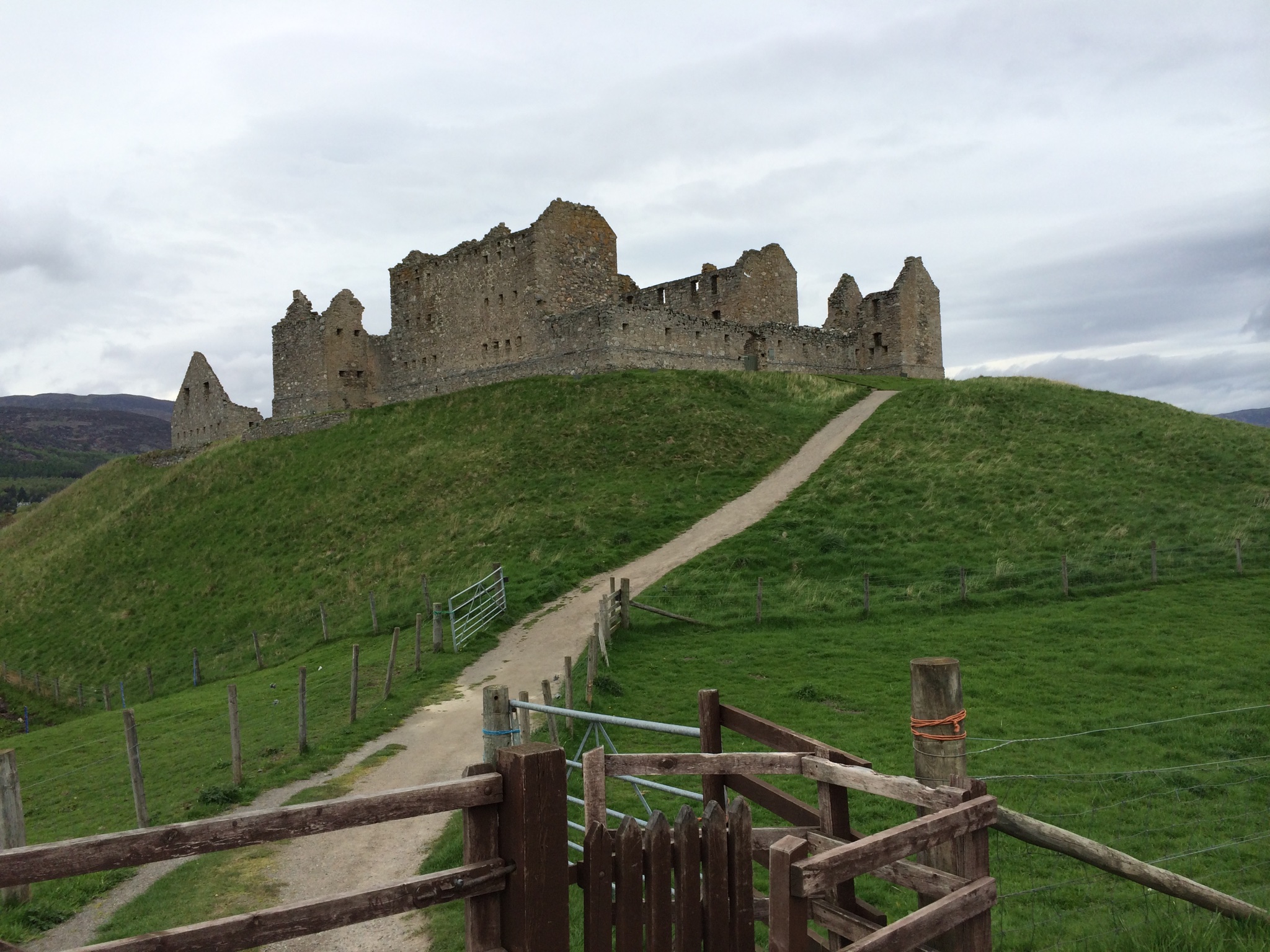
The ruins of Ruthven Barracks
The Irish and French troops captured at Culloden were generally treated well and eventually “paroled” and allowed to return home. The Scottish soldiers, however, had a different fate.
They were treated as rebels, and that identity was supplemented with the belief that clansmen in particular were an uncivilized, dirty, and inferior race (and in some cases Catholic). Highanders were viewed the way Indians were in the western expansion of the United States–barely human. Many of the fleeing Scottish soldiers were executed if caught. People suspected of harboring them, including some titled aristocrats, had their houses burned and livestock driven off or sold. Some were killed.
“In the months ahead, bloodshed would become the norm as the government army continued its pursuit of Jacobite soldiers and their supporters, mounting what would later be called a counter-insurgency campaign against the largely civilian population of the Scottish Highlands,” wrote Trevor Royle in his 2016 book, “Culloden: Scotland’s Last Battle and the Forging of the British Empire.”
The Duke of Cumberland became known as “Butcher Cumberland,” a well-earned sobriquet, the rest of his life. There’s a story from years later in which he’s speaking publicly about his desire, as a royal, to become a patron of a worthy guild of working men. “How about the butchers?” someone in the crowd called out.

“After Culloden, Rebel Hunting” by John Seymour Lucas (1884)
This reign of terror by an army usually considered well-disciplined and respectful of the distinction between soldier and civilian brings to mind the experience of Italy when it was a battleground for the Allied and German armies.
In its slow, bloody retreat northward on the peninsula, the German army was attacked from the front by the British, Canadian, and American armies, and from the rear and flanks by partisan forces. Historian Mark Gilbert, in a book published last year called “Italy Reborn: From Fascism to Democracy,” wrote that in the last year of World War II “approximately 200,000 Italians fought in the resistance and tens of thousands of patriots assisted in non-combatant roles.”
German fear and fury knew few bounds. Hitler at one point set a policy (incompletely enforced) that for every Wehrmacht soldier killed, 10 Italians would be executed. The 2016 “Atlas of Nazi-Fascist Massacres in Italy 1943-1945”–a project of 120 Italian and German researchers–found “5,300 such [retaliatory] episodes with a total death toll of over 22,000 civilians, mostly children, women and elderly people.”
Memory of these reprisals has lasted into this century. The memory of Culloden also lived on for more than a century, not just because of its violent aftermath but because of the political and cultural changes it brought.
After it, the power of clan leaders was legally limited; the wearing of tartan (except in certain circumstances) became a crime; 13 Highland estates of people involved in the Jacobite rebellion were confiscated and some owners were executed; a law was passed to suppress houses of worship where “the King and the Royal Family shall not be prayed for by name.” Nearly a thousand Jacobites suffered “transportation”–forcible exile to America or the Caribbean as indentured servants.
Culloden occasioned an assault on Scottish identity that still echoes faintly. Although today’s Scots don’t venerate Bonnie Prince Charlie, they tell a story about him that venerates Highlanders.
After the battle, the prince hid in the Highlands until he was picked up by a ship on September 20, 1746 and taken back to France. During that time there was a reward of 30,000 pounds to anyone who turned him in. That’s the equivalent of 5.8 million pounds today–about $7.9 million. Nobody did.
It’s not by chance that Jamie Fraser, the hero of the “Outlander” television series is a Jacobite survivor of the battle.
The Battle of Culloden also had a long military tail. Many of the men who were leaders in the wars of British North America were young officers on the boggy moor that day. Two of the more famous were James Wolfe and Thomas Gage.
Wolfe took part in the post-Culloden pursuit of Scottish soldiers, writing later that “as few Highlanders were made prisoners as possible.”
On September 13, 1759, he was commander of British troops in the Battle of the Plains of Abraham outside Quebec City–a place with spooky similarities to the Culloden battleground. Facing him were French forces under the command of Marquis Louis Joseph de Montcalm (whose aide was a man named Joseph Johnstone, a Jacobite veteran of Culloden who’d fled to France).
Both commanders were killed in the battle, which was the beginning of the end of French rule in North America. Wolfe’s death-by-sniper was memorialized by the painter Benjamin West, who rendered it as a Pietà.
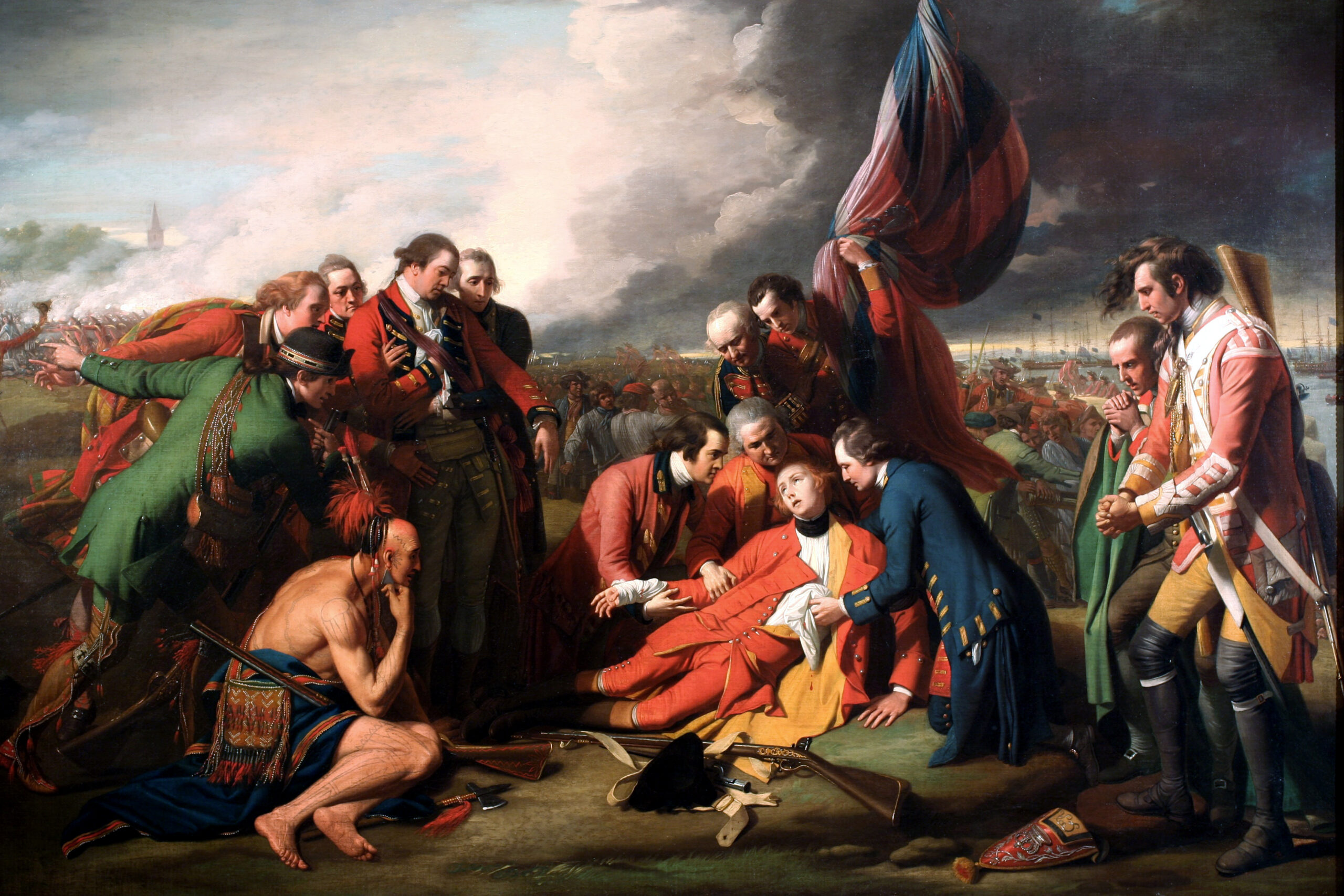
“The Death of General Wolfe” by Benjamin West (1770)
Thomas Gage was a lieutenant colonel in the fighting in Western Pennsylvania in 1755 that marked the start of the French and Indian war. George Washington was a colonel there, and knew him. By the eve of the American Revolution, he was the governor of the Province of Massachusetts Bay, and commander-in-chief of British forces in North America.
Gage sent troops to confiscate colonists’ weapons west of Boston, a foray that became the disastrous Battle of Lexington and Concord, with 273 British casulaties to the Americans’ 93. He was in office (although not in command) at the Pyrrhic victory of Bunker Hill, where the British suffered a thousand casualties. He wasn’t optimistic about England’s chances in an American war. By October 1775 he’d been relieved of his duties and was on the way back to England.
In 1884, a man named Benson J. Lossing published a history of the United States that told a story about Gage in siege-bound Boston that the painter Henry Bacon depicted a century later.
Even the children seemed to lose their timidity, and became bolder. They nobly exhibited it on one occasion. They were in the habit of building mounds of snow in the winter on Boston Common. These the soldiers battered down, so as to annoy the boys. This being repeated, a meeting of larger boys was held; and a deputation was sent to General Gage to remonstrate.
“We come, sir,” said the tallest boy, “to demand satisfaction.”
“What” exclaimed Gage, “have your fathers been teaching you rebellion, and sent you here to exhibit it?”
“Nobody has sent us here, sir,” said the boy, while his eyes flashed with indignation. “We have never insulted nor injured your troops; but they have trodden down our snow-hills, and broken the ice on our skating-grounds. We complained; and calling us young rebels, they told us to help ourselves if we could. We told the captain this, and he laughed at us. Yesterday our works were destroyed for the third time; and we will bear it no longer.”
Gage admired the spirit of the boys, promised them redress; and, turning to an officer, he said, “The very children here draw in a love of liberty with the air they breathe.”
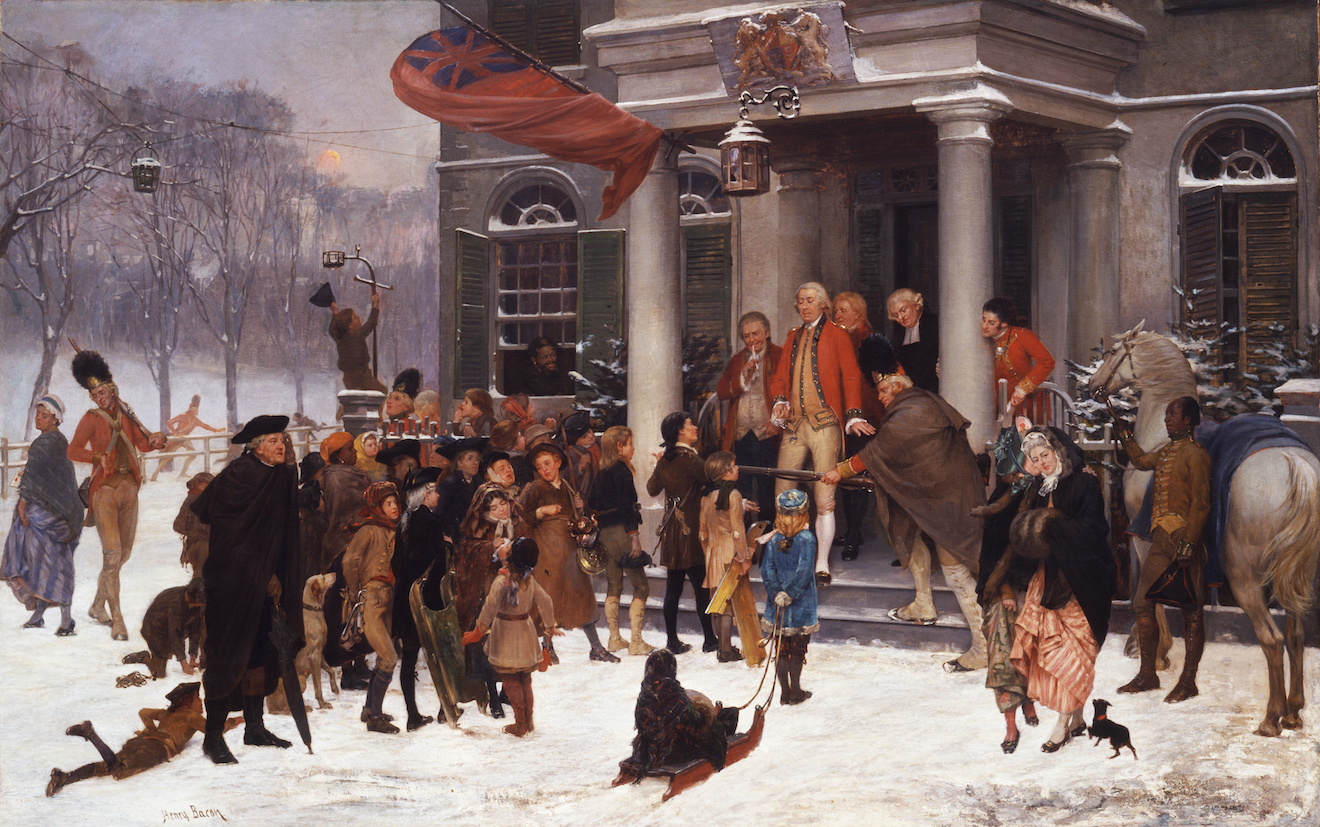
“The Boston Boys and General Gage” by Henry Bacon (1875)
Bacon, a Massachusetts native, had served in the Union Army. At the Second Battle of Bull Run he sustained a crippling wound to his left arm, which was not his painting arm. He presumably knew something about things worth fighting for.
The painting, owned by The George Washington University, is famous for the variety of people depicted–and, by implication, the universality of support for the appeal for the redress of grievances. In addition to the “tallest boy,” there was a respectful girl pulling a child on a sled, an old man using an umbrella as a cane, a woman walking a dog, a maid flirting with a British soldier, a scamp climbing a lamp post, and two Black men.
Trevor Royle, in his book, says of Gage: “In the aftermath of the loss of North America, Gage was criticised for his docile behaviour and his refusal to crush the rebellion if necessary by employing overwhelming force from the very beginning. It was not as if he did not have the necessary experience . . .”
Suppression of an uprising in support of an exiled royal pretender was possible in Scotland. Suppression of an uprising in support of democracy–or the incomplete 18th Century version of it–wasn’t possible in America
And Gage knew it.
As a (barely) reformed Jacobite Johnston(e), I can only hope that my Highlander brethren will venture forth in full Tartan to fight on against King Charlie. A sweeping (many continents and centuries) account of Culloden and its repercussions. I note with some concern that the dispatch is titled “Culloden I”.
I just said to Jim – your posts are mini history lessons. Amazing how you explain the connections of this Scottish battle with other historical events. Thanks for sharing.