When I left Lossiemouth on a bridge over the river to the beach the first people I met were the instructor and students of a surfing school. You have to really want to learn to surf to take lessons in the Moray Firth in May. I asked the teacher what the water temperature was. He didn’t know. “It’ doesn’t matter with the wetsuits,” he said.
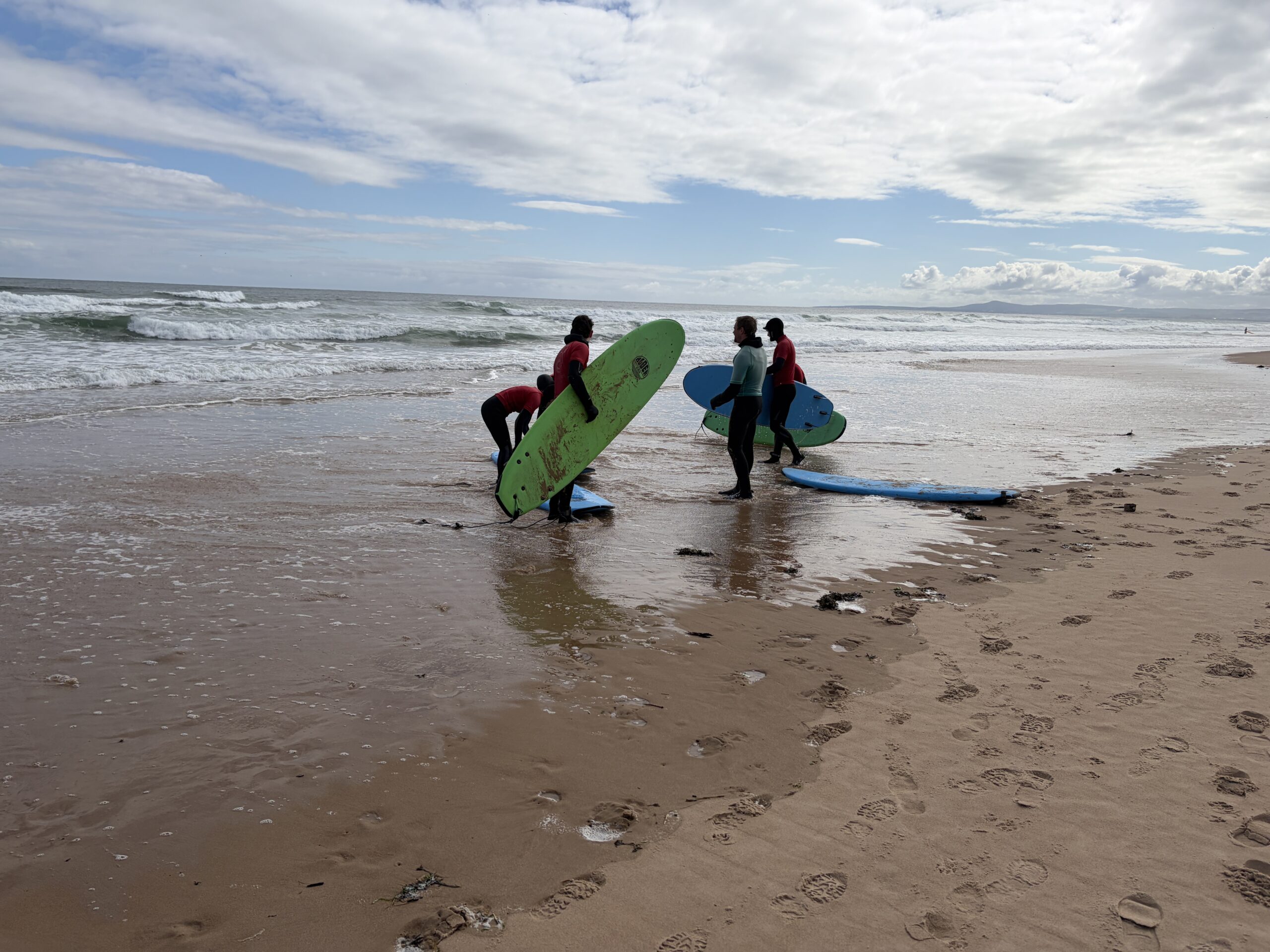
The beach is long and beautiful, justifiably famous in Scotland.
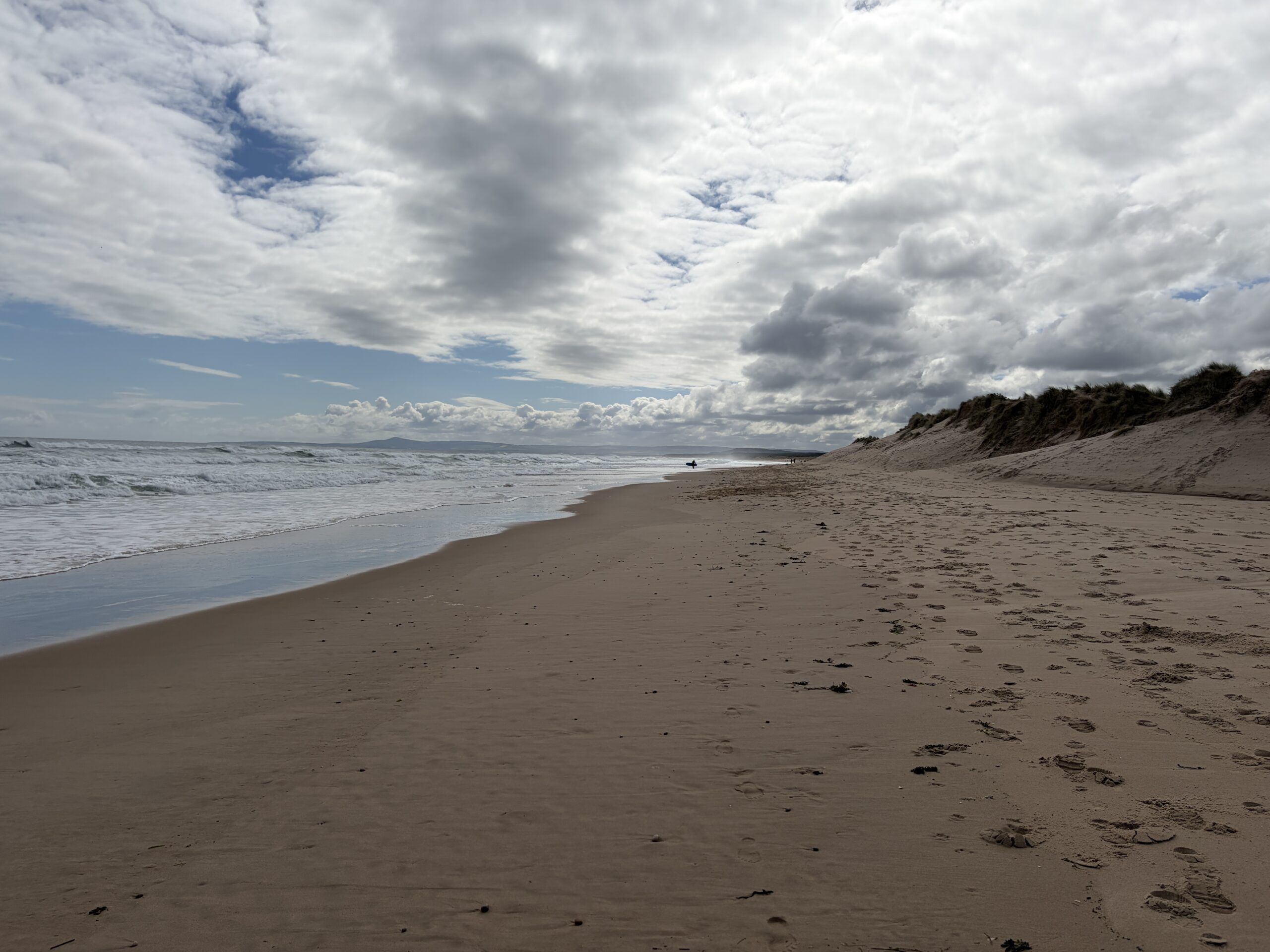
I eventually ran into Duncan and Charlie, two Challengers I’d met in Burghead, at the only open cafe. It was above the beach and we were entertained by four windsurfers and one surfer, who caught one wave in 35 minutes and came in.
Duncan is on his third Challenge (he retired from one because of injury) and Charlie is on his second. They are cousins. Duncan, 65, is a former bicycle mechanic turned addictions counselor, and Charlie, 59, is an architect. Their last names are “Bain Smith (no hyphen).”
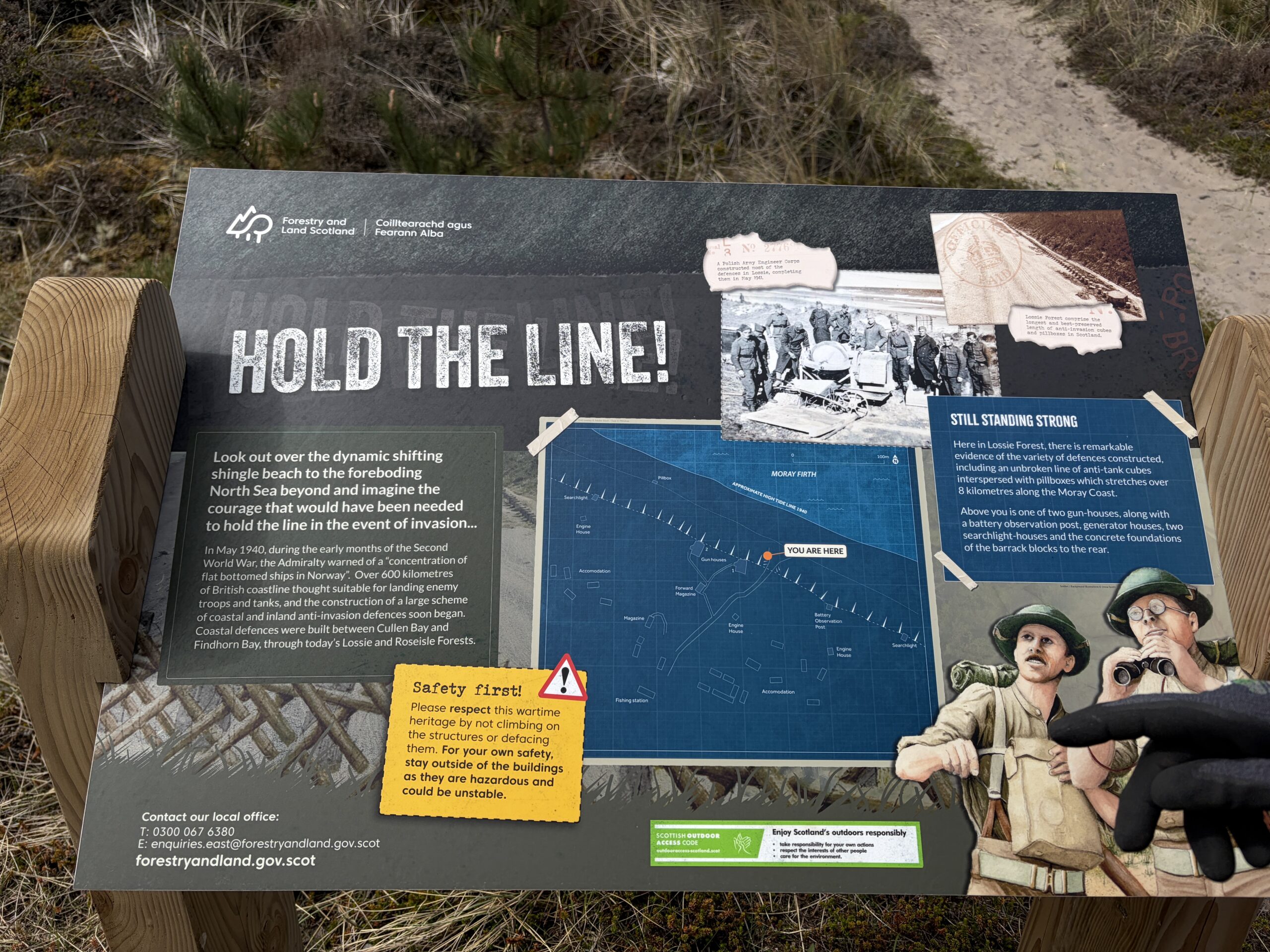
We passed many World War II defenses as we walked along the beach path–dozens of concrete-cube tank barriers, pill boxes, and occasional big-gun emplacements on top of the dune.
We stopped at this interpretive placard. Charlie narrated the order of battle in a posh accent as if he were a “leftenant.”
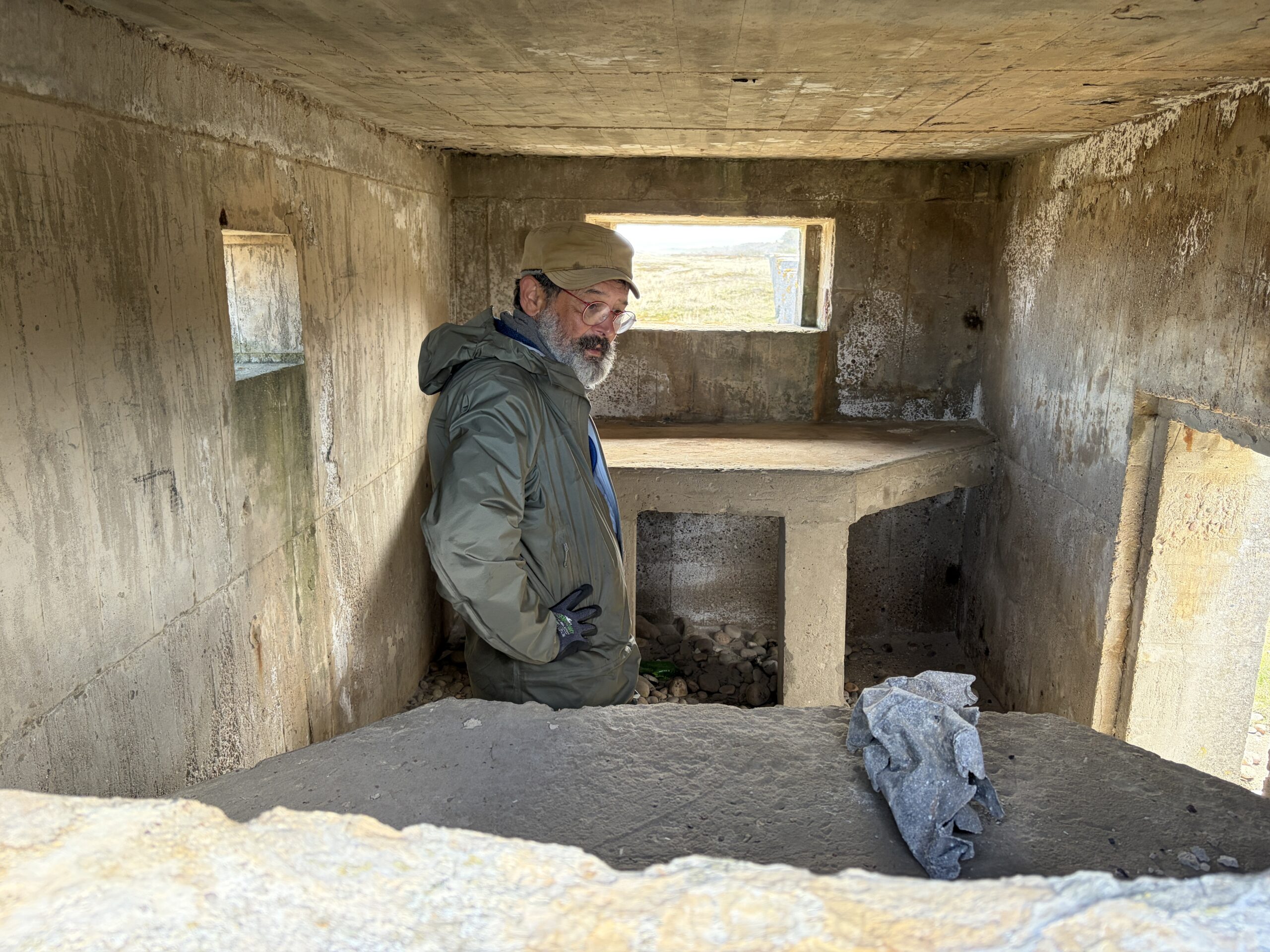
Here is Charlie inside one of the pill boxes.
We went through the usual oral autobiographies. It turns out one of their ancestors (possibly a great grandfather) who was the younger son of a rich man, moved to Wyoming in his twenties. Or, more likely, was sent there by his family after trouble at home.
He was a “remittance man.” A quick Google search found this definition in The Canadian Encyclopedia: “a term once widely used, especially in the West before WWI, for an immigrant living in Canada on funds remitted by his family in England, usually to ensure that he would not return home and become a source of embarrassment.”
This term and phenomenon applied equally well to the United States, and especially for Wyoming, where there was at least one school for teaching posh Scots, Englishmen, and New England elites the requirements, discipline, and skills to become a western rancher.
My great uncle, Frank T. Brown, was sort of a remittance man. He moved to Medicine Bow, Wyoming, in the 1880s and ran a sheep ranch with an older man. My father believes he’d been sent away from Framingham, Massachusetts, because of some sort of trouble—with the law, or perhaps after getting a girl pregnant. He died of suicide after a “spree” with choral hydrate, according to a coroner’s report a researcher found for me in the 1990s.
Duncan and Charlie’s remittance man fared better. His older brother died, so he went back to England and inherited the family fortune.
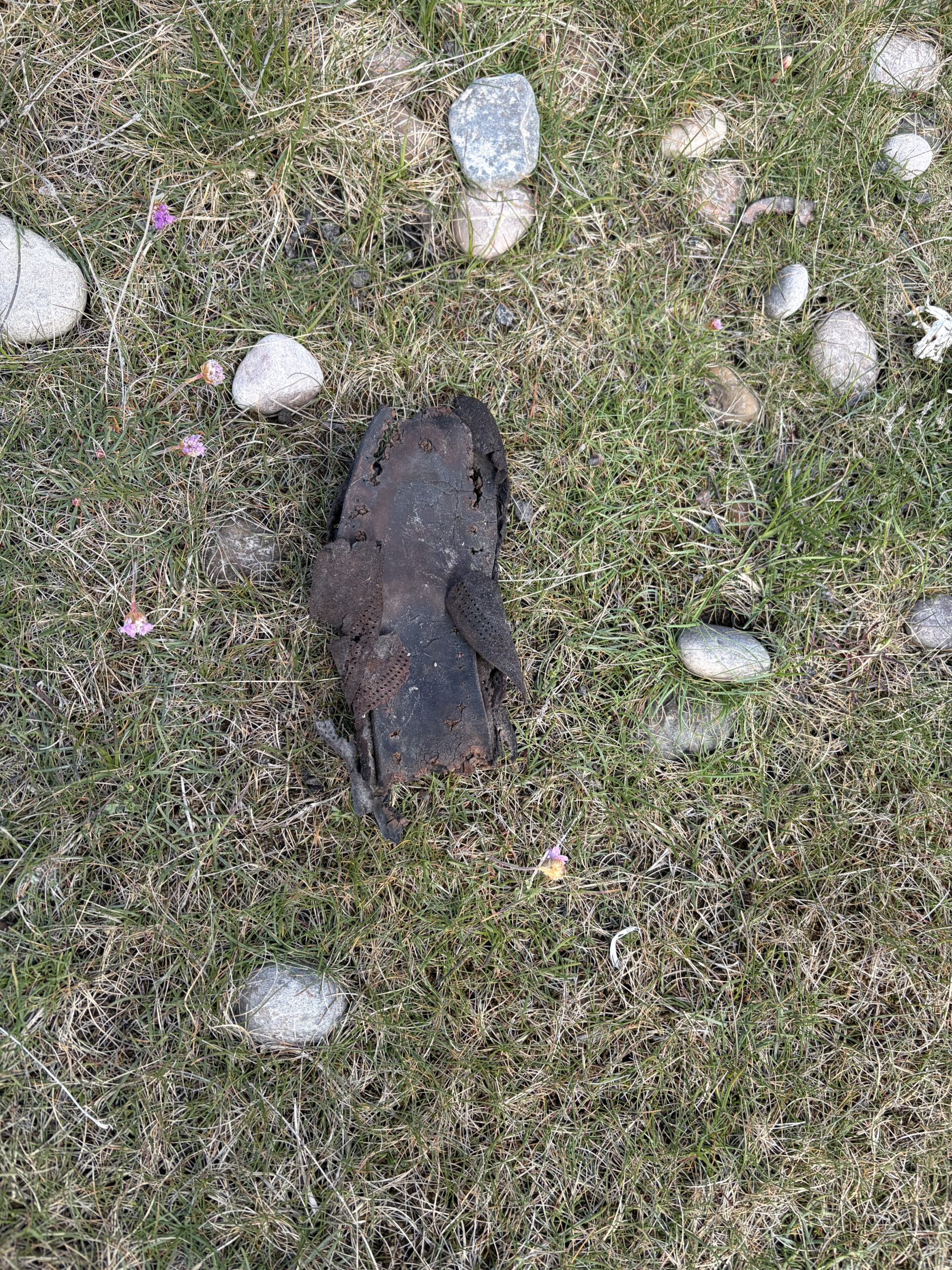
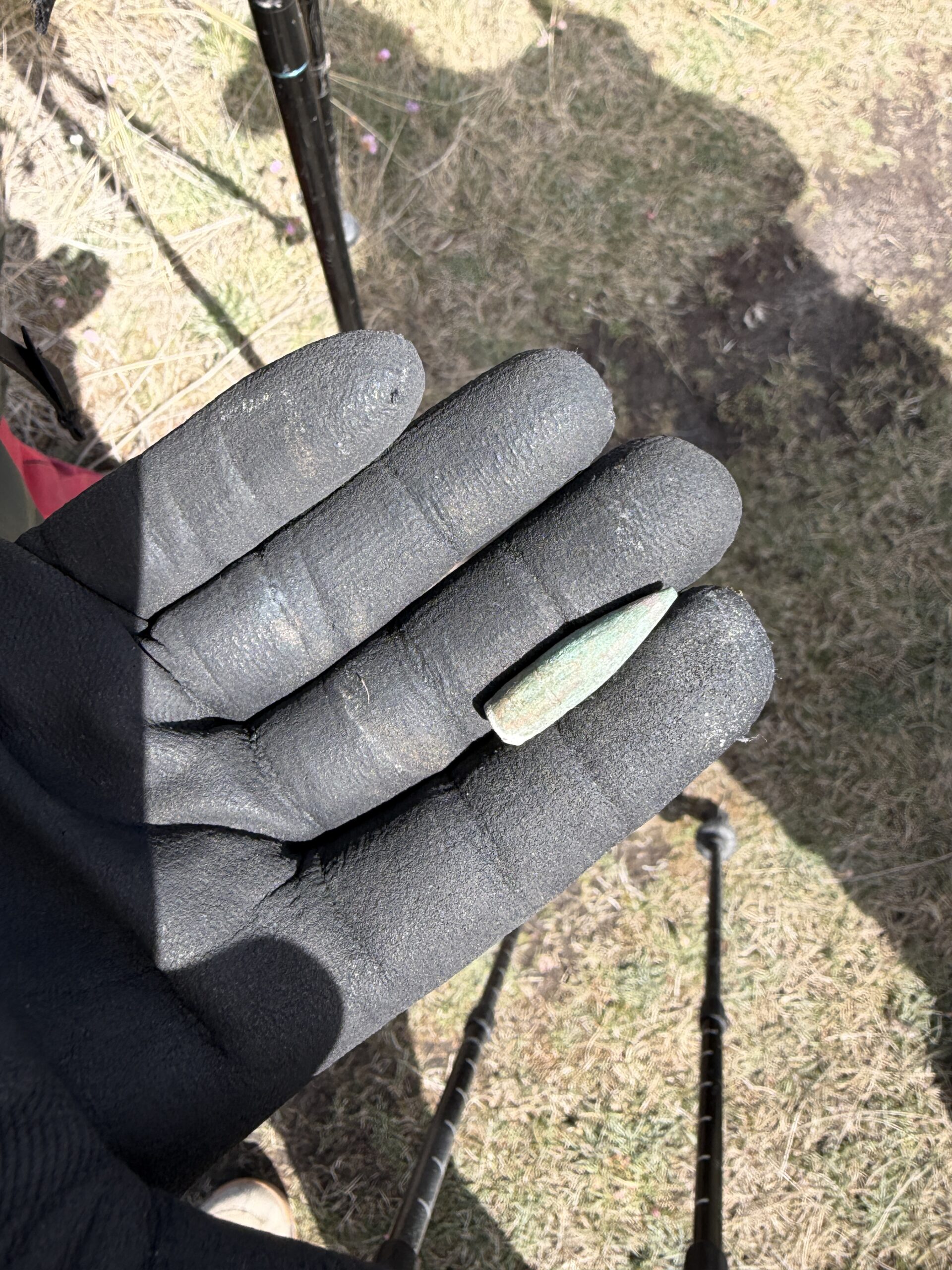
We found a few relics on the marsh, including the remains of a Victorian leather shoe, and a slug from rifle bullet. In fact, we found three (one deformed) in the same area, which suggests some sort of target practice.
fdycgcg
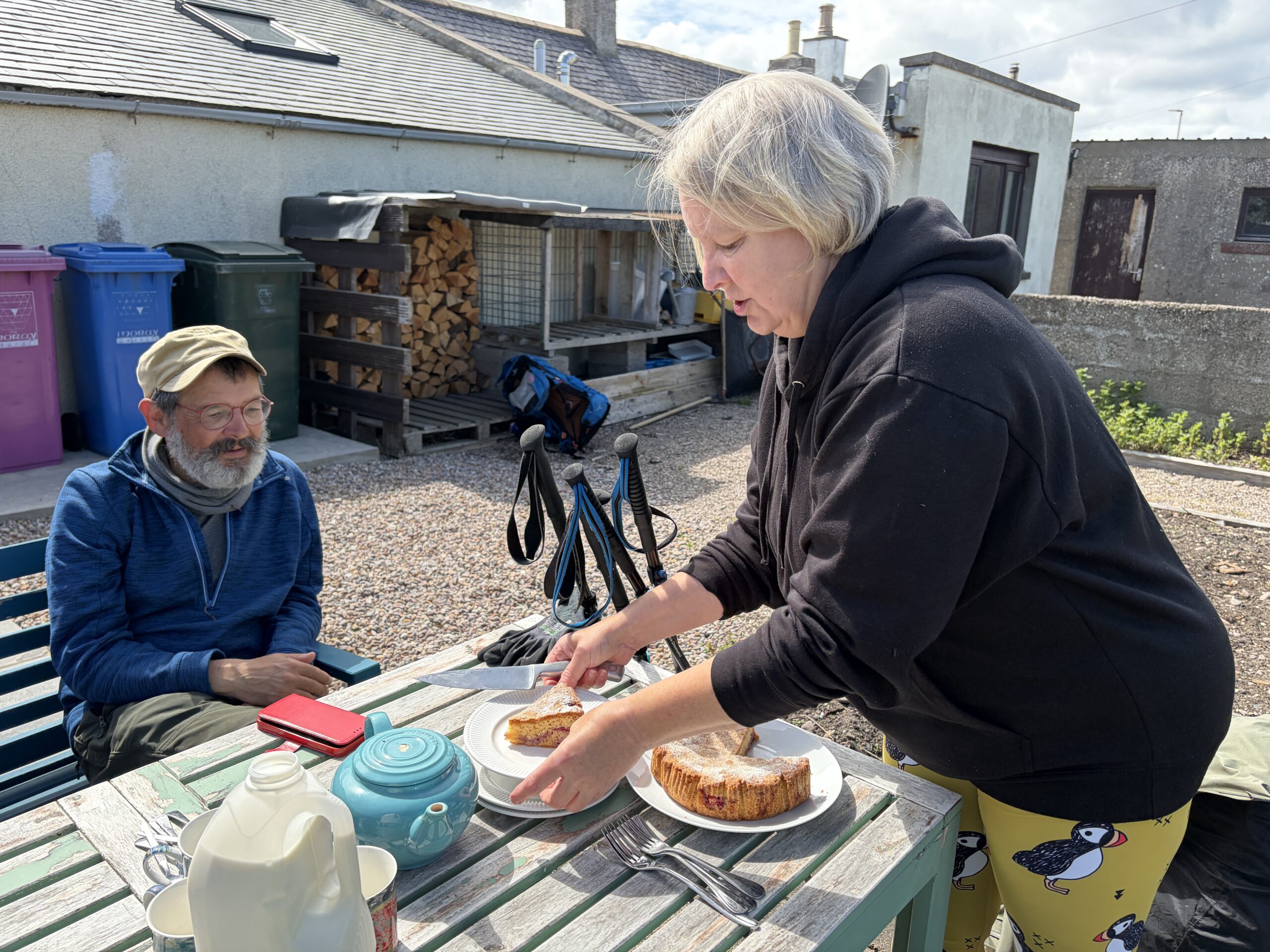
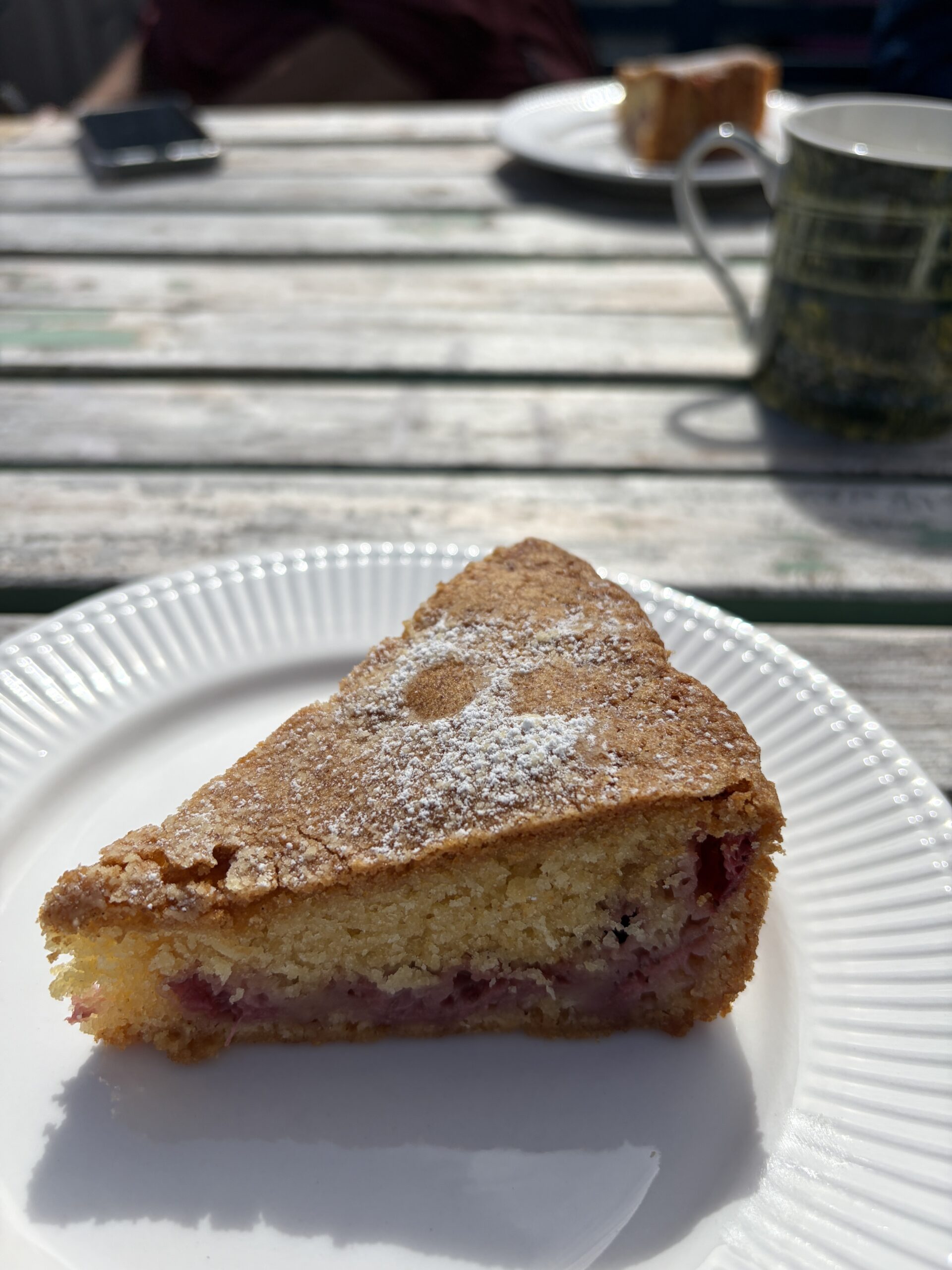
Our immediate goal that morning was the home of a woman named Janet Donnelly in Kingston, a village just to the west of where the River Spey empties into the Moray Firth. For years she has offered Challengers tea, cake, and a bathroom. Duncan, who is on the right, had let her know a day or so earlier that he and Charlie planned to stop by, and had updated that with a message that there’d be a third person, me.
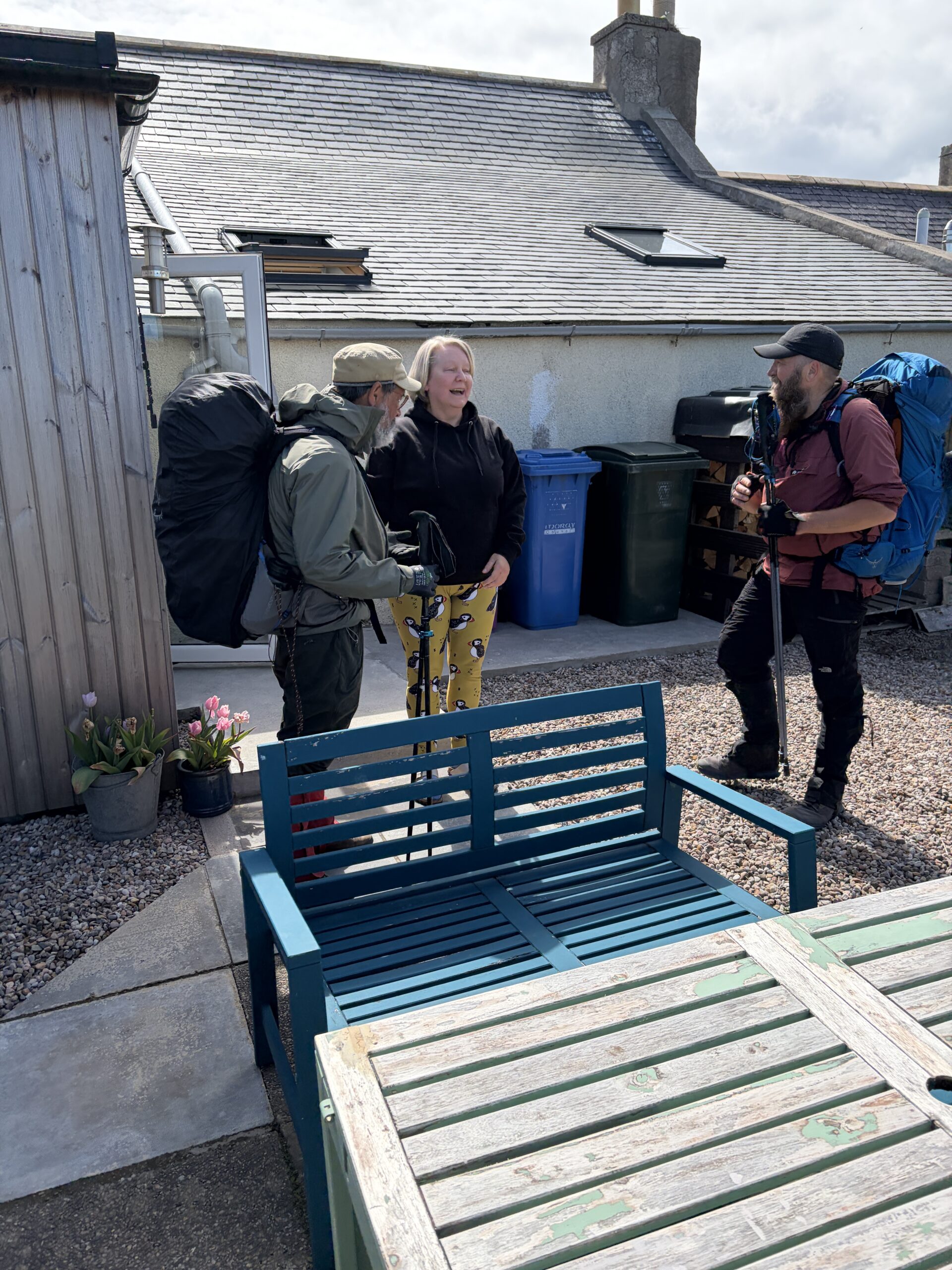
Duncan, left, and Charlie, right.
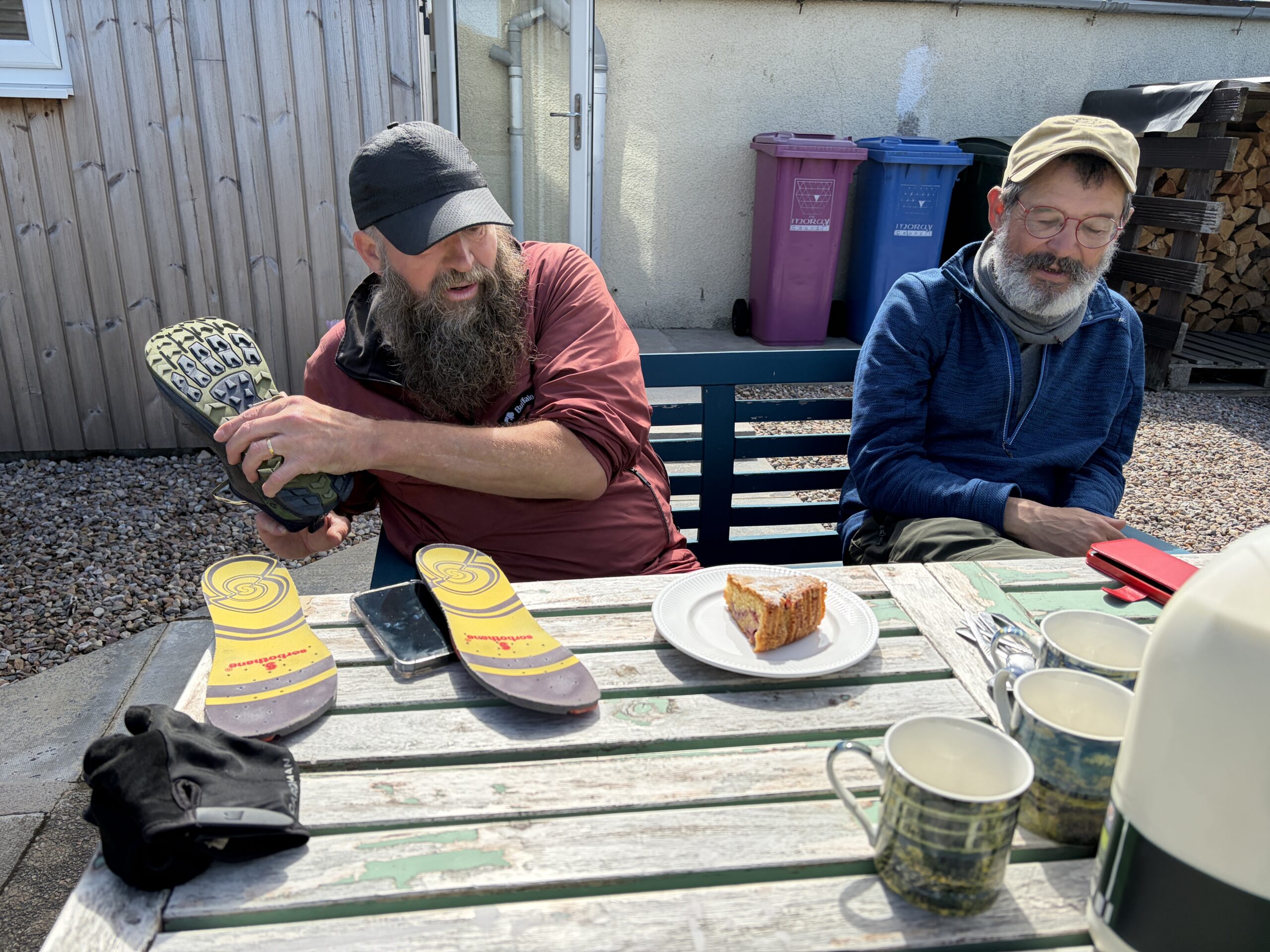
It was a great break, and a lovely thing for Janet to do.
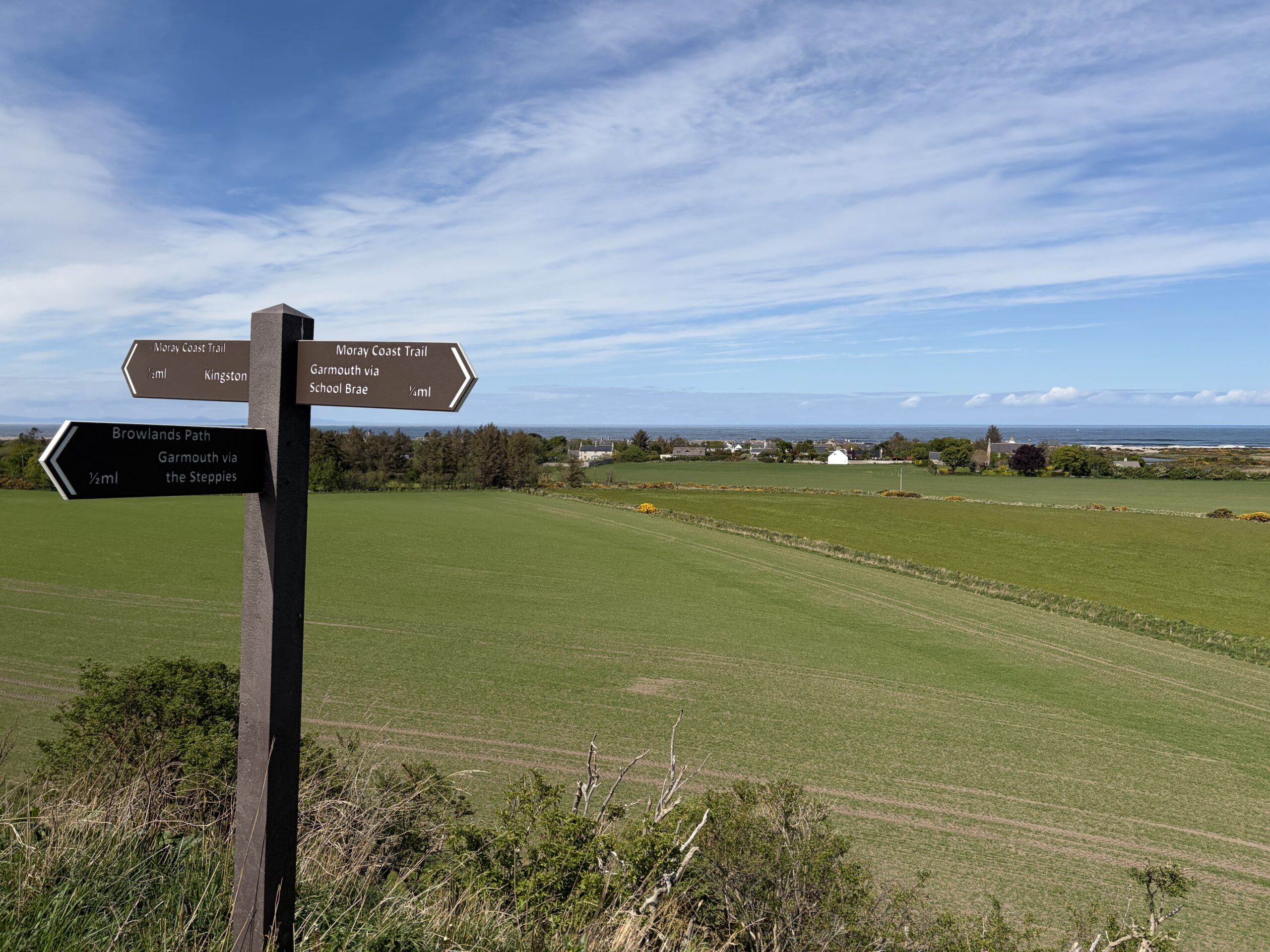
We thanked her and headed out of town. We got a good view of it as we made our way south toward a way over the River Spey.
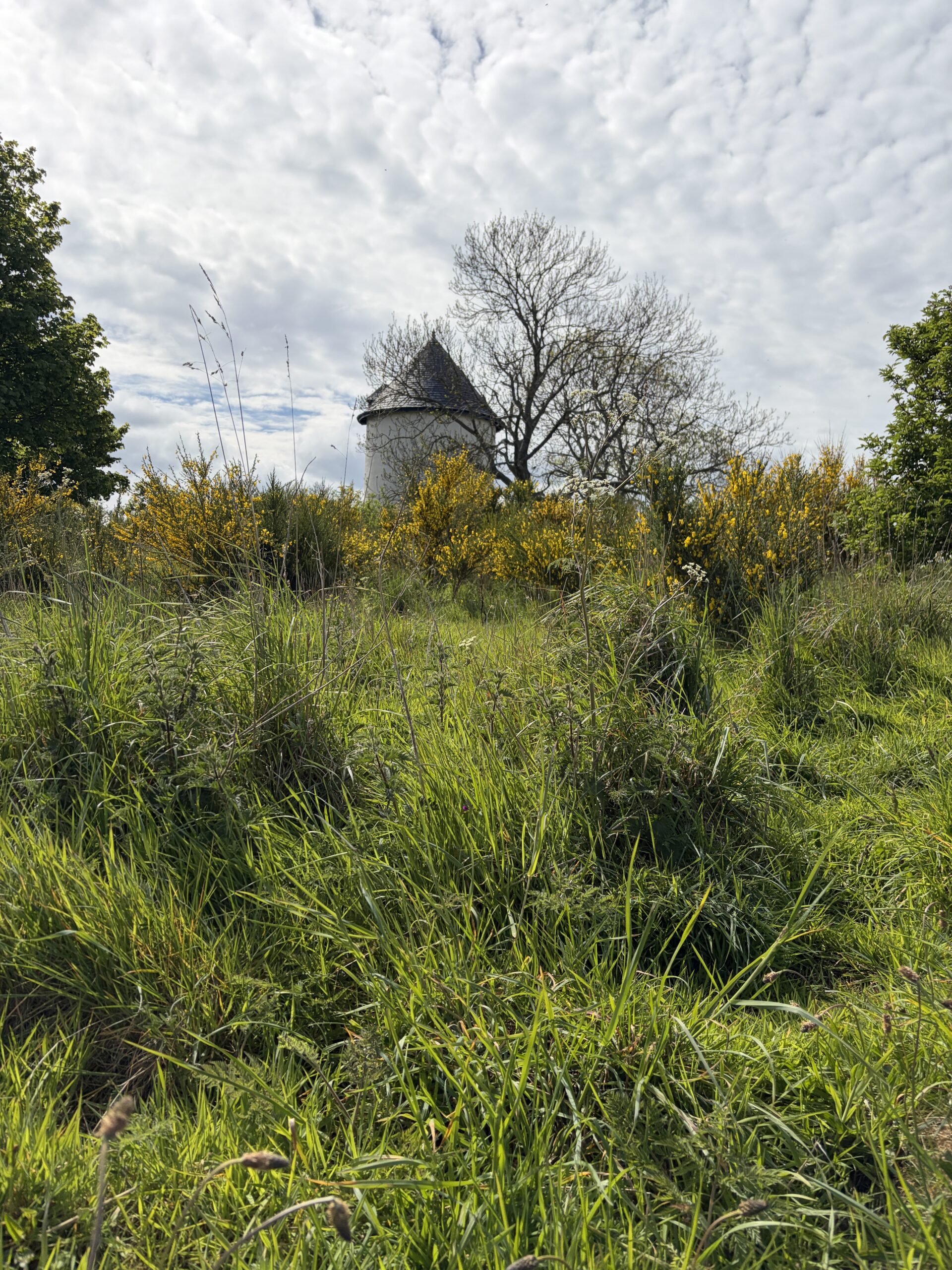
We passed a structure that Charlie described as a “dovecote”—a place that attracts doves to nest, and from which people harvest young doves for food.
“There used to be a lot of them around. They’re quite rare now,” Charlie said.
A few minutes later we passed a sign that said: “Path to water tower.”
”They’re even rarer now,” Charlie said with a straight face.
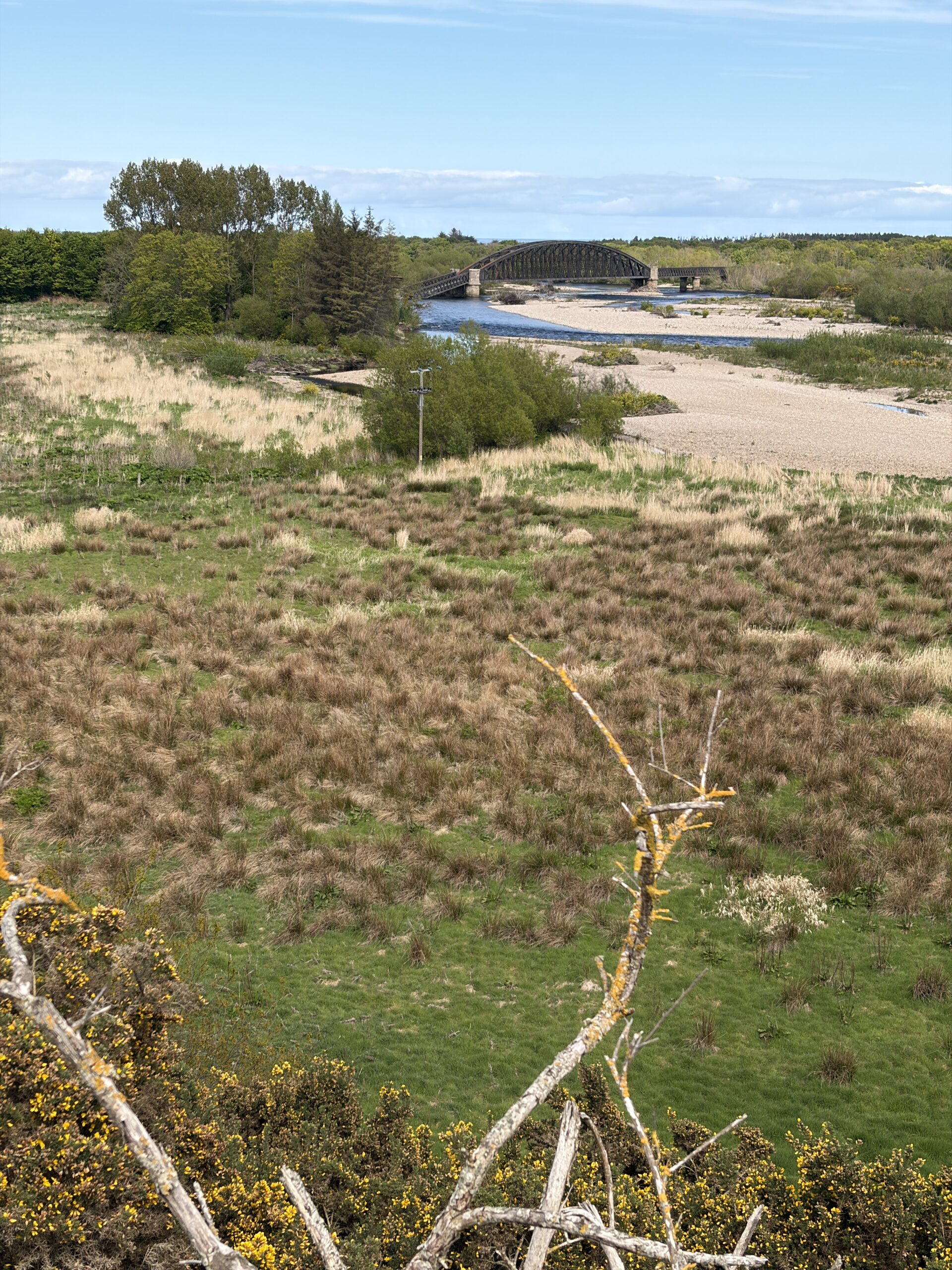
Normally, we would have crossed the river on an old railroad bridge that had been turned into a footbridge. But one end of it had washed out in a flood a few months earlier. This necessitated walkers to go south four miles, cross the river on a highway bridge, and then walk back four miles to the coast trail.
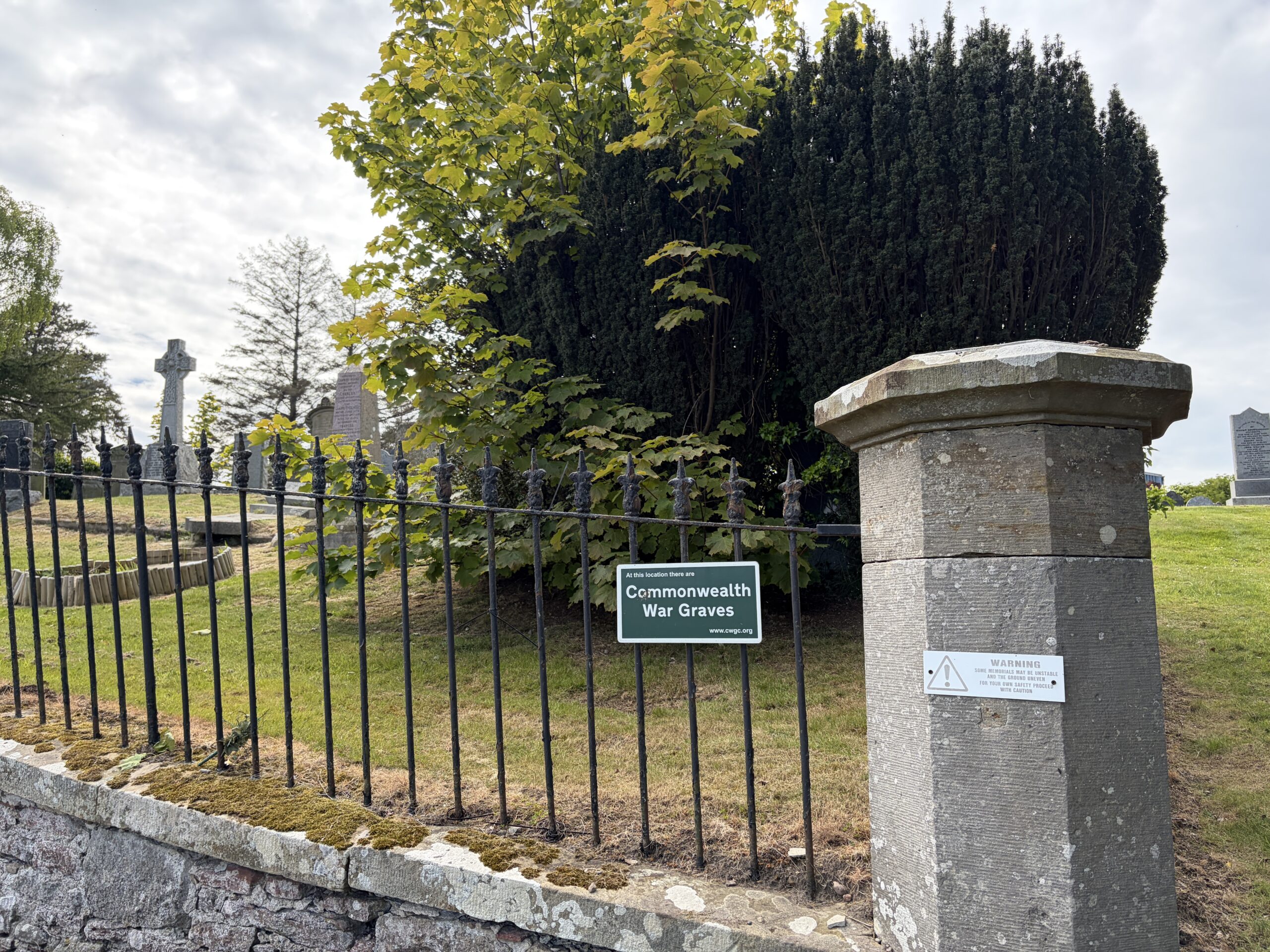
There were a few things to see, like this cemetery with war graves. But basically, this diversion was an unpleasant task to put behind you as quickly as possible.
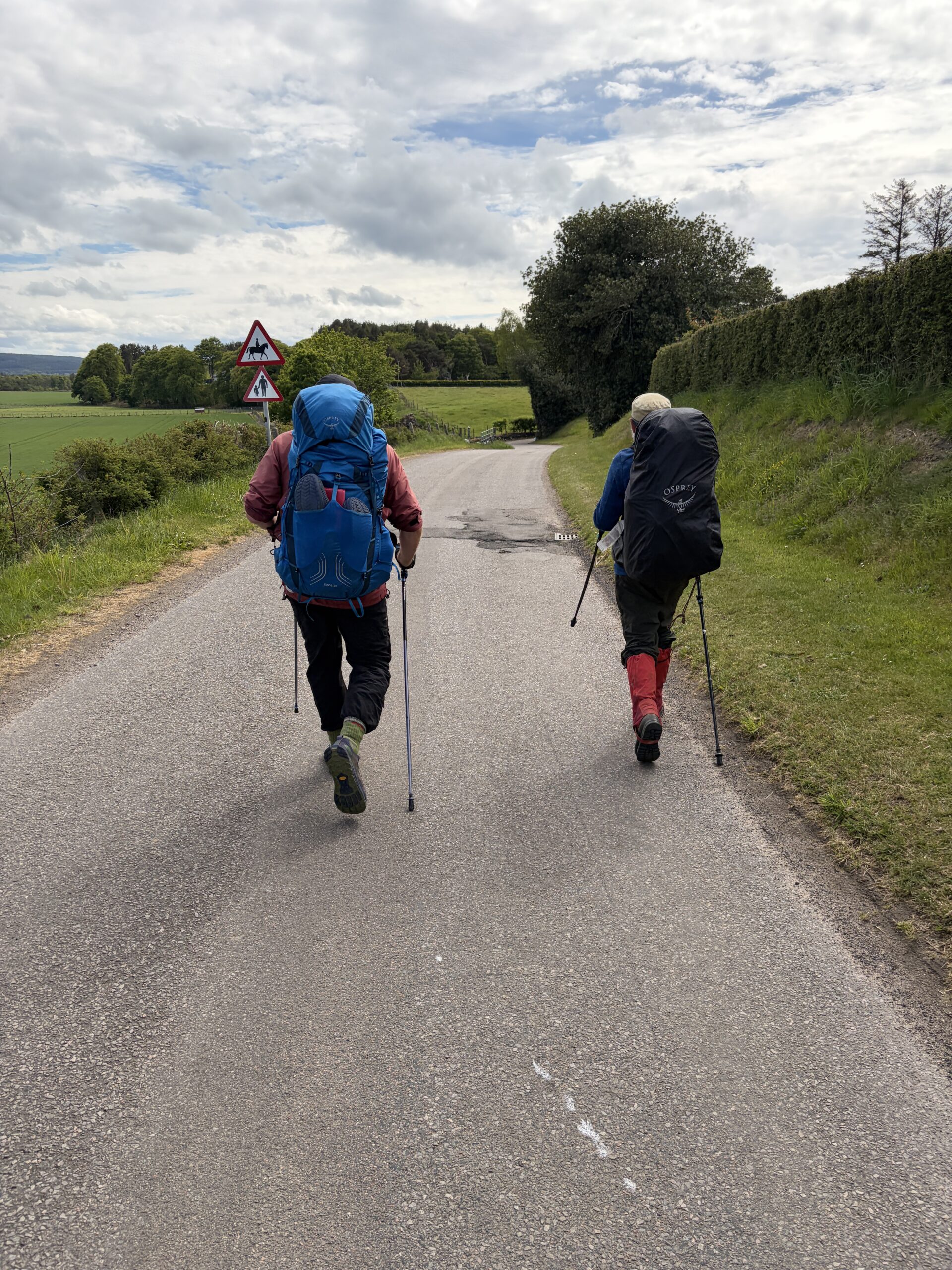
It had been clear all morning, however, that I probably wasn’t going to be able to keep Duncan and Charlie’s pace. I’d mentioned that to them out on the beach path. I said they should feel free to go on ahead. But they clearly didn’t.
As we undertook this long road walk, I was behind them a bit. Duncan was solicitous, several times turning around and asking how I was doing.
”Doing fine,” I said. “But you all should go on. Really. It’s the etiquette of the Challenge. Go at your own pace, and no hurt feelings if you leave someone behind.”
He, of course, knew this. I didn’t feel the slightest abandoned as they pulled away.
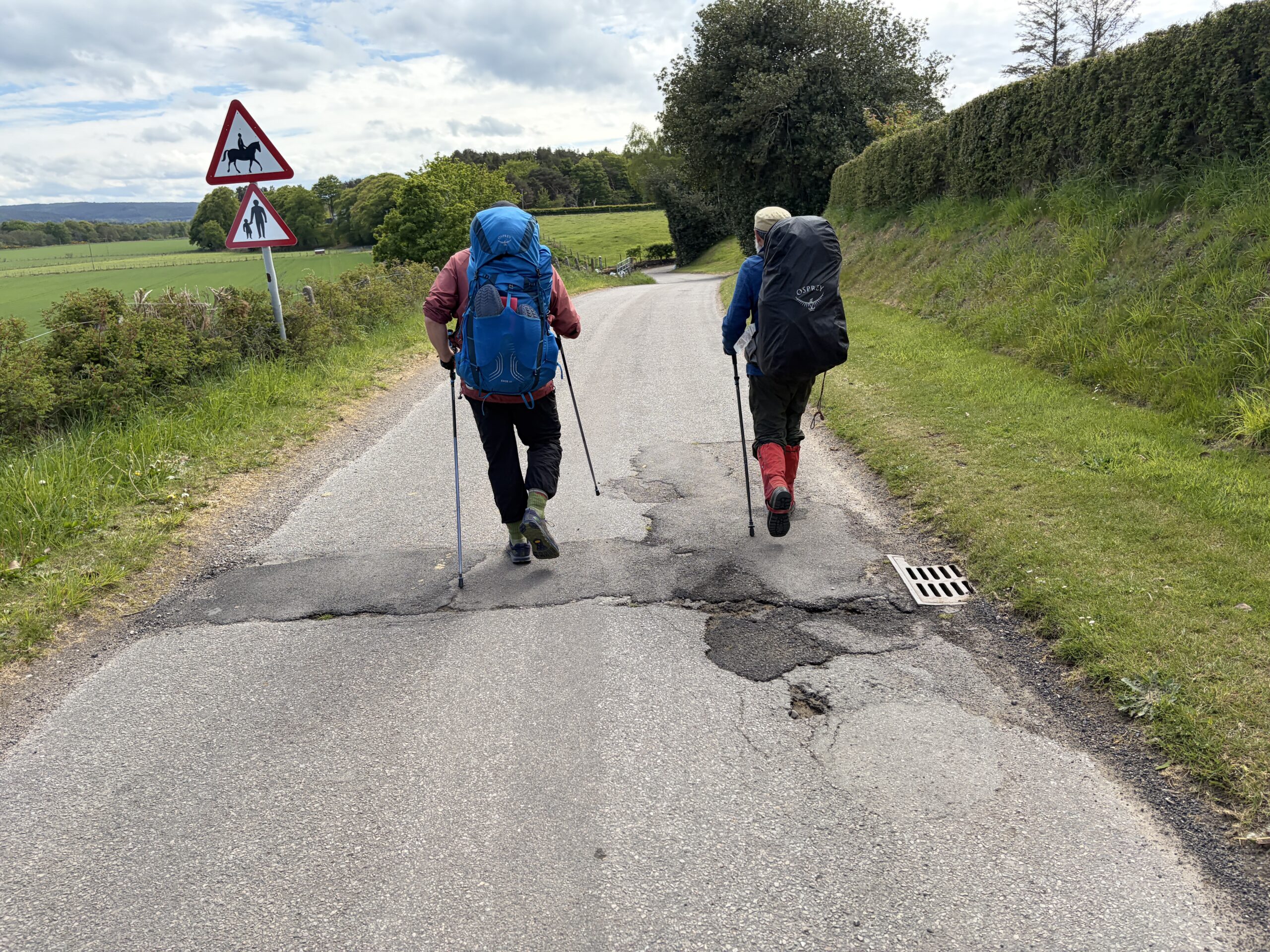
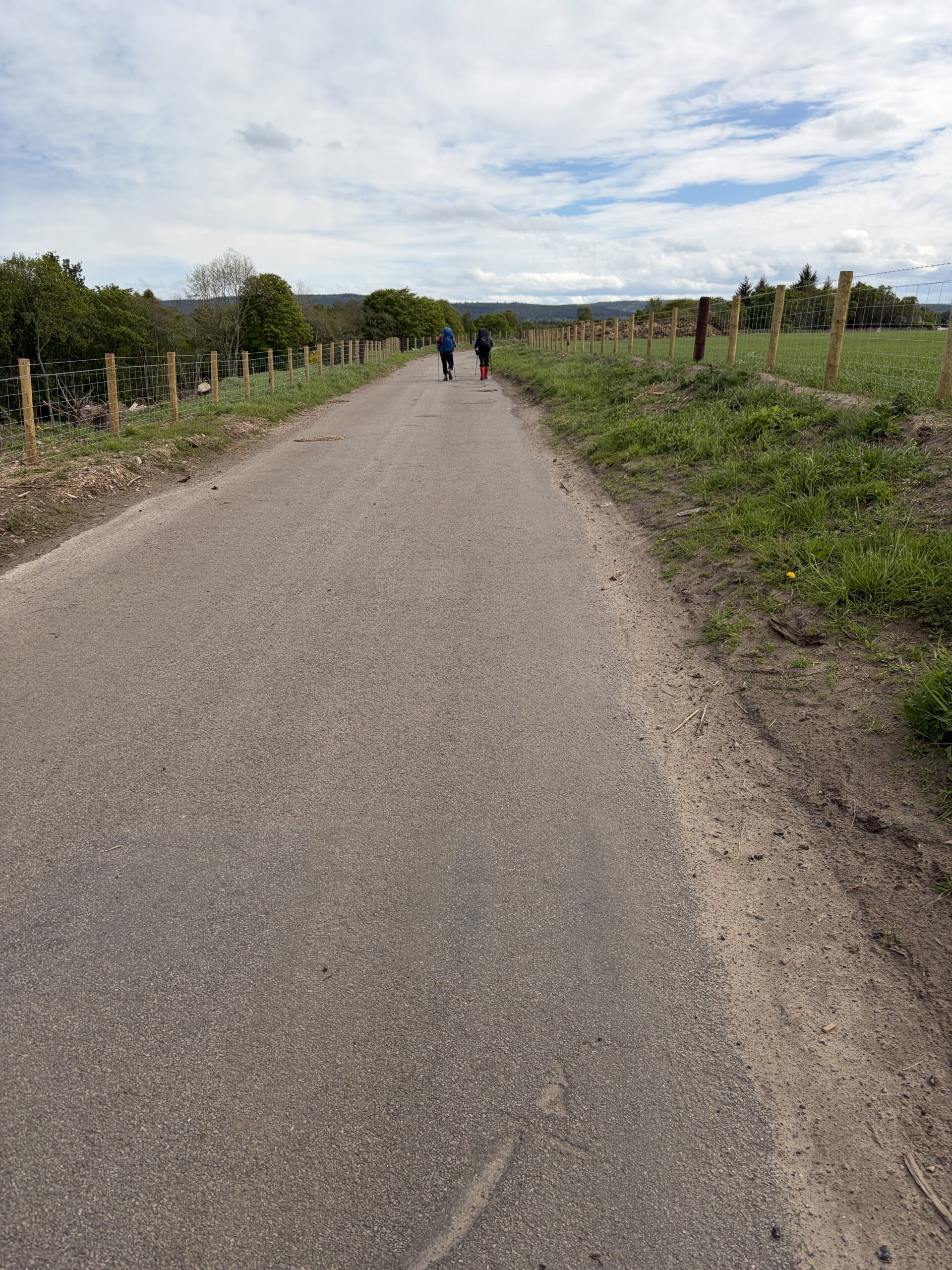
The winner of today’s Understatement Award, automatically qualifying it for Driest Understatement of the Week: “This necessitated walkers to go south four miles, cross the river on a highway bridge, and then walk back four miles to the coast trail.” A wee diversion, eh…?
Looks like the Moray Firth is 44 F now. Seems a little cold!