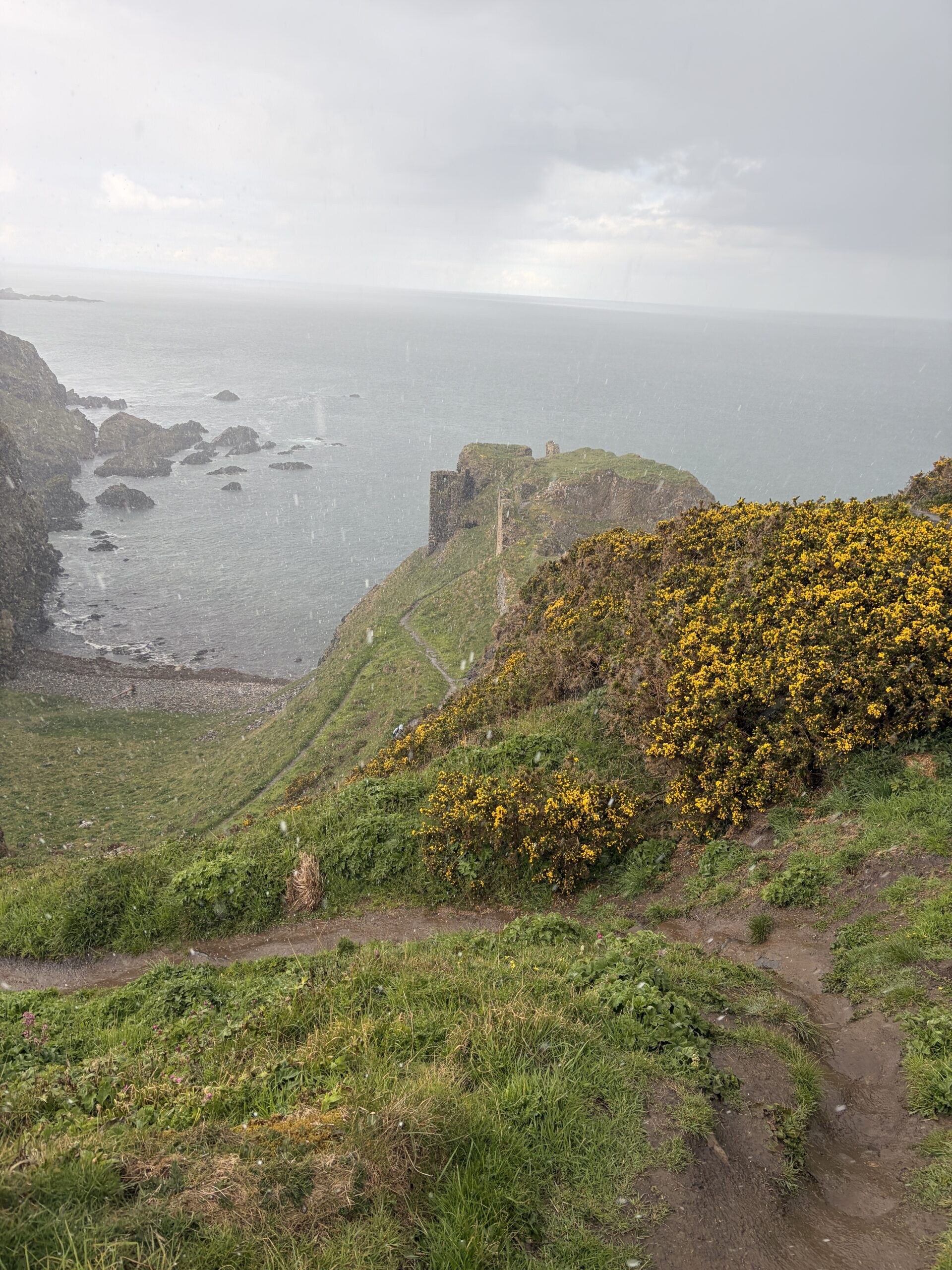
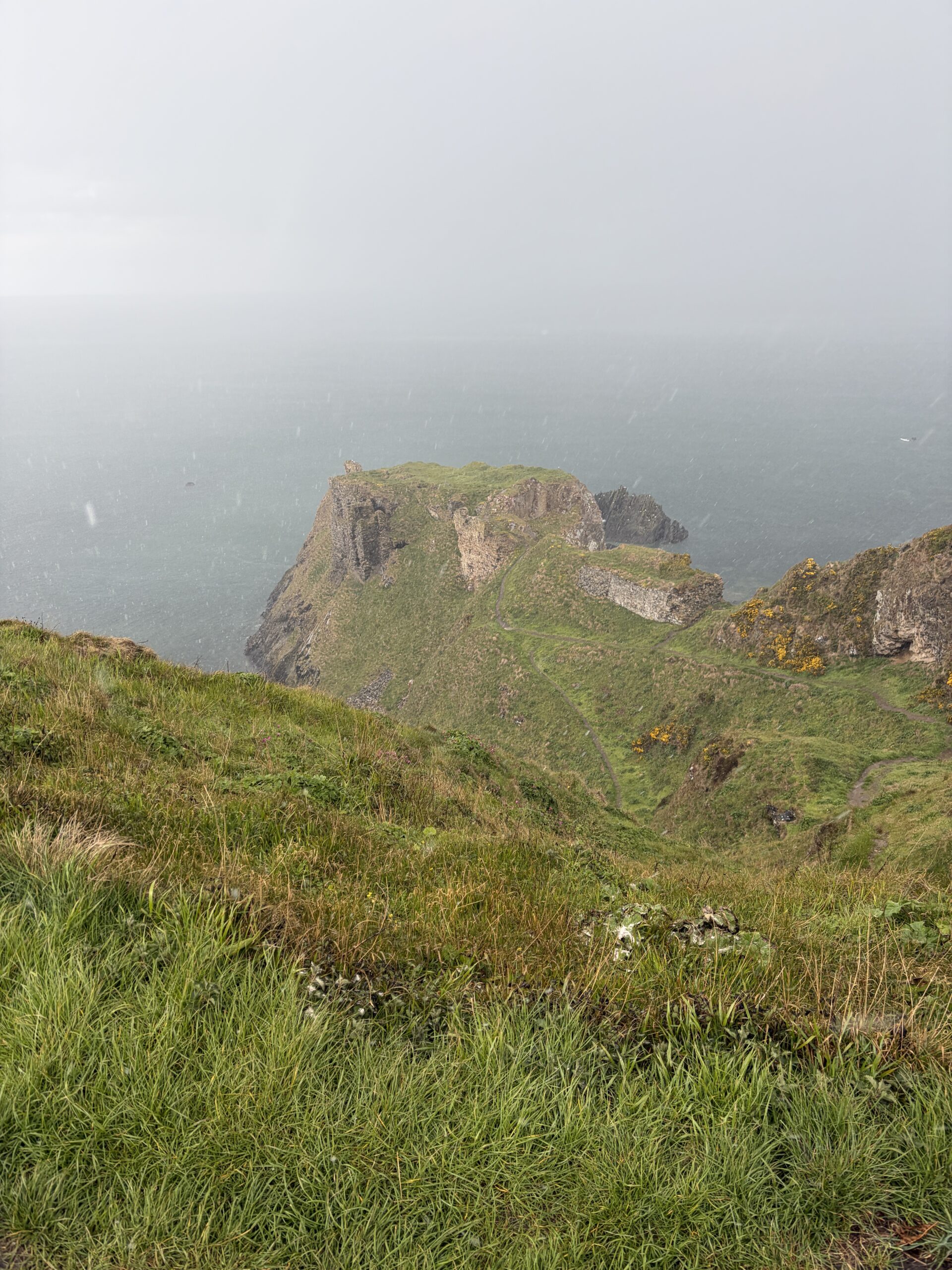
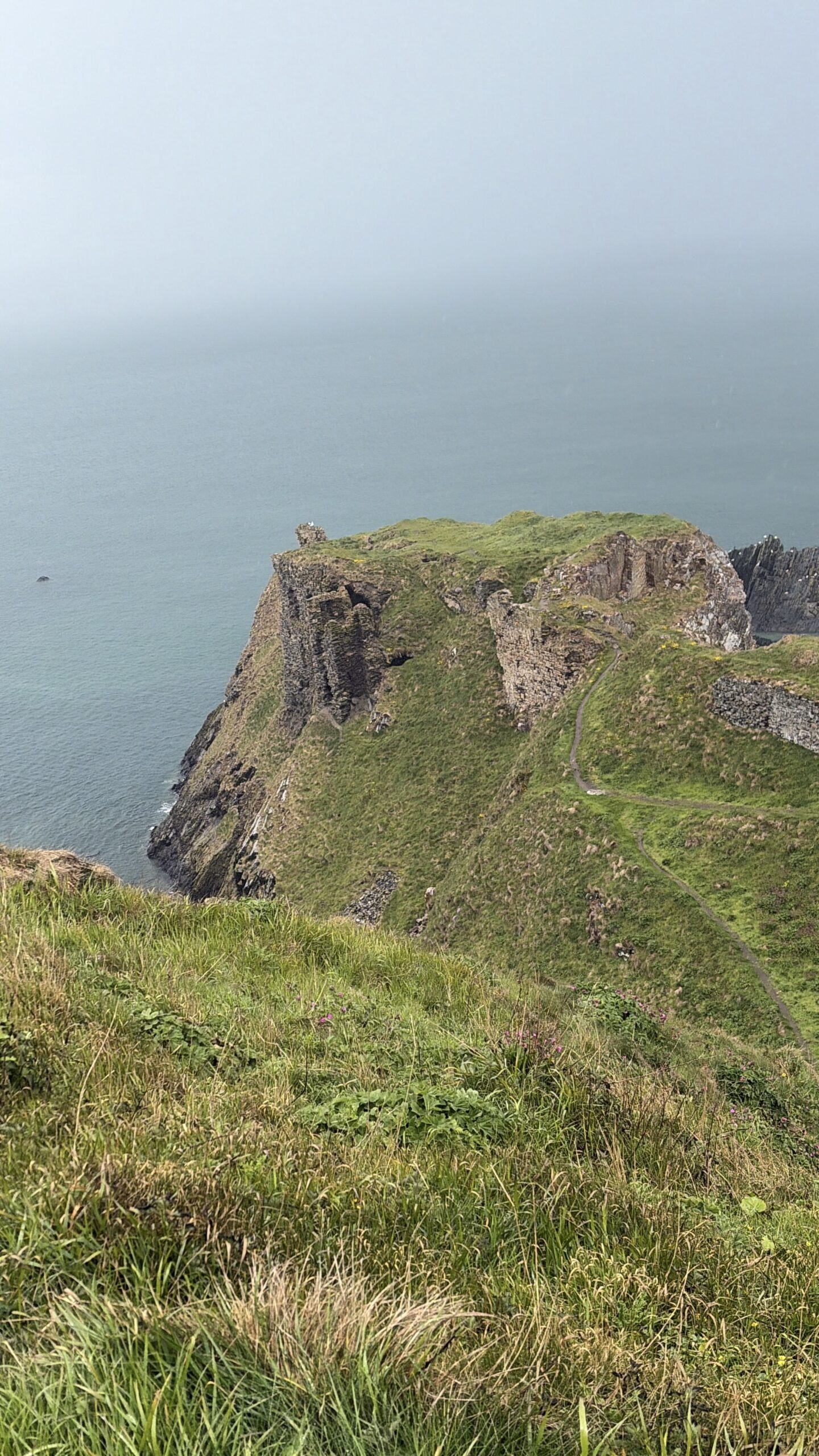
As I mentioned in my first post of this Challenge, one of the reasons I wanted to return to the Moray Coast was to see Findlater Castle.
When I did a crossing in 2016 that included parts of the coast, I looked longingly down on the castle from the cliff above. It was too late in the day, and I was too tired, to descend the embankment and explore it.
Ruined castles evoke the unknowable past and the impermanence of the works of man in an intense and romantic way. That ‘s why painters Iike Thomas Cole and Caspar David Friedrich painted them. I’m a sucker for those painters and for ruined castles, although I’ve only seen an couple of the latter.
In his book “Portrait of the Moray Firth,” Cuthbert Graham quotes an unattributed description from the 19th century: “The outer walls of several parts of the building are so founded on the cliffs as to correspond with the face of the precipice, so that the principal tower seems to hang over the sea, and from the windows of several apartments a pebble may be dropped into the waves.”
The royal license to build the castle was issued in 1455, but there may have been a structure there before then. No carriages could access the building, only people and horses. There was an unattached “forecourt” on the cliff above where transactions with visitors began.
The history of the place is complicated and bloody, The barony it was on changed families when a man disinherited his son. Fighting of course followed; the new owner was eventually captured and beheaded and the castle returned to the ownership of the original family, which abandoned it in the mid-1600s.
How were the enormous blocks of its walls cut and lifted into place? What were its rooms like? What was left when the last brazier was extinguished and ther owners moved to town (Cullen, in this case)? And what’s the point of it? No invading force would consider landing there, with harbors and coves east and west of it.
A visit wouldn’t answer those questions, but it would set the imagination wandering in a way pictures can’t.
I didn’t put on rain pants when I set out from Cullen (where, soaked and tired, I’d snagged a cheap hotel room at the last minute the night before). It wasn’t supposed to rain—a prediction I’ll never believe again.
By the time I got to Findlater Castle two hours later light rain had turned to hail. The hail then stopped and was replaced by the first real downpour of whole trip. My hiking trousers and boots (and socks, of course) were soaked.
I took off the pack and left it on a bench on the cliff top and started down to the castle. Soon it was clear that the two trench-like paths had become freshets of mud and that footing, even aided by trekking poles, would be impossible. The only thing worse than being soaked is being soaked and covered with mud, I thought—that is if I didn’t slide down and over the edge.
I saved Findlater Castle for another life.
Of course, by the time I got back to the top and put on my pack the storm was clearing. The castle likes to keep its secrets, whatever they are.
hitting yo k
I walked on and by mid-afternoon the sun was out as I passed the hamlet of Wester Whyntie, which consists of a single duplex building. Both front doors were open and it seemed to be under renovation, although I didn’t see anyone.
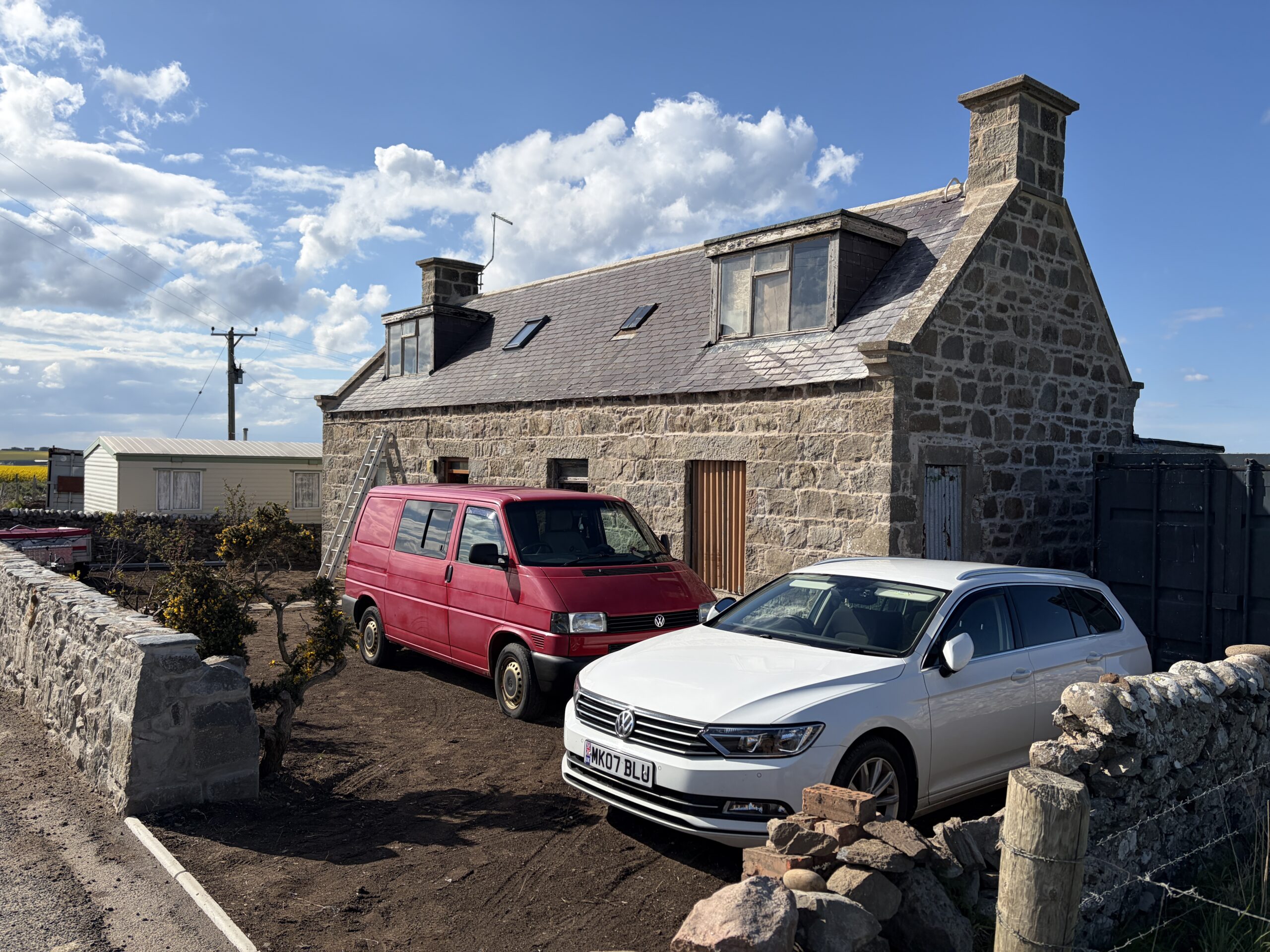
I stopped because there was wall in front of the house where I could rest the pack and get it off easily; also a place to sit when that was done. I sat in a tired daze (but no longer soaked!) for about 15 minutes before a man wearing a tool belt appeared.
“Checking to see if you was all right,” he said in an accent that wasn’t Scottish and was harder to understand. I told him I was okay, and he invited me in. His name was Mike; he didn’t want to give his last name.
Formerly a warehouseman, Mike is from Norfolk, England. He and couple he’s friends with had been looking for a house in the country to renovate and move to for several years. They looked in Cumbria and then in Yorkshire but couldn’t find something they could afford, (Mike insisted it had to have a roof on it at time of purchase.) So they started looking in Scotland, and found this place for about 100,000 pounds.
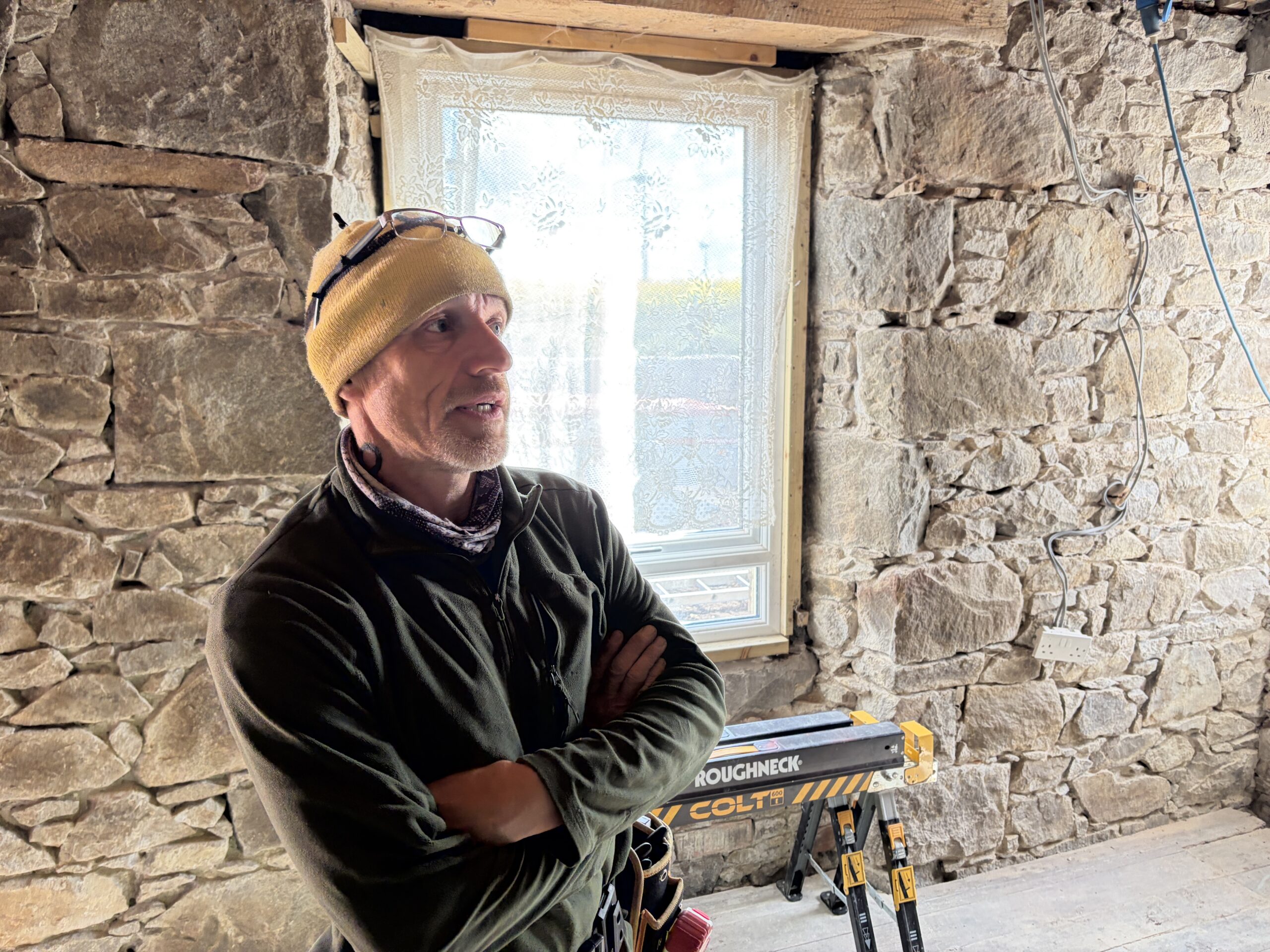
An old woman and her son had vacated it two years earlier. They were hoarders. Mike and the couple made periodic trips up to clean out the place before moving up last fall to work on it full time.
“You couldn’t get some of the doors open the whole way. Things was stacked to the ceiling,” Mike said. They filled seven dumpsters “and we had a fire burning rubbish for six months.”
A room at one end of the house had been used by domesticated and then wild animals. The floor was rotting away and it had an unmentionable smell. They found nothing of value, although Michelle, the wife of the couple, said she kept a “mangle”—an old-fashioned machine that squeezes the water of washed laundry between two rollers.
“I liked that. I’m going to get it restored,” she said.
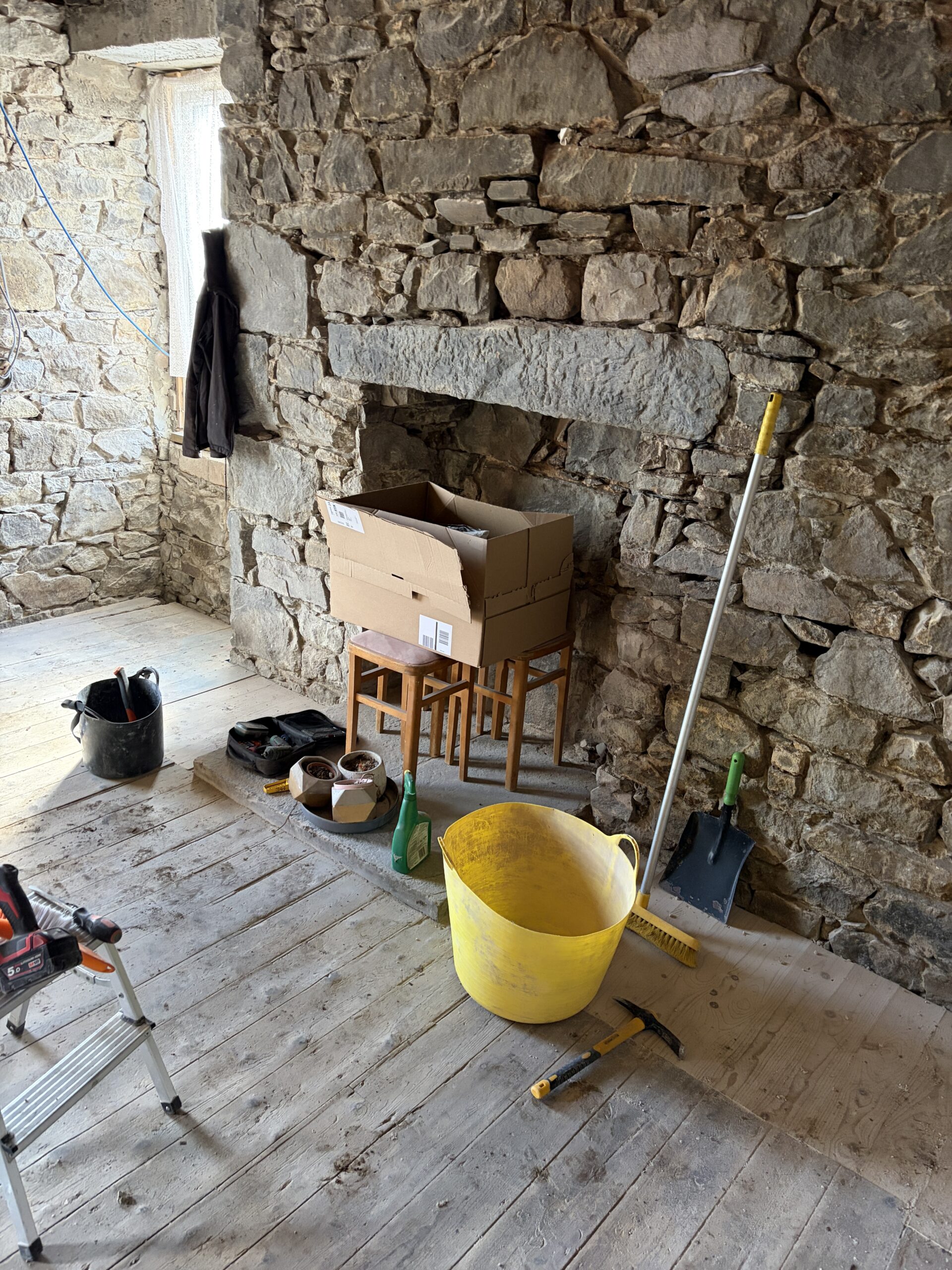
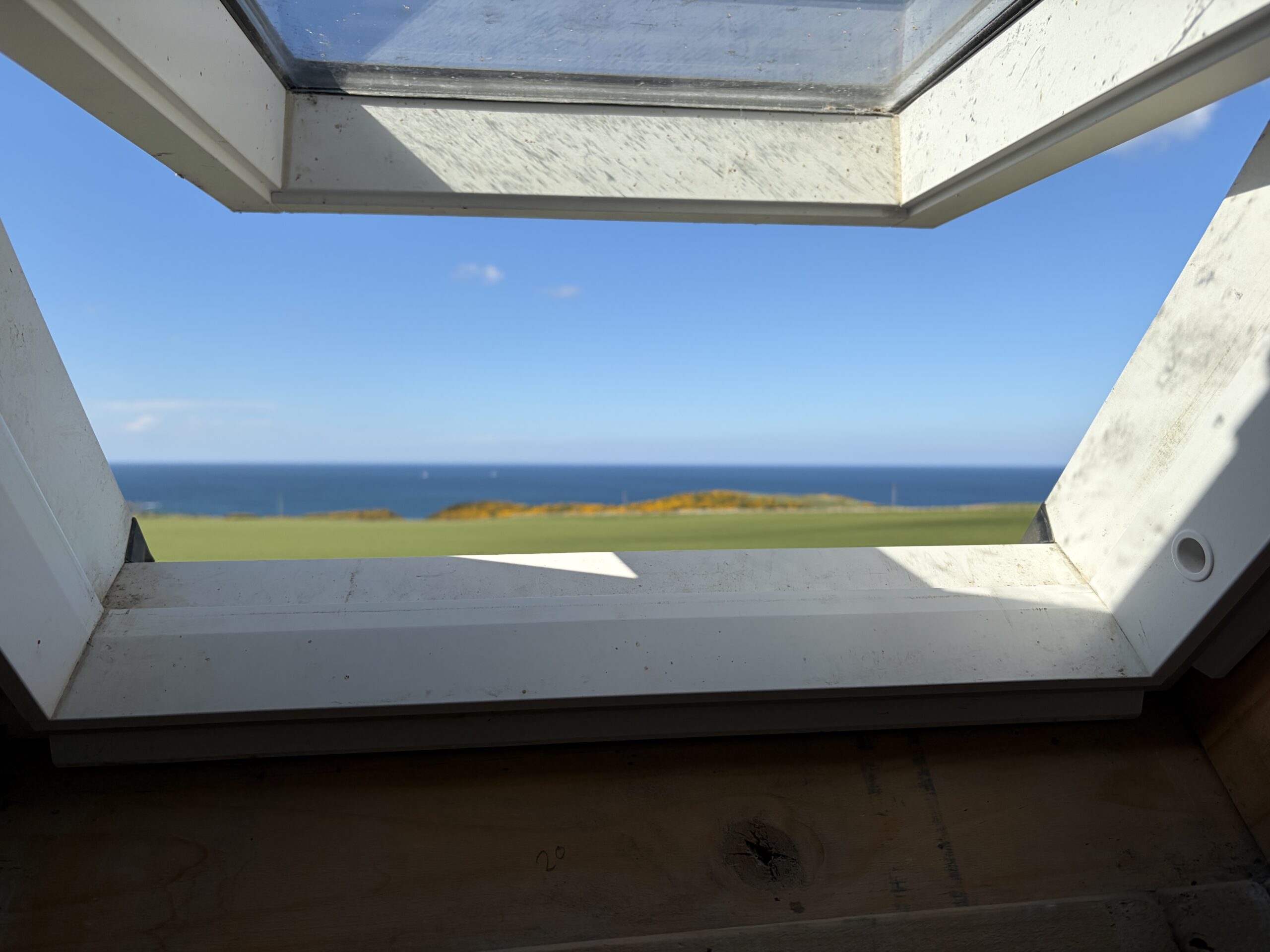
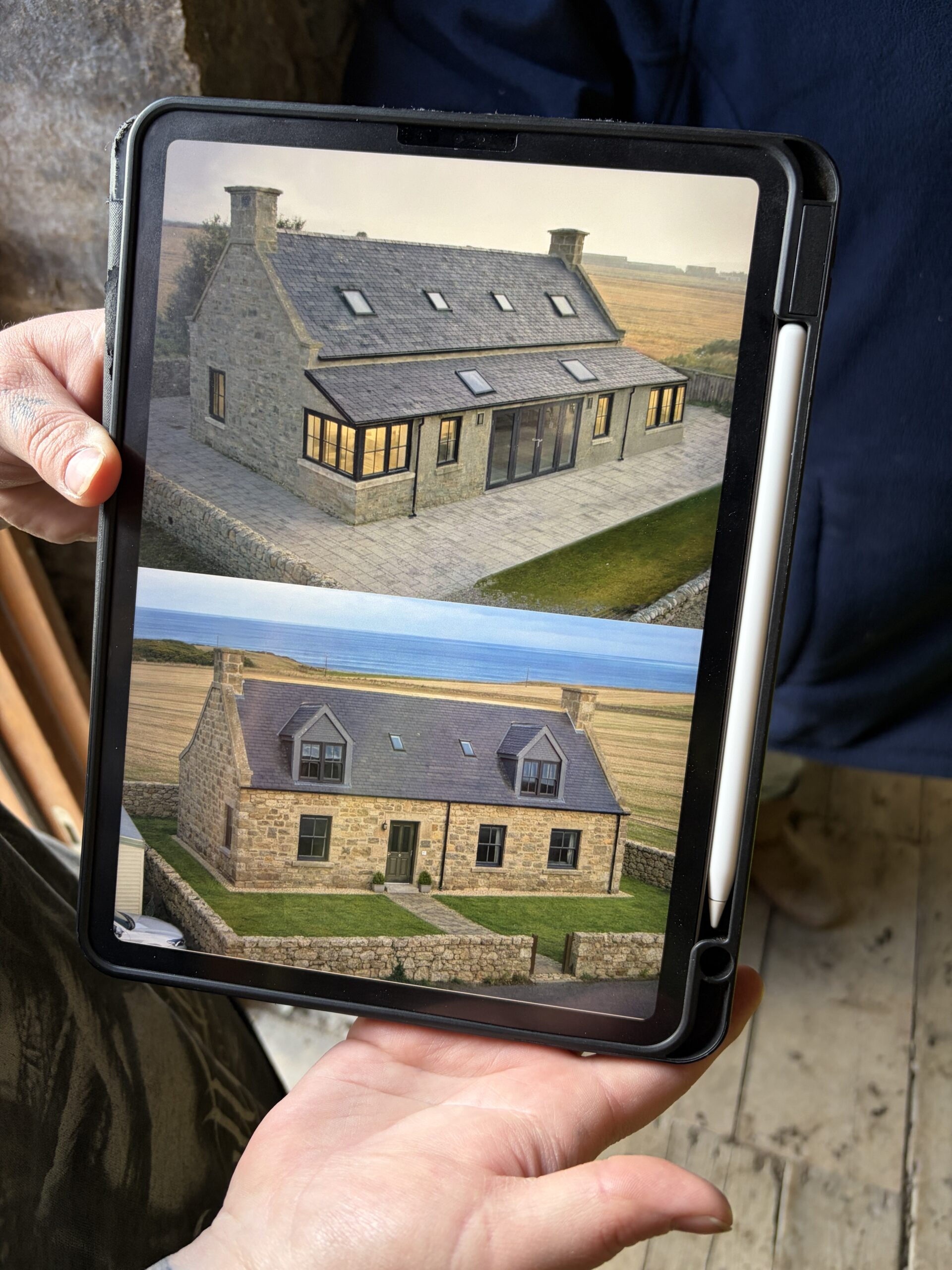
They’re turning it into a single, shared house. They’re putting in bigger windows upstairs to make the most of views of the sea.The couple have two children—a young man and woman—who will live there, too.
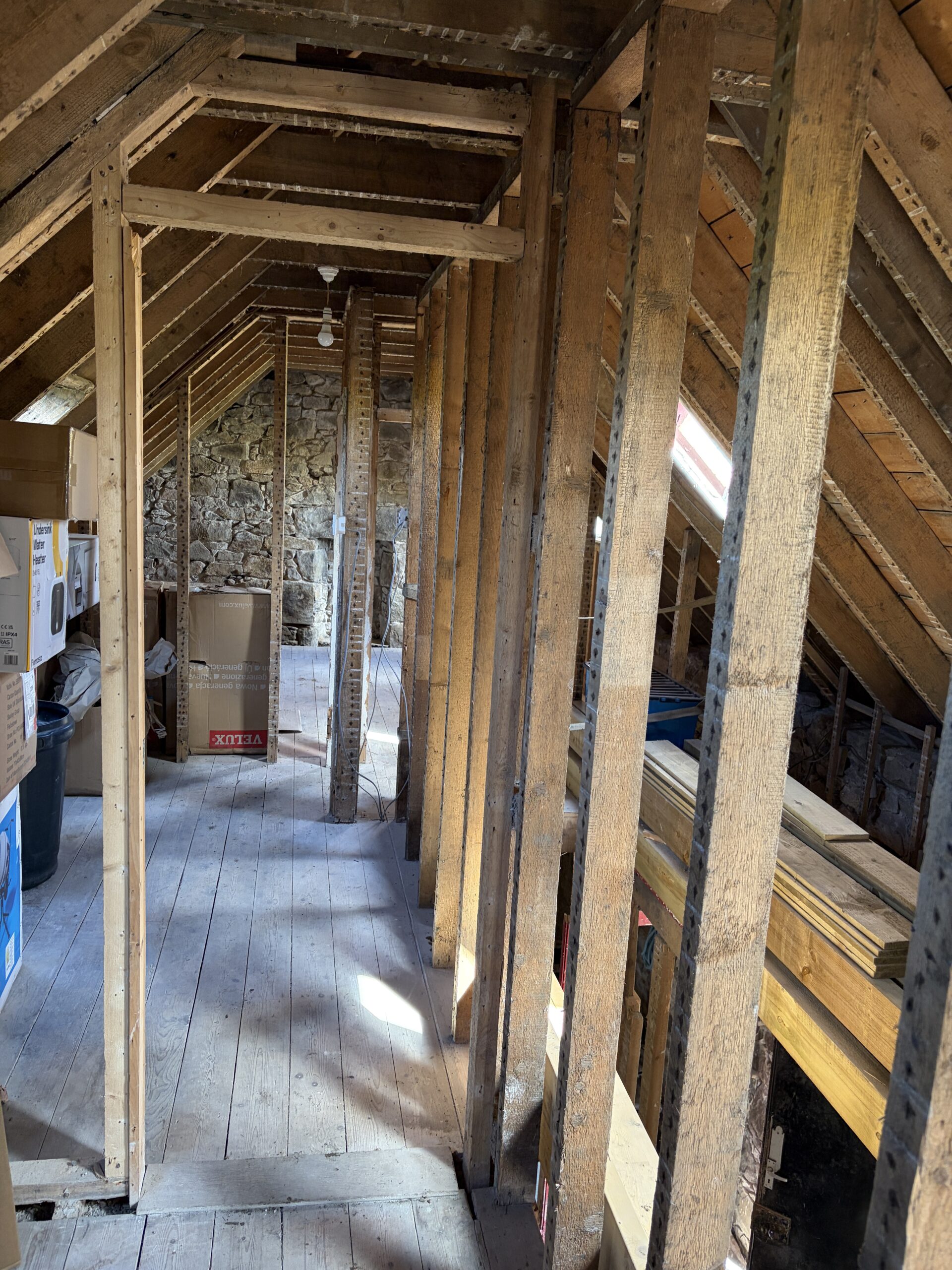
Except for where they’re changing the slope of the roof with the help of a builder, they’re doing the work themselves, learning what they don’t know as they go. They’re even moving the staircase.
I asked who is designing the new structure. Mike said it was Michelle.
”It’s all in her head. She’s brilliant,” Mike said.
”It’s all in my head,” Michelle confirmed. But her daughter is a tattooist, so can draw, and has helped (along with some online programs) with coming up with written plans.
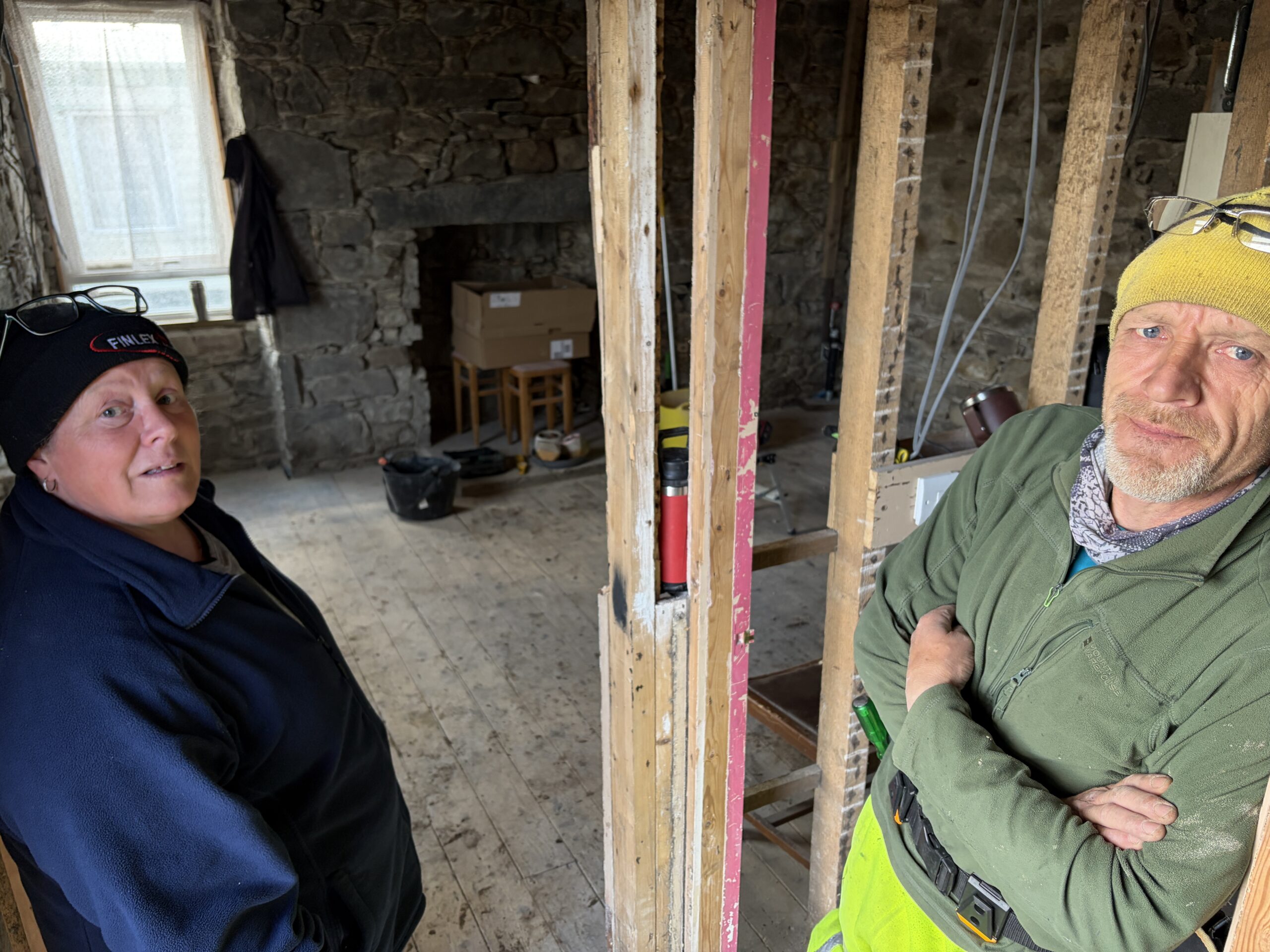
I didn’t ask about ownership, where they were getting the money for all the work, or where they were staying in the meantime. Even if they were willing to tell me, I didn’t have the time. I’d already stayed an hour and it was time to crack on.
Wester Whyntie Cottage will be beautiful when it’s finished, and like Findlater Castle a miraculous feat in its own right.
So many surprises to discover! Renovating a stone house by the ocean….what a dream. Finally able to catch up on your travels! Started watching Outlander a few months ago, so to be walking on the battlegrounds of Culloden must be pretty haunting and powerful.
What a sweet wee hiouse by the sea! Good on you Mike; Good on you Mike.
AndDavid Old Fellow,
When might we aee you?
How do you plan to arrive at Colintraive?
Could you ive us. ring? 01 700 841 220