The people who reviewed and approved my route, John and Sue Tattersall, had walked the Moray Coast on their TGOC crossing in 2025 and had lots of helpful suggestions. One was for a possible camping spot for my last night out—the Mill of Nethermill, about 14 miles from my ending place, the fishing town of Fraserburgh. It had holiday rentals, a pottery studio, and place for camper vans and tents.
I contacted the owner, William Pitt, who told me they’d stopped the camping part of the business because of bad behavior by customers. But he said I could pitch a tent on his lawn.
He mentioned he’d grown up in Maryland and said he looked forward to offering me “some mid-Atlantic hospitality,” which I didn’t know was a thing. I looked forward to meeting him and hearing what had to be a story worth telling.
First, however, I had to get there.
I left the golf-course campground just west of Banff, walked the coast to MacDuff, a town with a non-tourism commercial sector—shipbuilding and repair—and on to a place called Tarlair Pools.
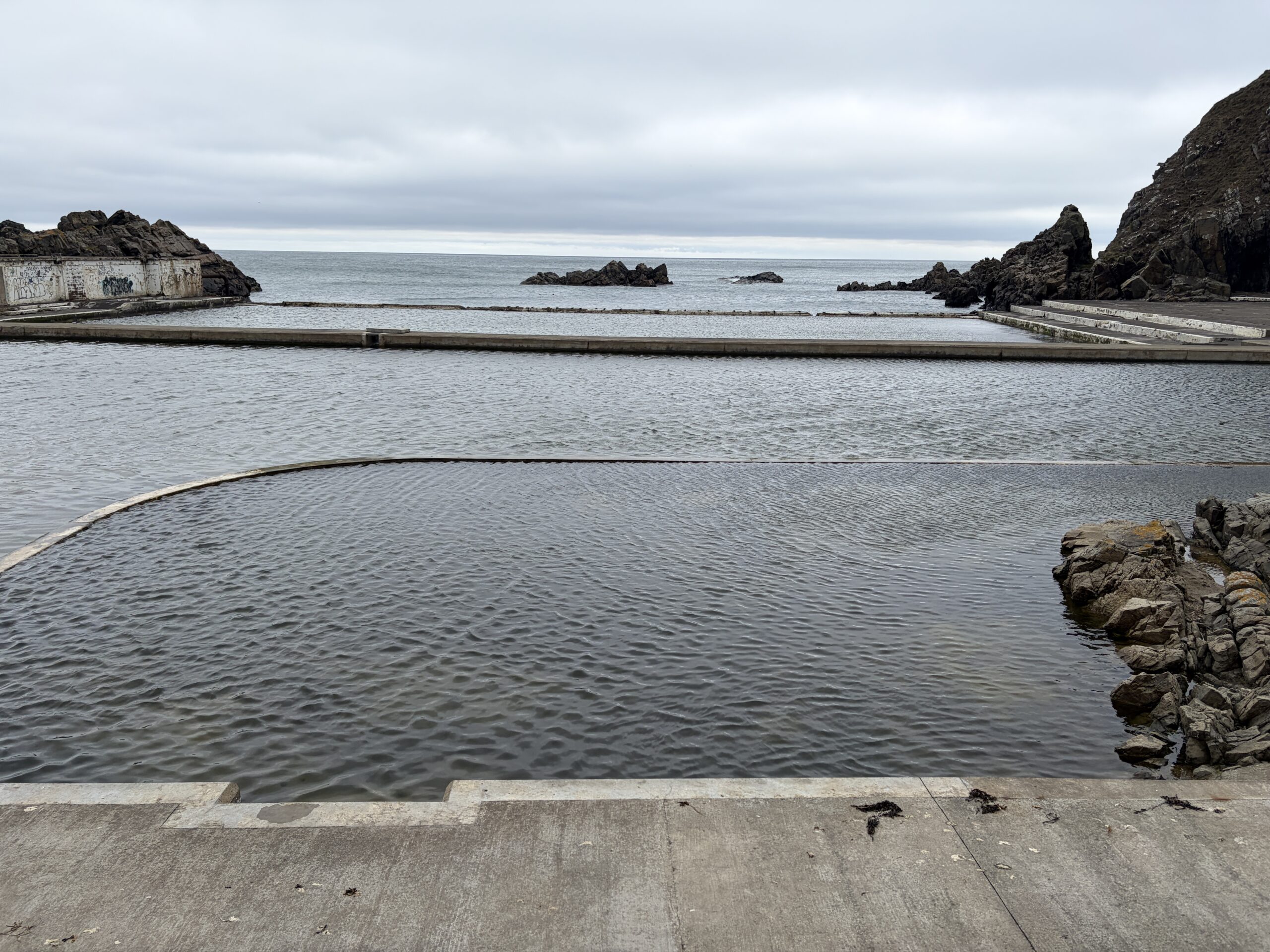
It’s a pair of tide-fed pools that is currently closed, but being rehabilitated. In my experience, these self-filling and self-emptying swimming venues are good ideas that don’t survive a couple of big winter storms.
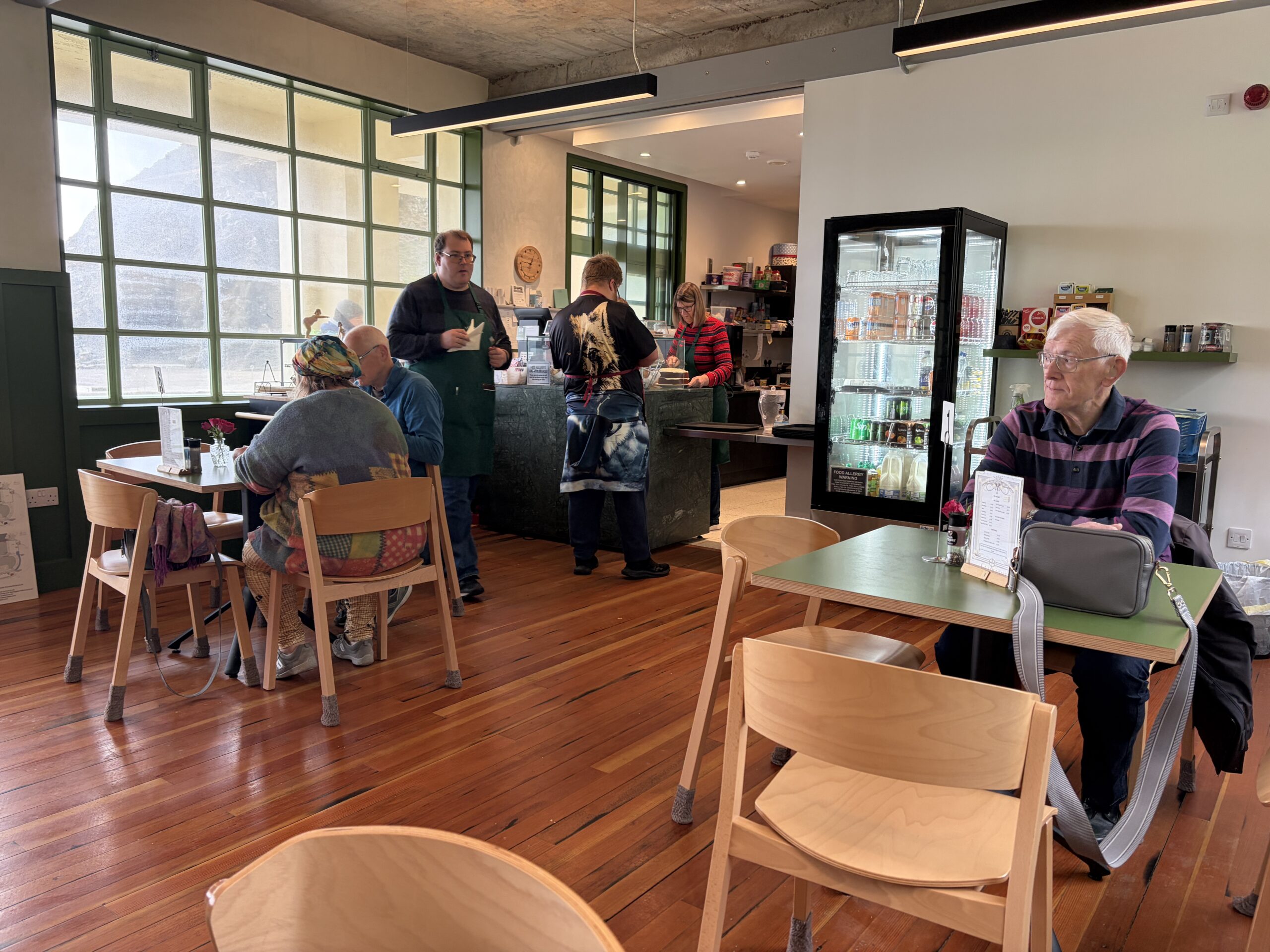
Of particular interest to me was a cafe where I could have lunch, two cups of coffee, and a scone.
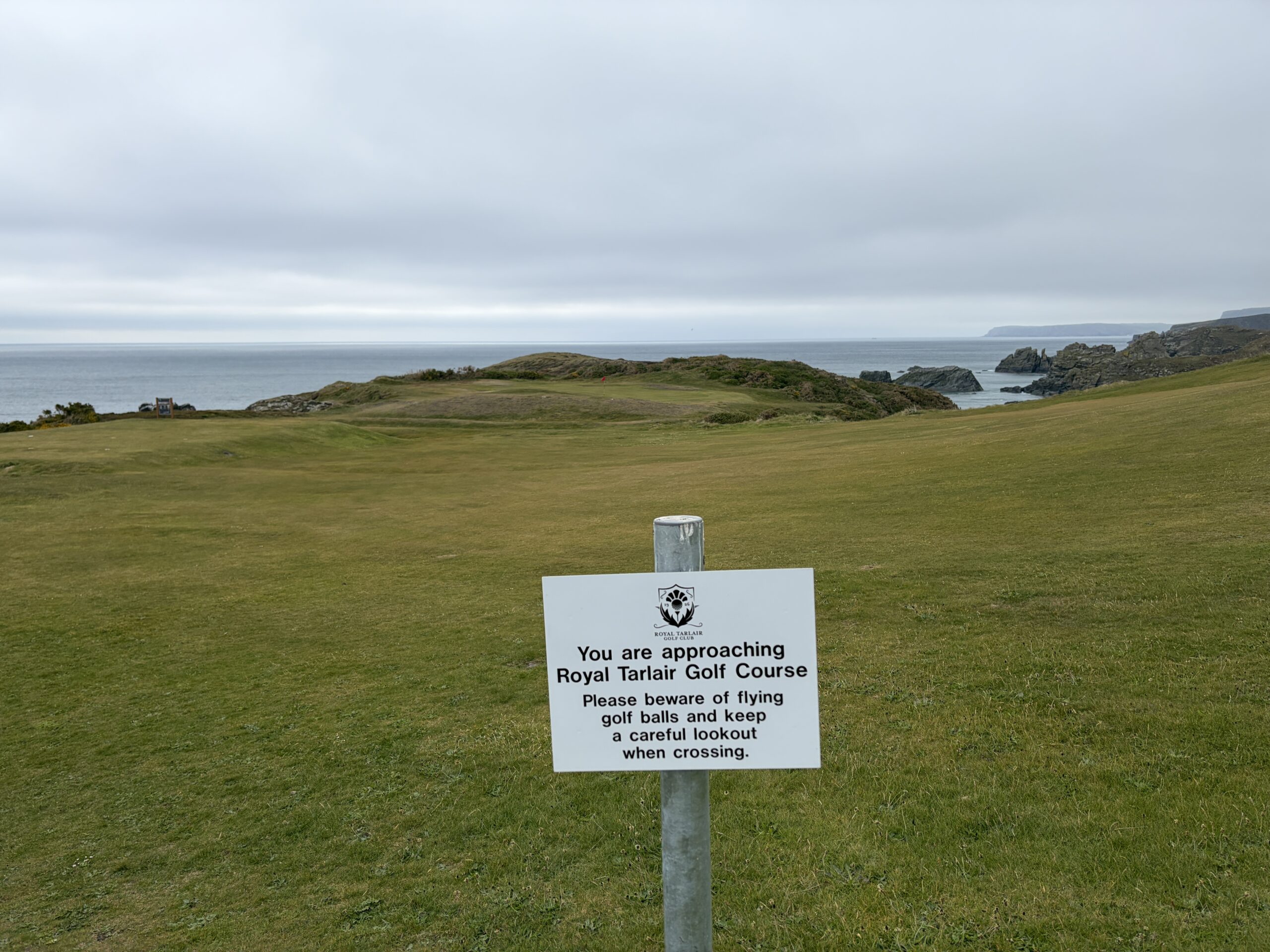
The cliffside trail beyond was in poor repair, and it was windy and cold, so I decided to go inland, which required a climb up a path to the plain above, which happened to be the Royal Tarlair Golf Course.
To my surprise, I saw no golfers. I’d seen them in worse weather on other courses I’d passed in the crossing. If you like golf links, can hit reasonably straight, and don’t mind walking—there are no golf carts—the Moray Coast is the place for you.
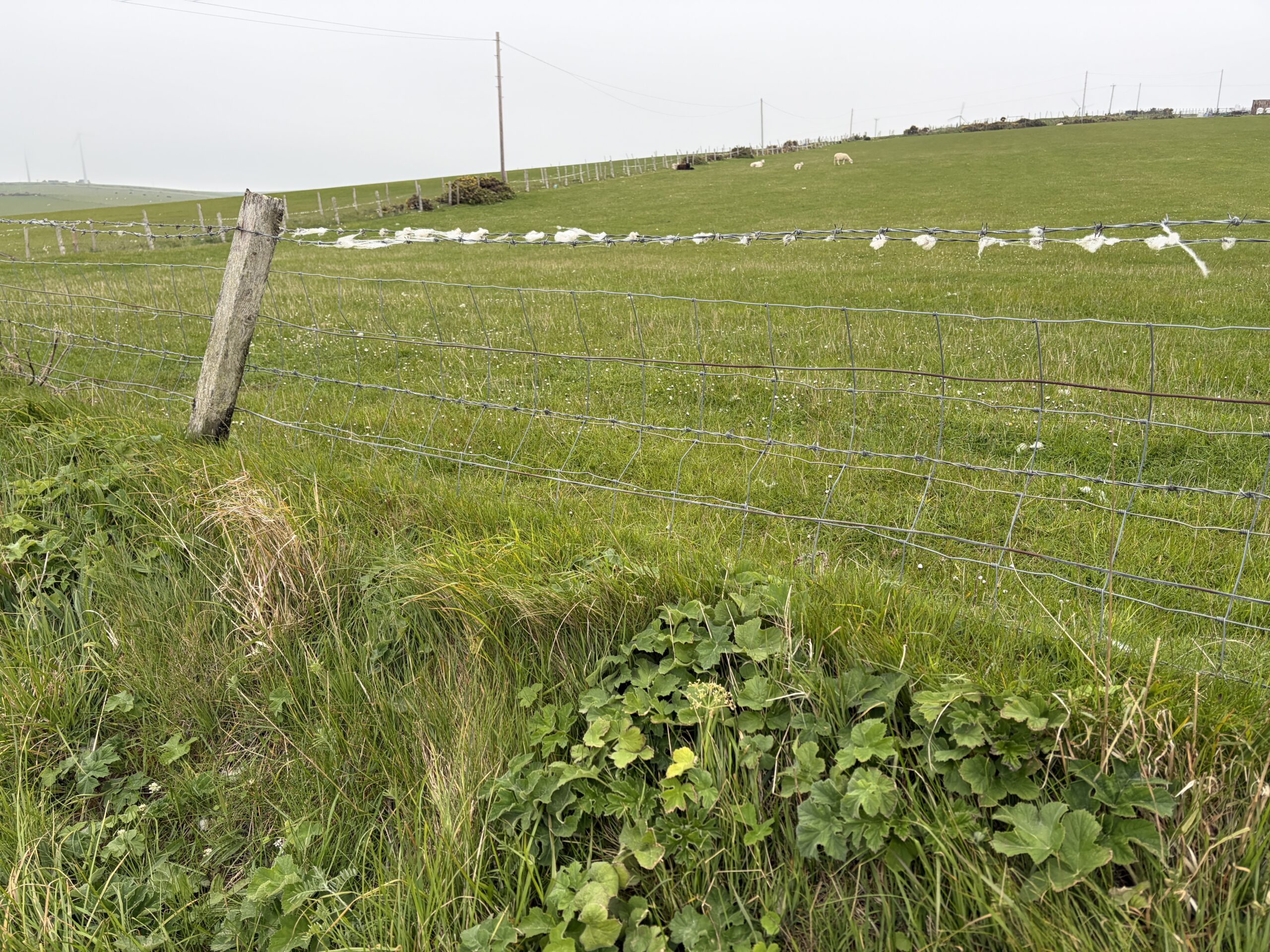
It was cold and very windy. These tufts of fleece snagged on barbed wire are standing horizontal in the wind.
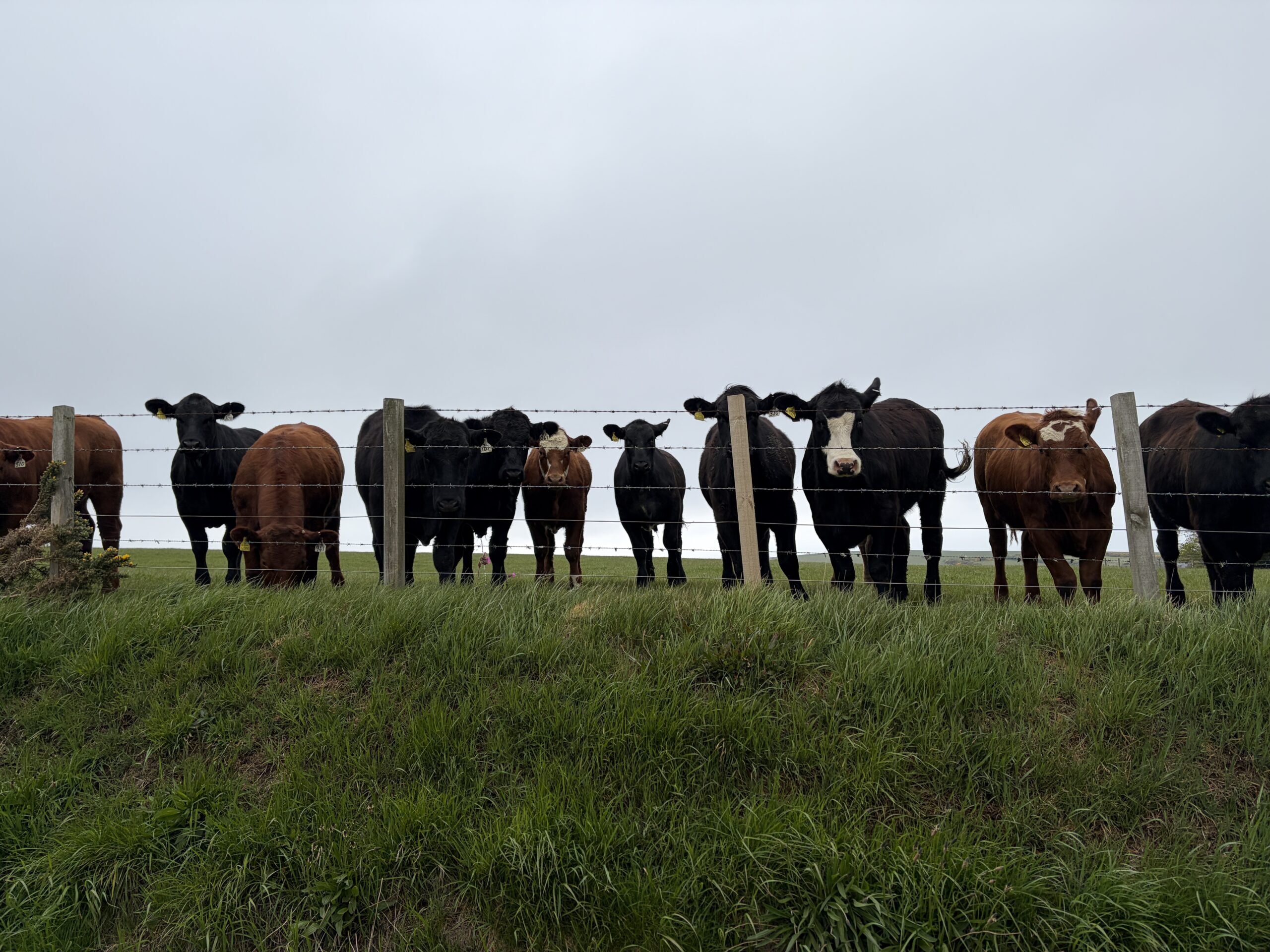
Cattle are a combination of curiosity and skittishness.
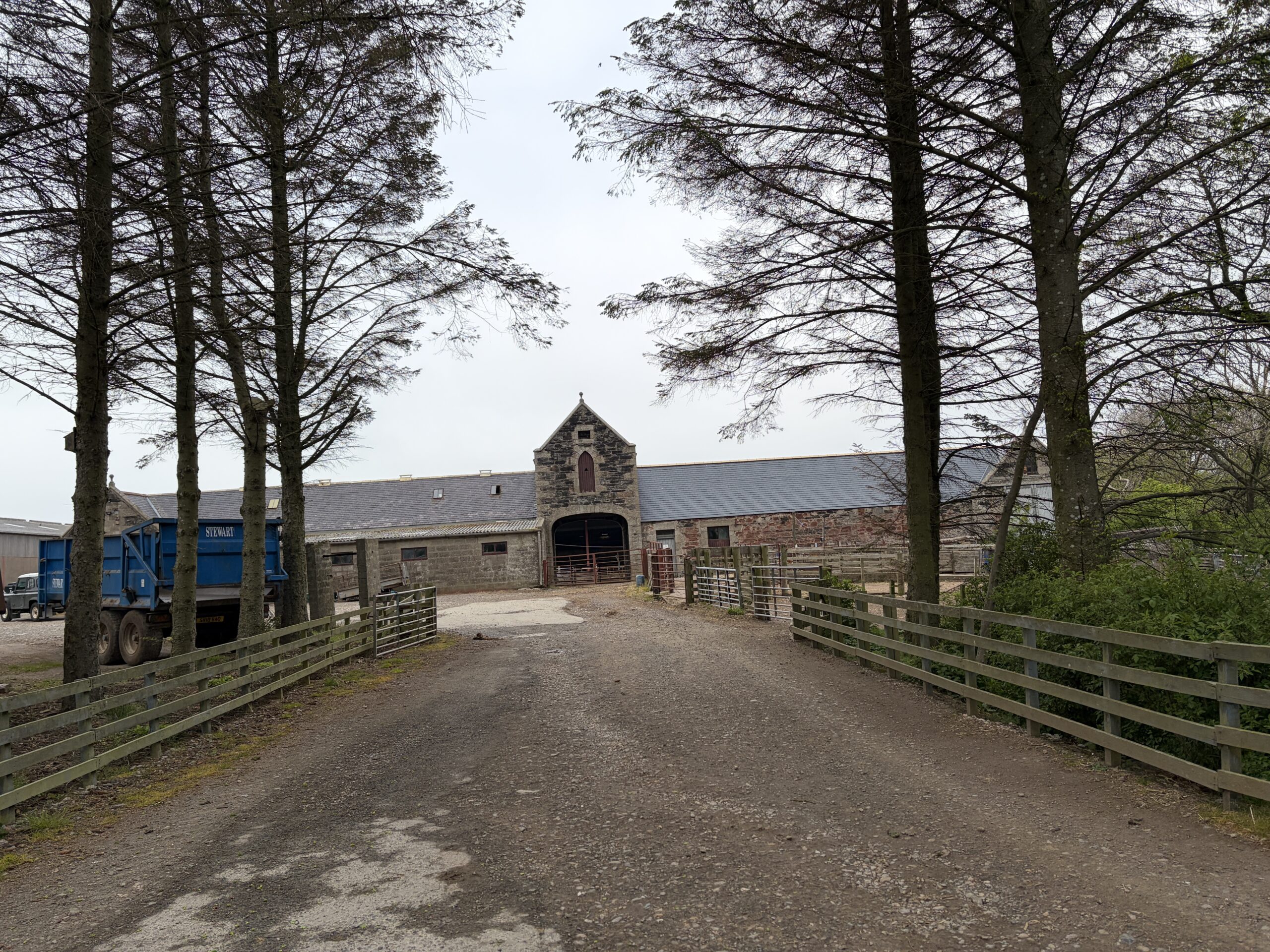
This stone barn with a central tower is a design you’d be unlikely to find in America.
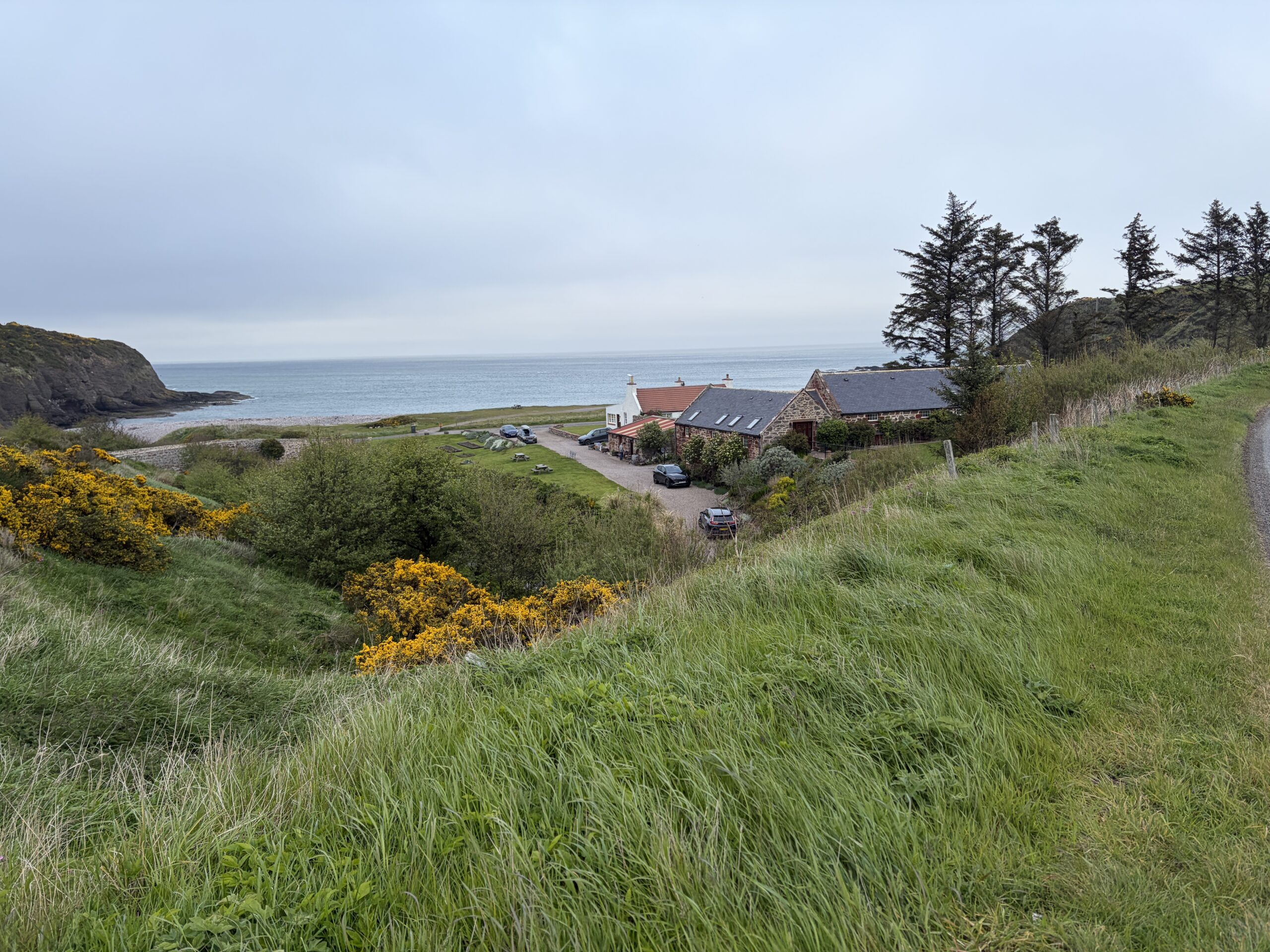
I eventually approached the Mill of Nethermill—“the mill below the mill.” (There must be a story there, too.) It was below the brow of the coastal plain, a cluster of buildings with an arched stone bridge built in the 1700s, now closed to vehicular traffic. I was tempted to take it and save a few steps, but I opted for the official entrance.
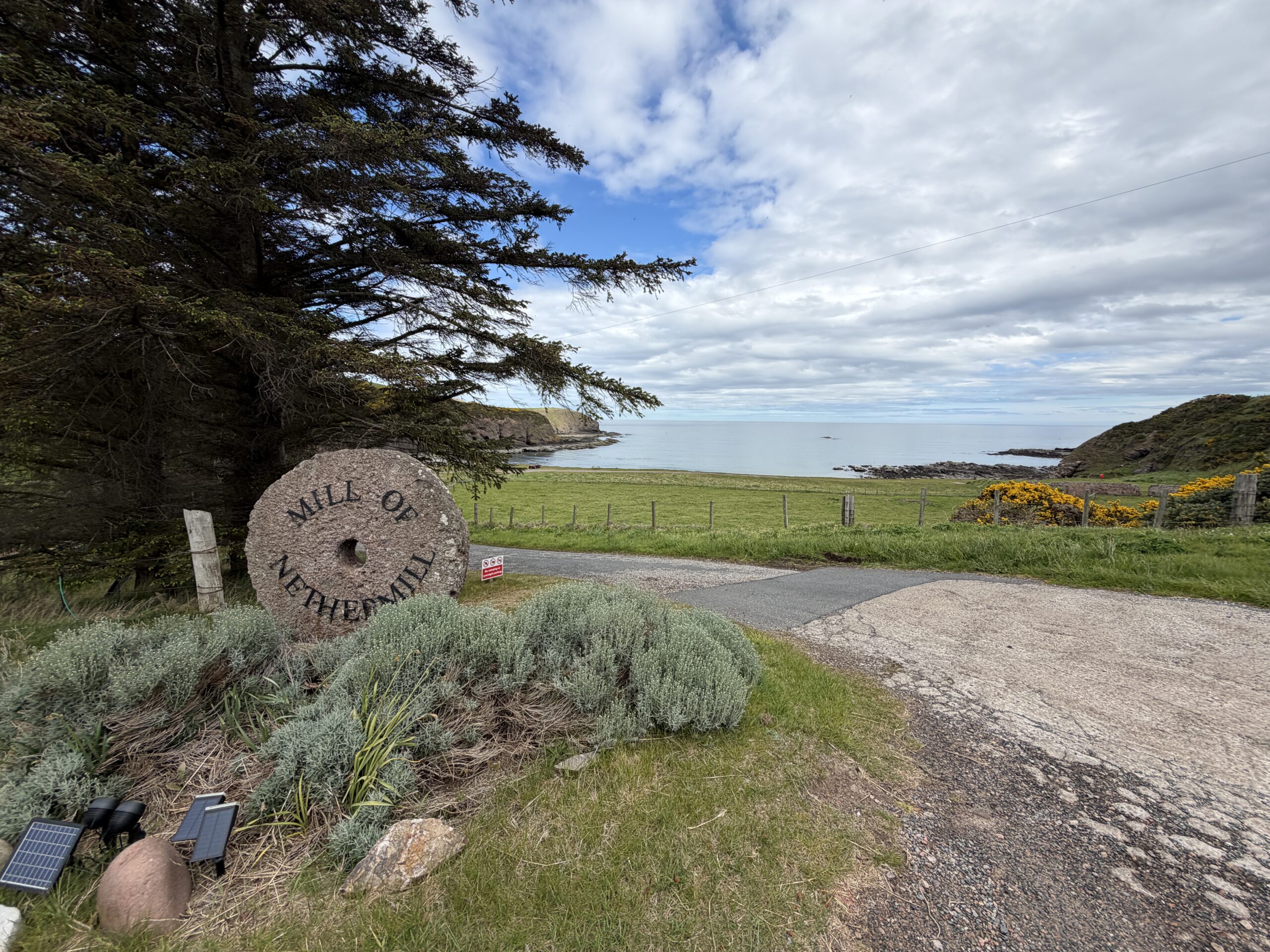
I’d texted Bill Pitt of my approach. He was waiting for me.
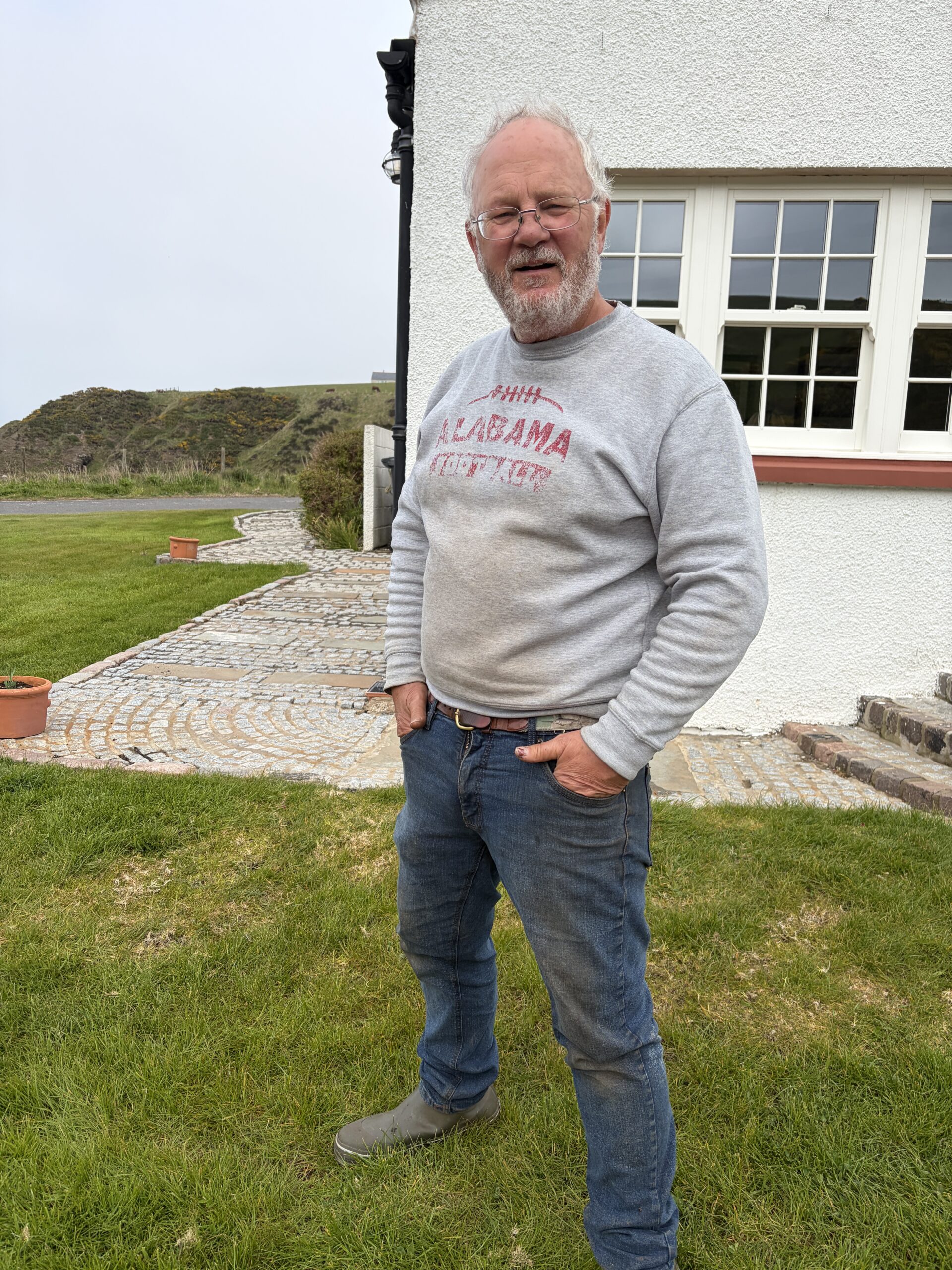
We exchanged pleasantries. I refreshed him with my 25-word autobiography, and also my interest in hearing how he got there. We agreed that the morning would be the better time to talk. He directed me to the closed tenting grounds (which he and his wife, Lynn, have decided to reopen) and invited me to find a pitch and return about 8.30 in the morning.
It was a beautiful place to spend the night–a crescent beach bounded by the apostrophe of rocky cliffs, with a clear view to the Moray Firth. In the winter there are often Northern Lights, Bill said, but not now. Because of the perpetually cloudy Scottish skies there weren’t any stars either. I haven’t seen the moon in two weeks.
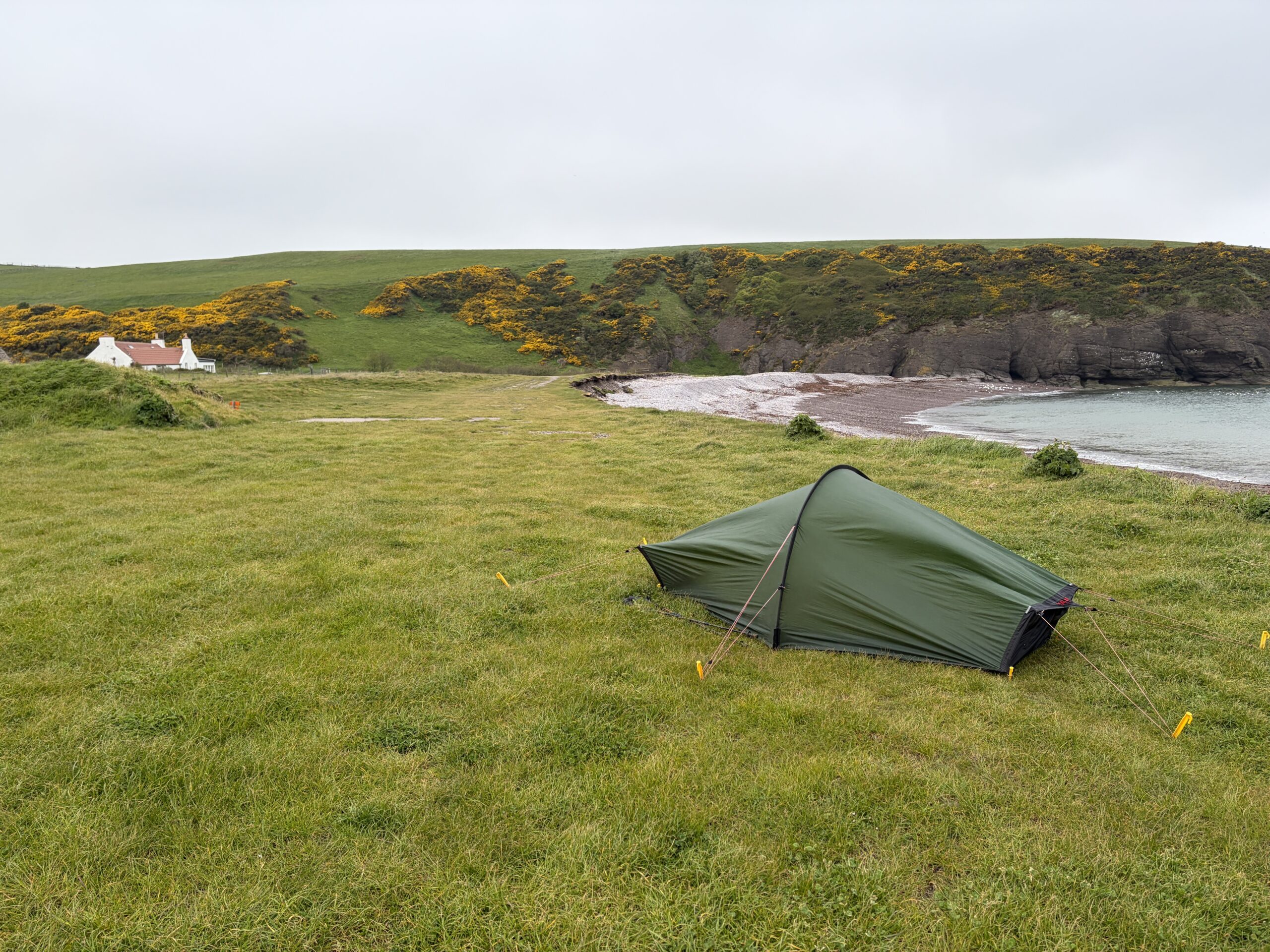
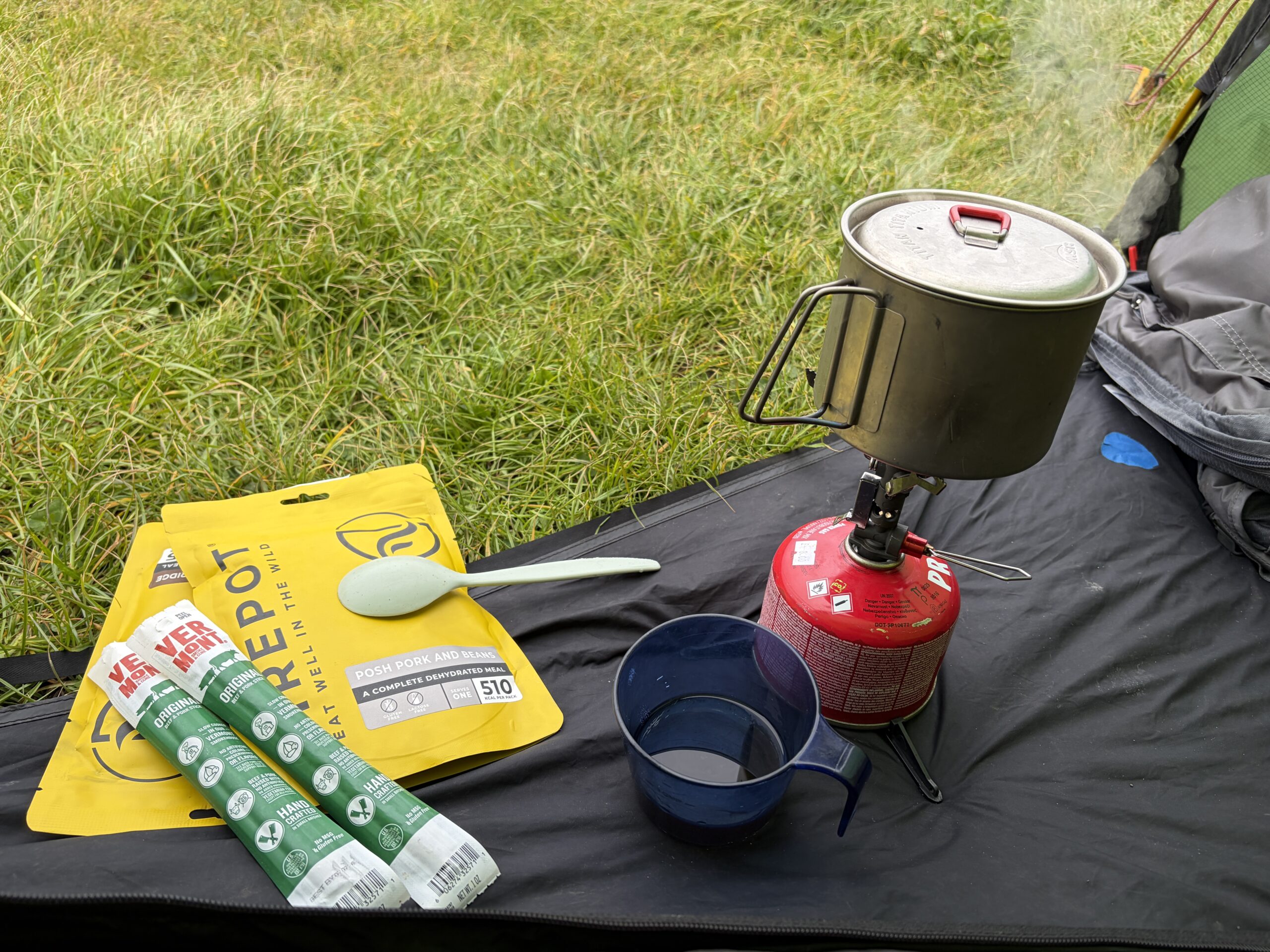
It was a good place to have “posh baked beans,” especially if they are accompanied by Vermont smoked meat sticks and a wee dram of malt.
Bill and Lynn Pitt have a long and interesting story, full of small but consequential moments of good fortune and a huge amount of work. I won’t tell you all of it, but I’ll tell you some of it.
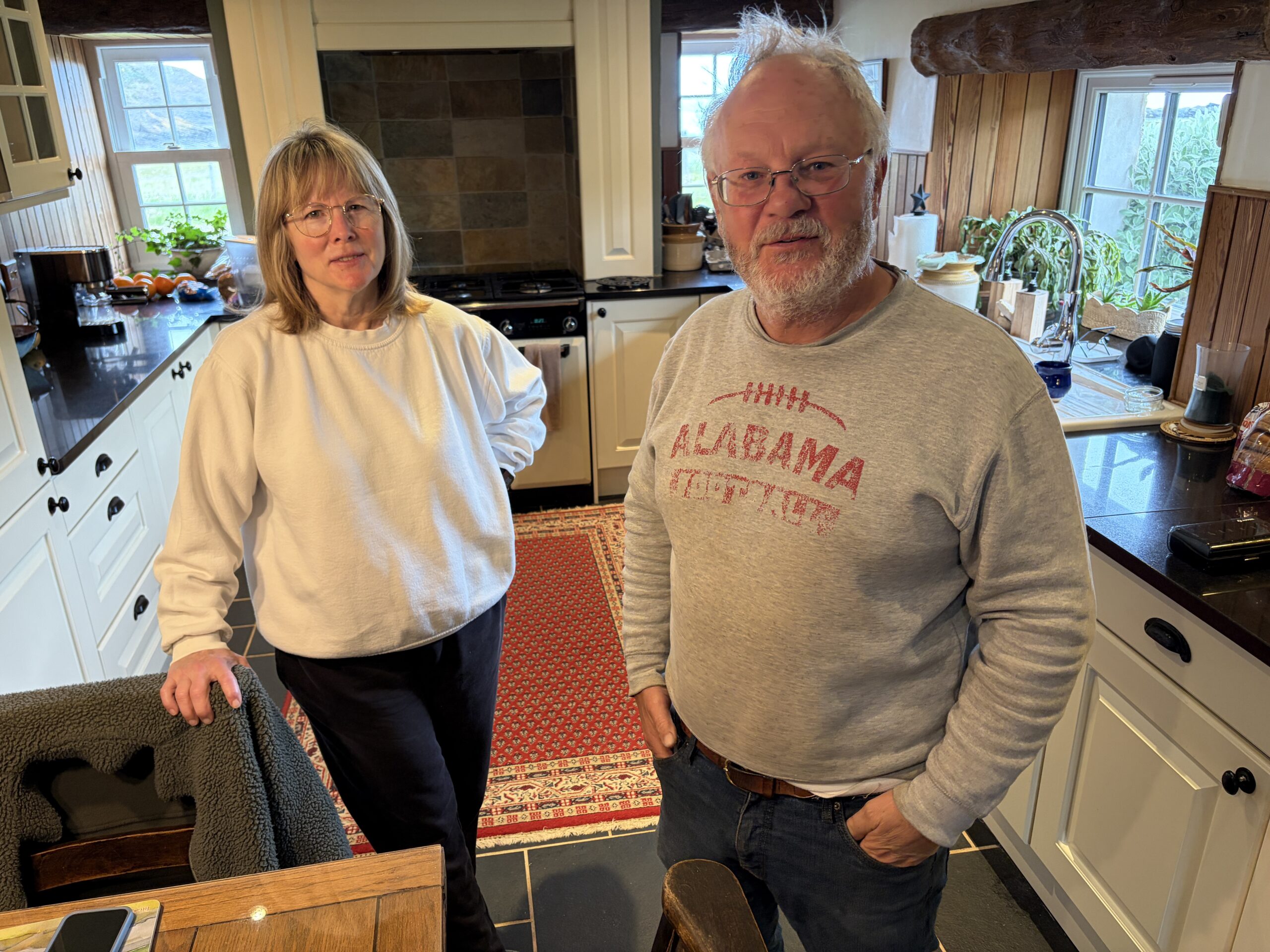
Lynn, who is 64, grew up in Charleston, South Carolina; she still has a trace of a Low Country accent. Bill, 66, was born in England, where his father was an Air Force intelligence officer (possibly CIA) involved in surveillance of the Soviet Union. When Bill was a toddler, his father was recalled to the Pentagon; the family settled in Germantown, Maryland.
Bill became a steamship agent, a job that requires solving problems for large vessels whose downtime in port is measured in tens of thousands of dollars per hour. Lynn was a customs broker—a person licensed to clear cargo through customs—chrome ore, blue jeans, automobiles. They were both high-stress, on-call jobs.
They have one child—a daughter—and were active in the Scottish Society of Charleston, which sponsored an American version of the Highland Games. Lynn has Scots heritage and they’d visited the country several times and liked it.
In 2005, they had a family reunion at the village of Crovie a few miles west of where they live now. It’s a virtually inaccessible hamlet of a few dozen houses set with their gable ends facing the sea and the weather, their front doors on a narrow passage between houses.
“We had a rental car, and on the drive back to Macduff I said, ‘One day we’re going to retire over here and I’m going to join that golf club’,” Bill recalled, referring to the links I’d just walked across.
“Within 11 months we were here,” Lynn said.
“We got back to Charleston and all we could think about was Scotland,” Bill said. “We couldn’t get it out of our brains.”
They explored immigrating and discovered it would be much easier if Bill could prove he’d been born in the United Kingdom. To his surprise, he found his late father’s transfer orders from 1962 that listed him as an infant, which was enough.
They asked their daughter, who was 14, whether she was interested in moving to Scotland. She was all for it, “so we got that box checked,” Bill said.
In 2006 they sold their house in Charleston at the top of the market. With the money they bought a fisherman’s cottage in Macduff. On the first day there Wallace, their dog, ran off. Within a few hours everyone in the neighborhood knew the Americans had lost a dog, and soon he was found.
“We knew at that point that we’d made the right choice,” Bill said.
They lived there and in the neighboring town of Portsoy for four years. Lynn worked at a historic castle nearby; Bill played golf and fixed up a “holiday house” they bought and rented out. Eventually they learned of the Mill at Nethermill and bought it when a sale to a Frenchman fell through.
The former occupants hauled water by hand from a well whose pump had failed. The grounds were nettles and brambles. They stored furniture from the holiday house, which they’d sold, in the old mill building. Someone broke in, stole it, and set the building on fire. Bill, Lynn, and their daughter moved onto the cottage on the property to keep an eye on things.
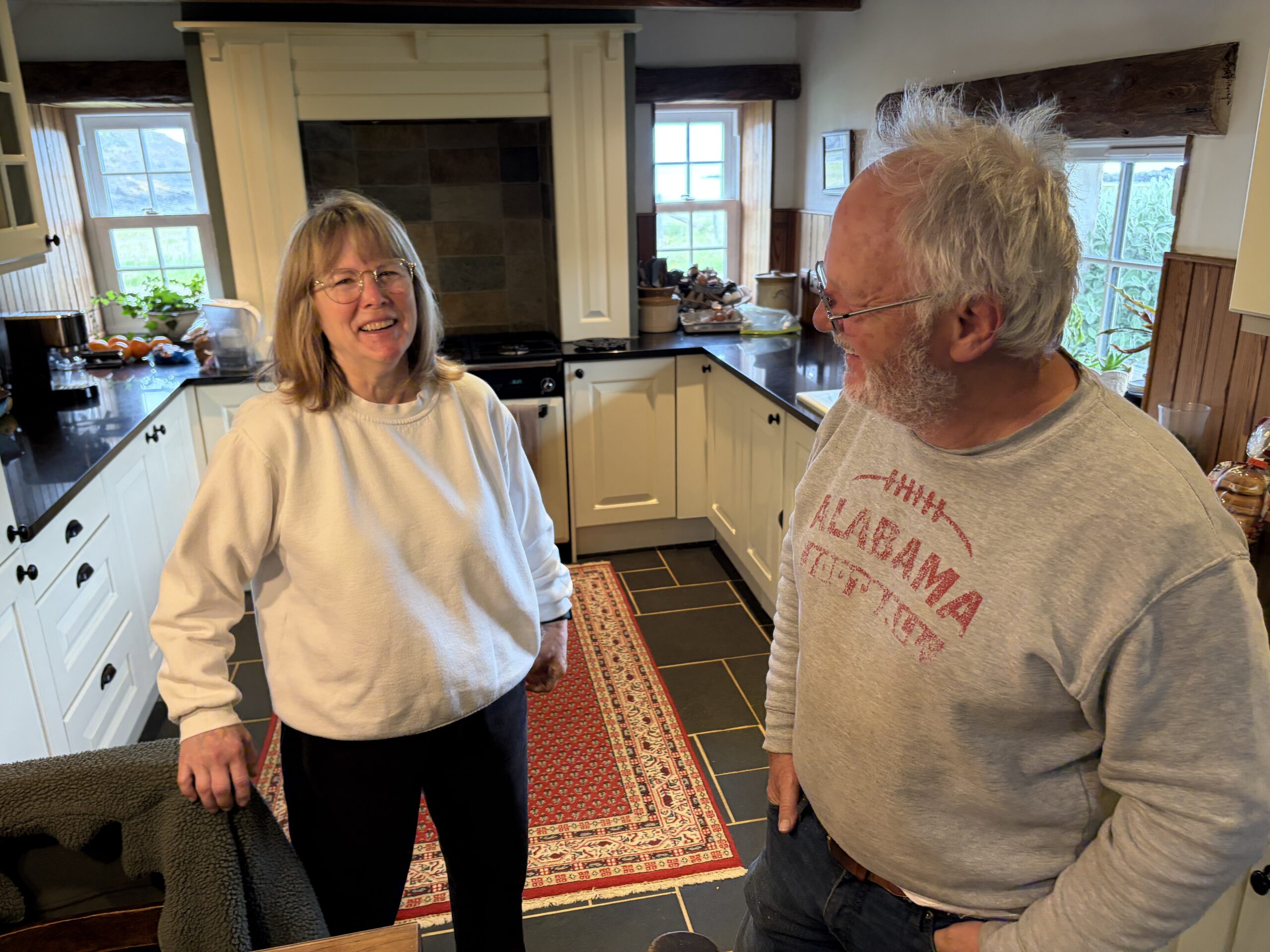
They calculated they needed four rental units to have a profitable business. They started the long slog of renovating the mill, hiring local workers and a Lithuanian man whom they met when he was collecting shellfish on the beach. They took no loans, spent all their money, and were down to a credit card when they got an unexpected tax refund check in the mail.
Lynn took a pottery course, set up a studio with a kiln, and began selling her wares. Bill taught himself various masonry skills.
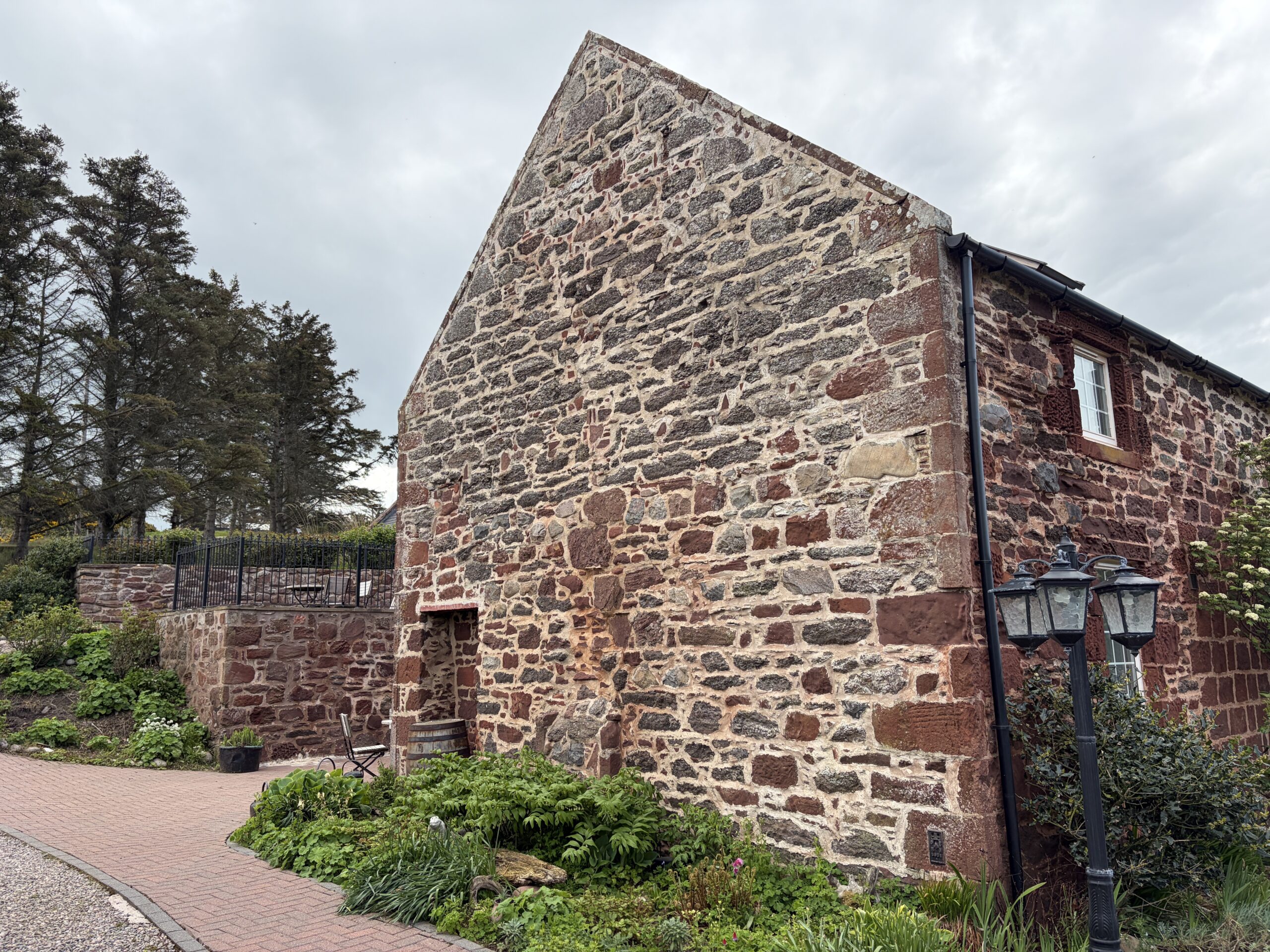
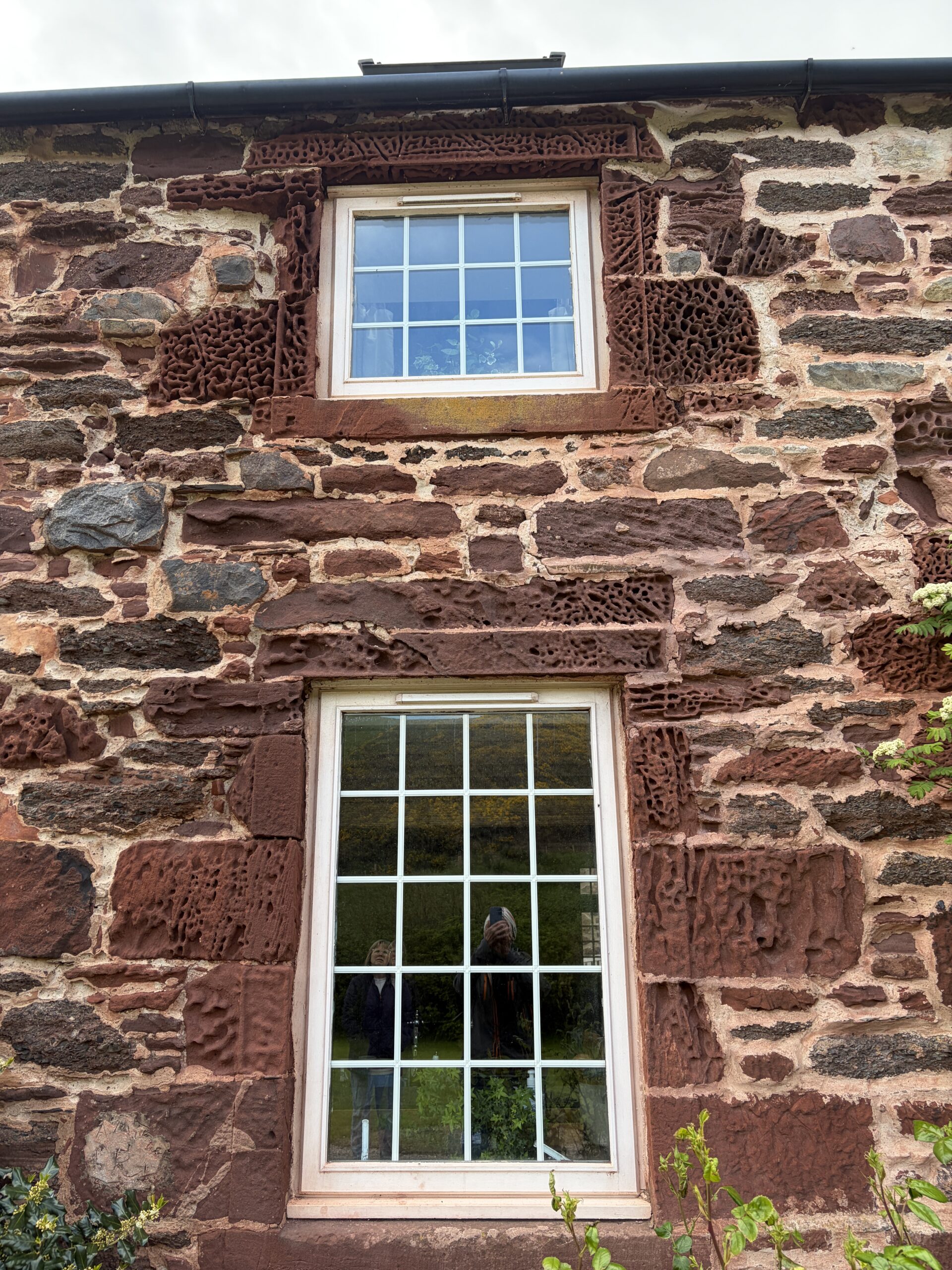
Today, they have four units in the mill building–the rehab cost more than the whole property did–that they rent out by the week in the summer and for a three-day minimum in the off season. A few years ago they won an award from a Scottish tourist bureau.
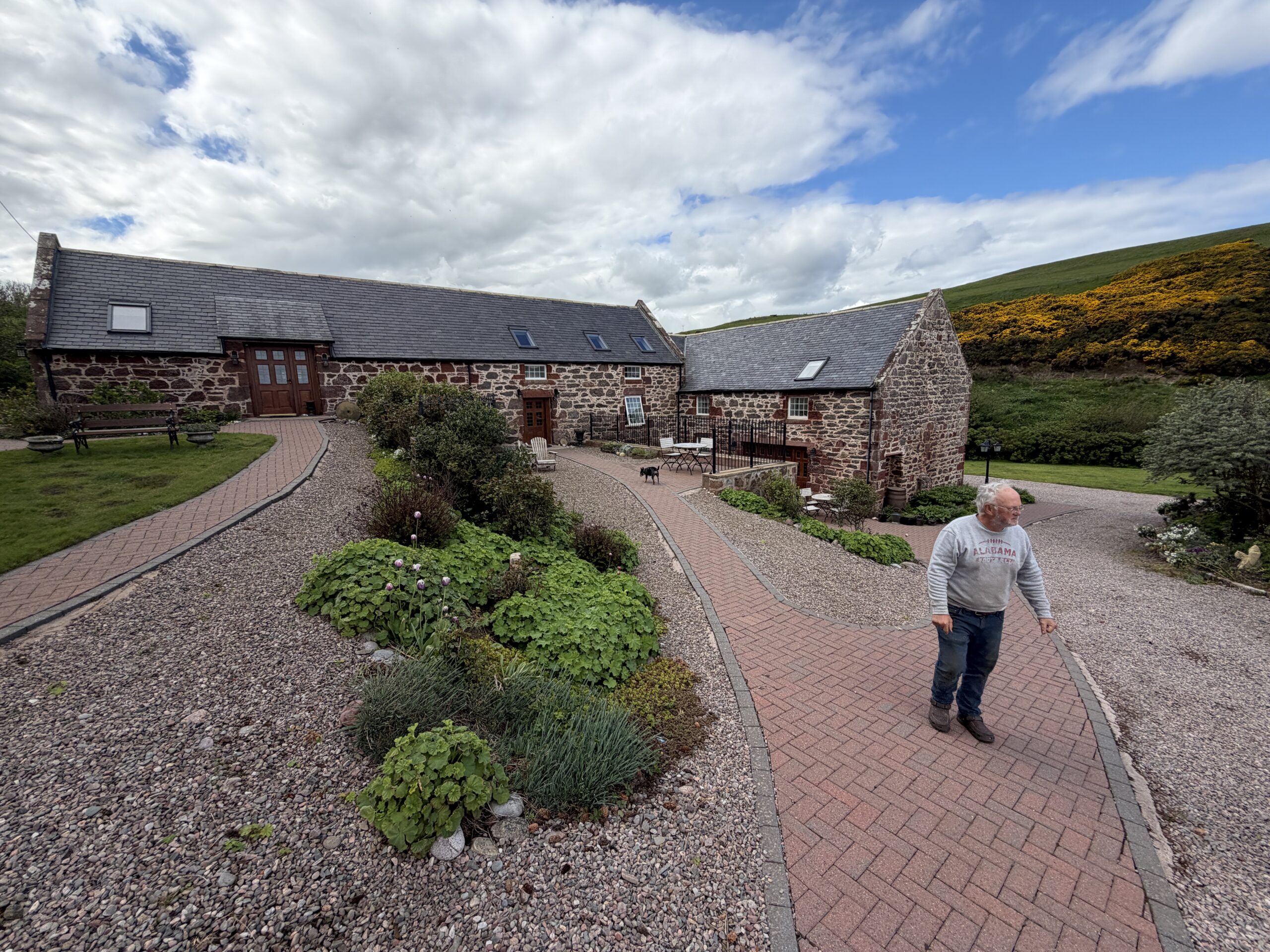
The rental business and the pottery shop both make a profit.
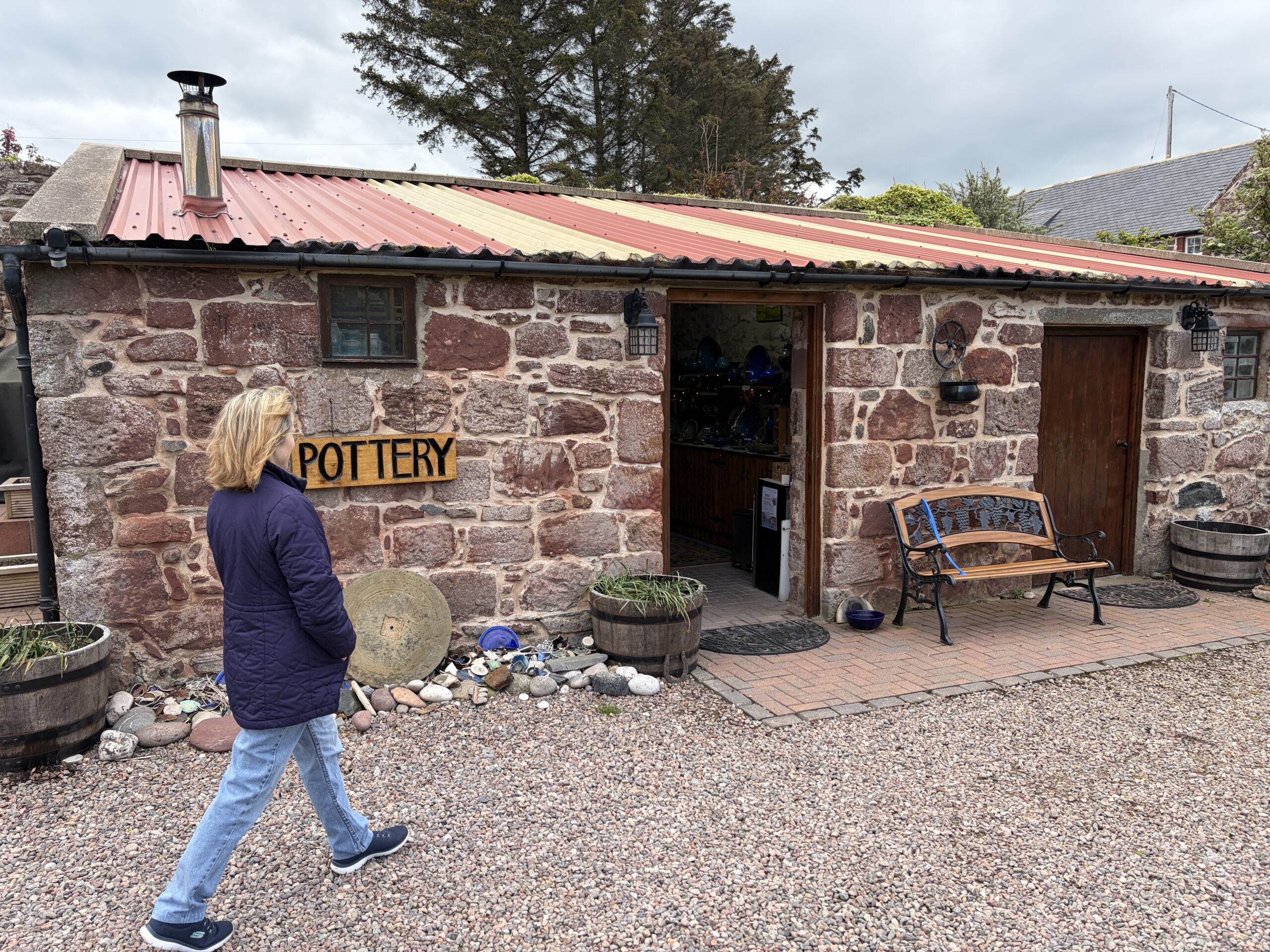
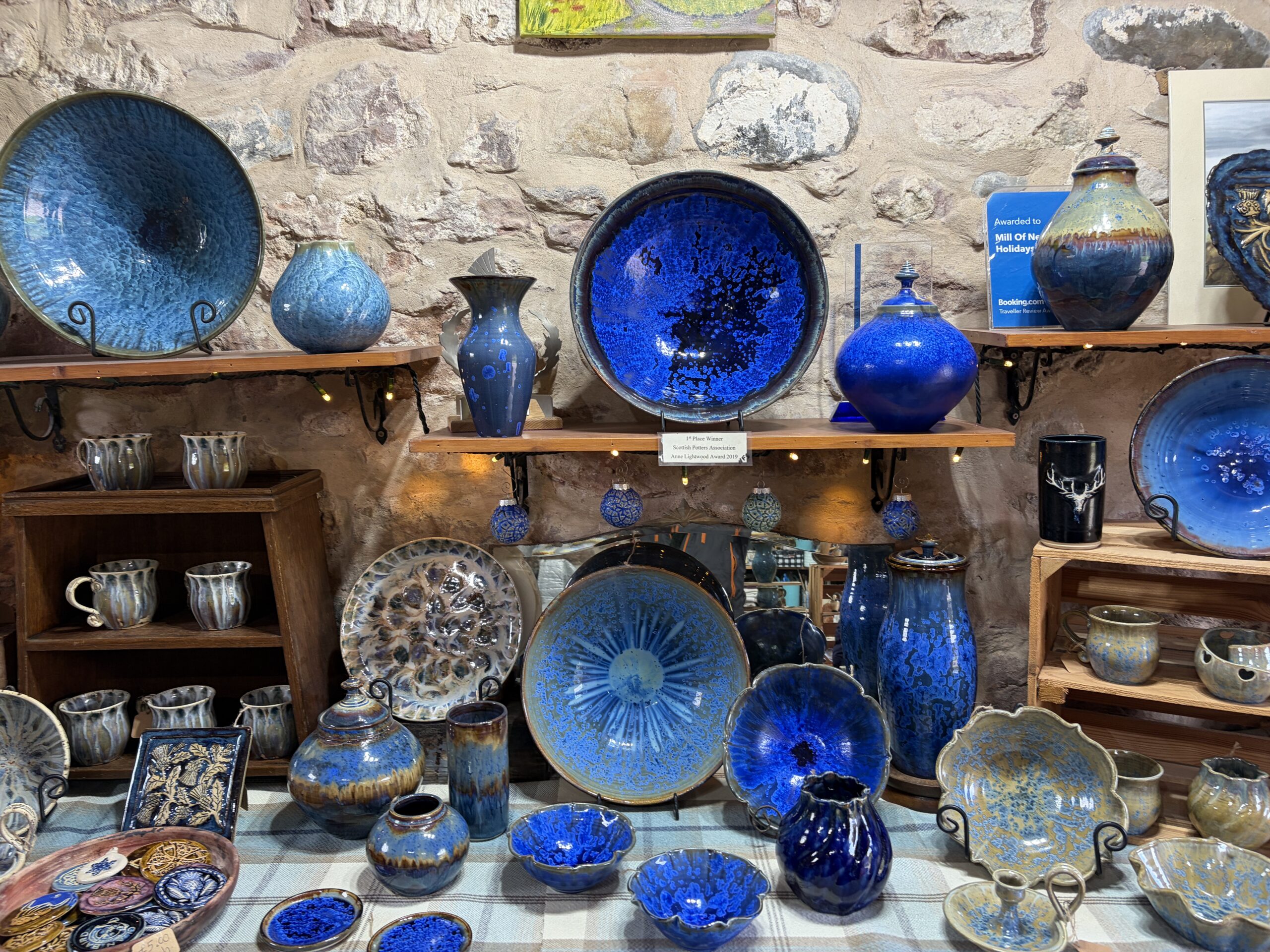
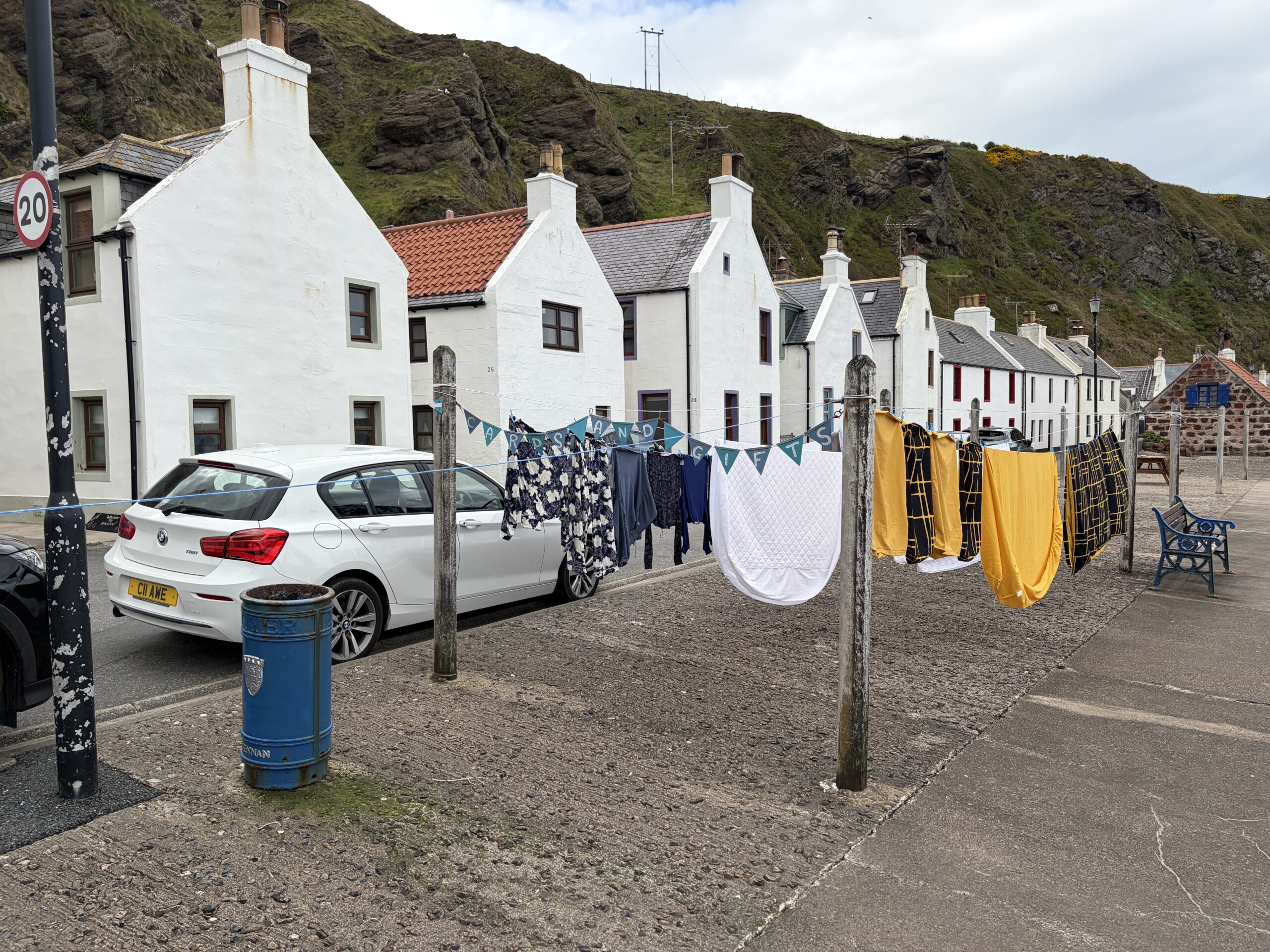
They’re involved in various local projects. Several years ago Bill helped organize a 40th anniversary of the movie ‘Local Hero,” which was filmed in the village of Pennan a mile away.
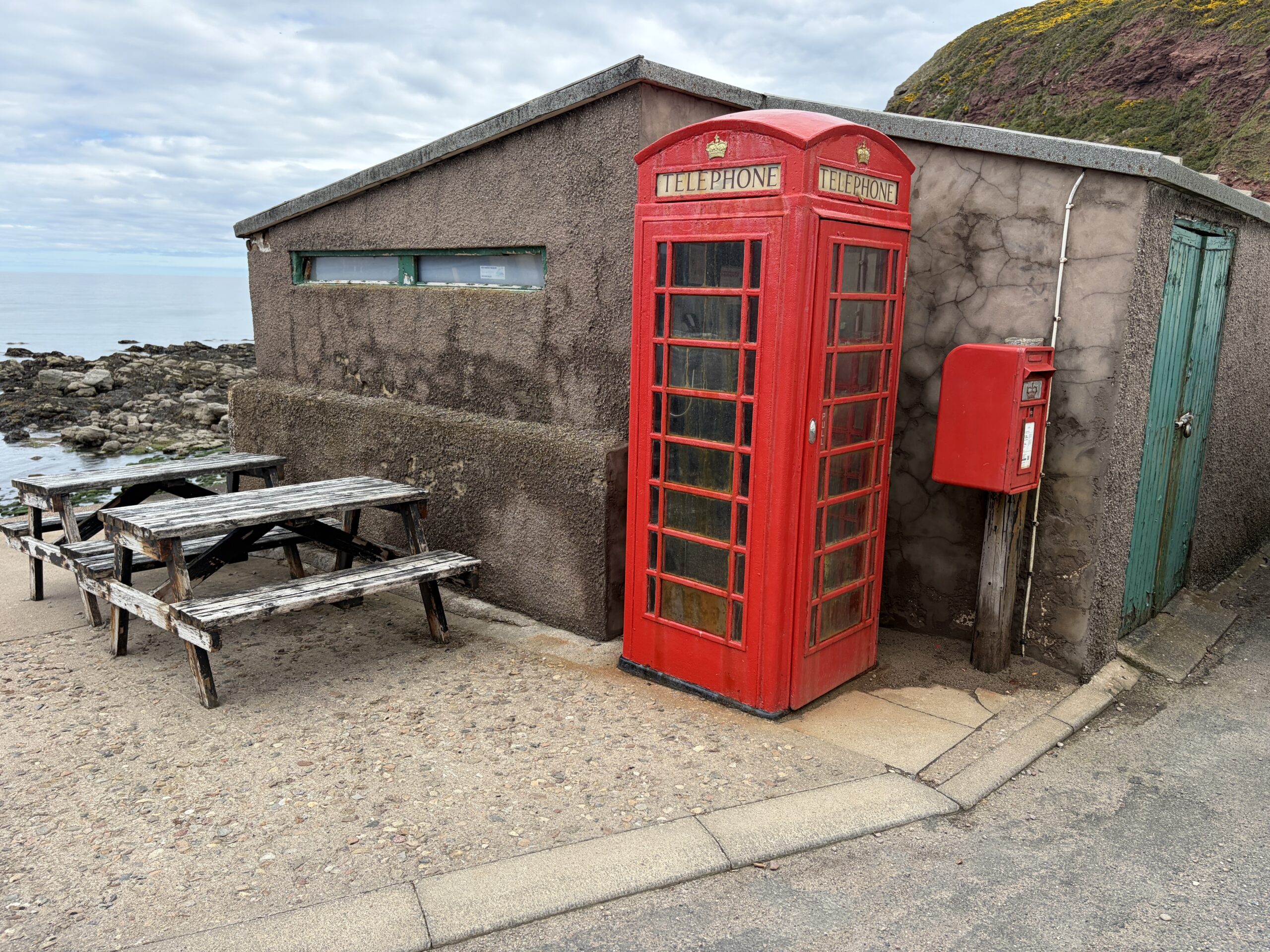
Although I’ve never seen it, the story apparently features a classic red phone box, which people now come from around the world to see. Bill and a friend named Eddie paint it every year–many phone boxes are shabby and derelict–and they planned to do the job the next day.
One time they got there with paint and brushes and saw a man sitting and looking at the phone box, deep in thought. He was an American Airlines pilot who’d flown into Edinburgh, rented a car, and driven to Pennan just to see it. Bill let him load a brush and take a few strokes. It was kind of a dream come true.
It’s an unexpected and hard-earned and satisfying life that Bill and Lynn Pitt have built for themselves in Scotland, a long way from Maryland and South Carolina.
“We’re big, big believers in fate,” Bill said.
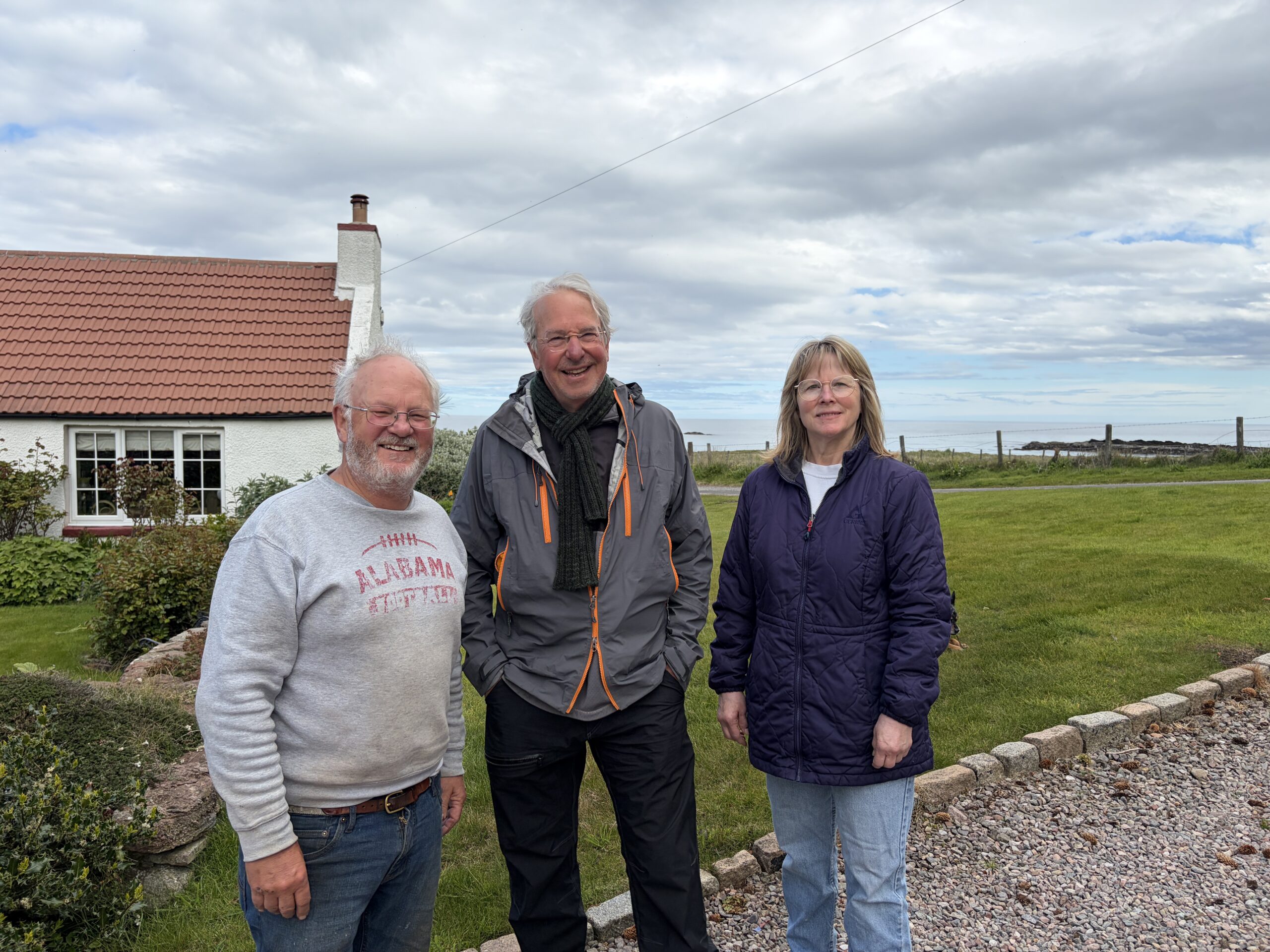
You’re looking good in that photo. Walking must agree with you! You should definitely see “Local Hero” when you get a chance. One of Burt Lancaster’s last movies.