I left the Mill of Nethermill and headed east. It would be mostly roadwalking on this, the last day of the Challenge.
There was a path along the coast, but a report from a year before said following it involved negotiating gorse—the prickly yellow shrub that’s everywhere—and some fences without gates. My feet were sore—no blisters, but the soles battered from stony paths and shingle—so I shortened the distance by cutting out the headlands and taking a local road with little traffic.
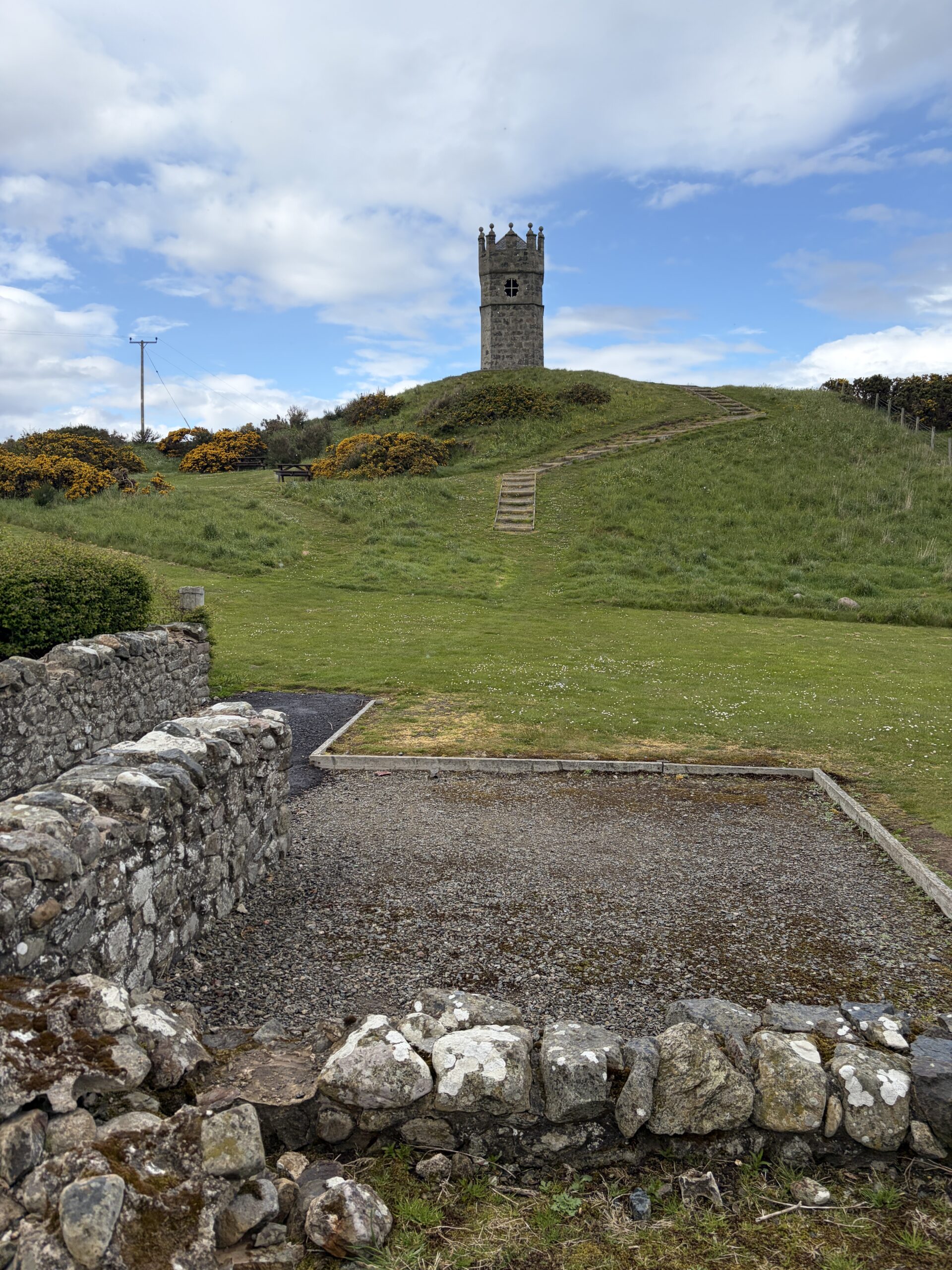
I soon passed Mounthooly Doocot—the second word is the Scottish word for dovecote—built in 1800 in a faux-Gothic design. It has 300 nesting boxes for pigeons, and a ladder on a rotating central pillar from which they can be robbed. This wa from a time when for some people money was no object in building chicken coops.
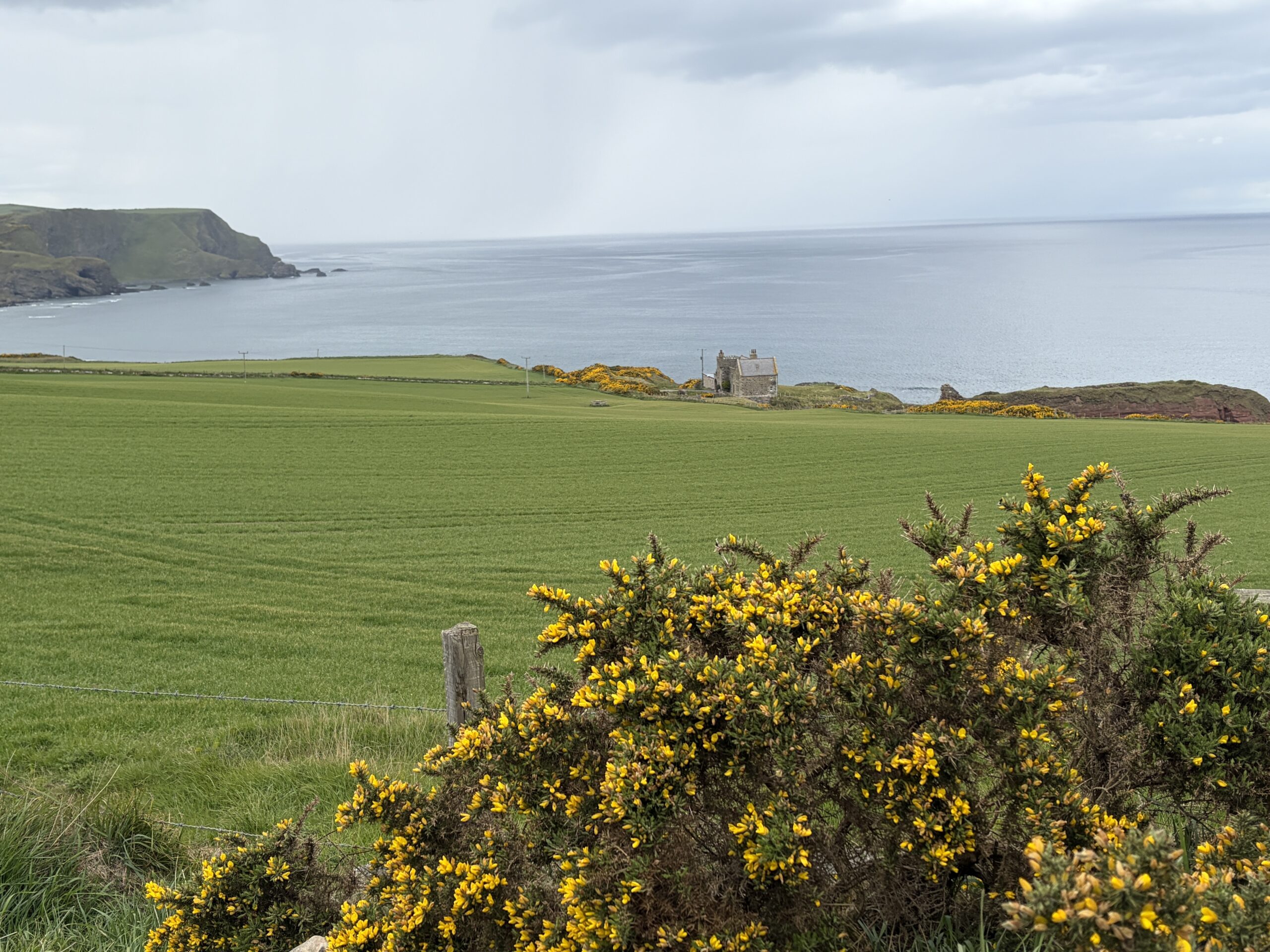
The road was hard underfoot, but gave great valedictory views of the Moray Coast. This one contains the essential elements: grass, gorse, sea, rock, and a single stone house.
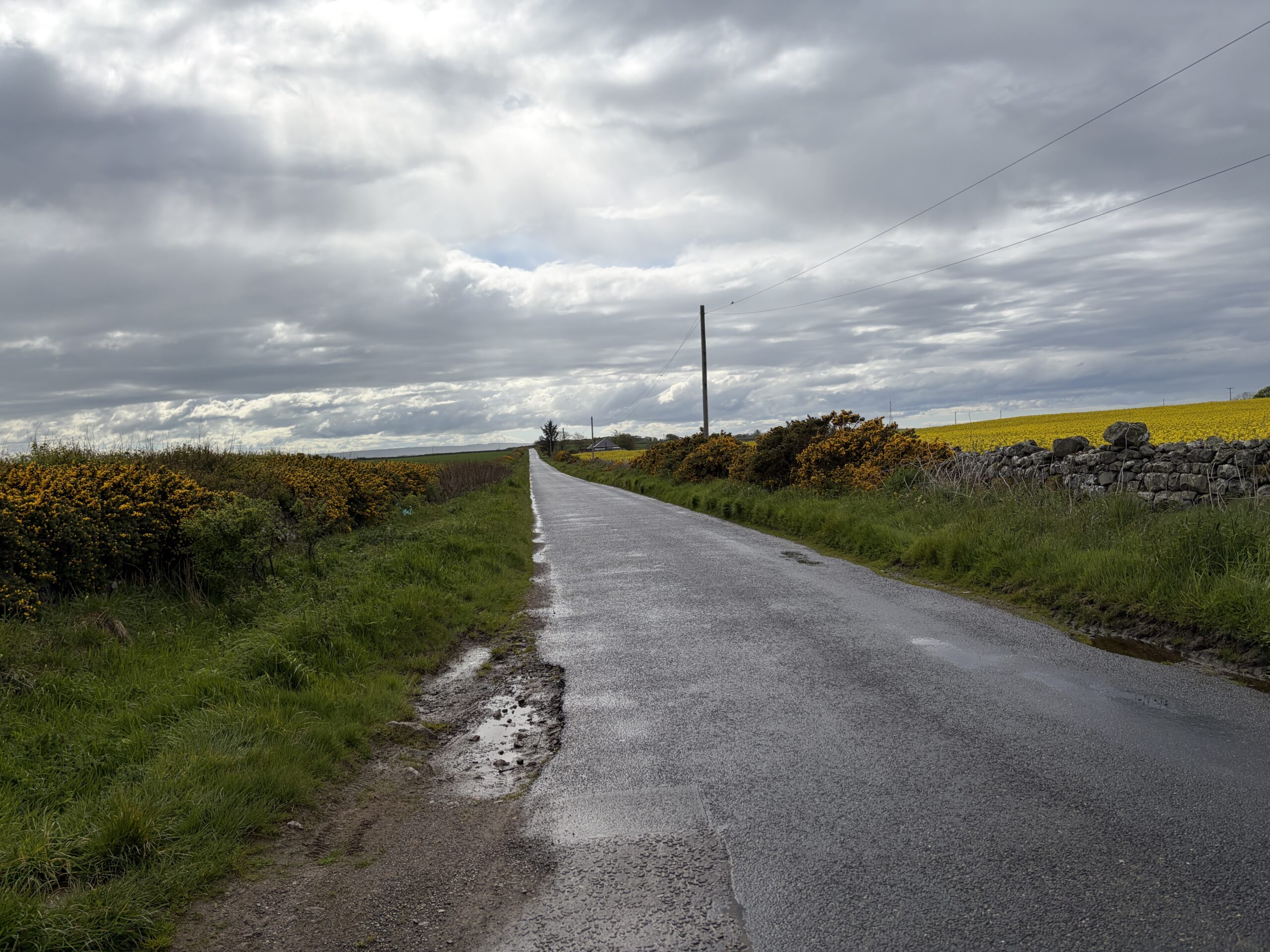
I looked back. This is the direction I’d come from in what seemed an age ago.
The minor road connected with a big one (thankfully with a cycle track next to it) that headed into Fraserburgh. I lifted my head at one point and saw a man in an orange sweatshirt standing in the track waving his arms.
It was Duncan Bain Smith. He and his wife, Cham, were staying in their camper van, parked nearby. Duncan and his cousin Charlie had cracked on and finished a day early. Duncan invited me in for tea, but I declined. I wanted little more than to finish and take my boots off.
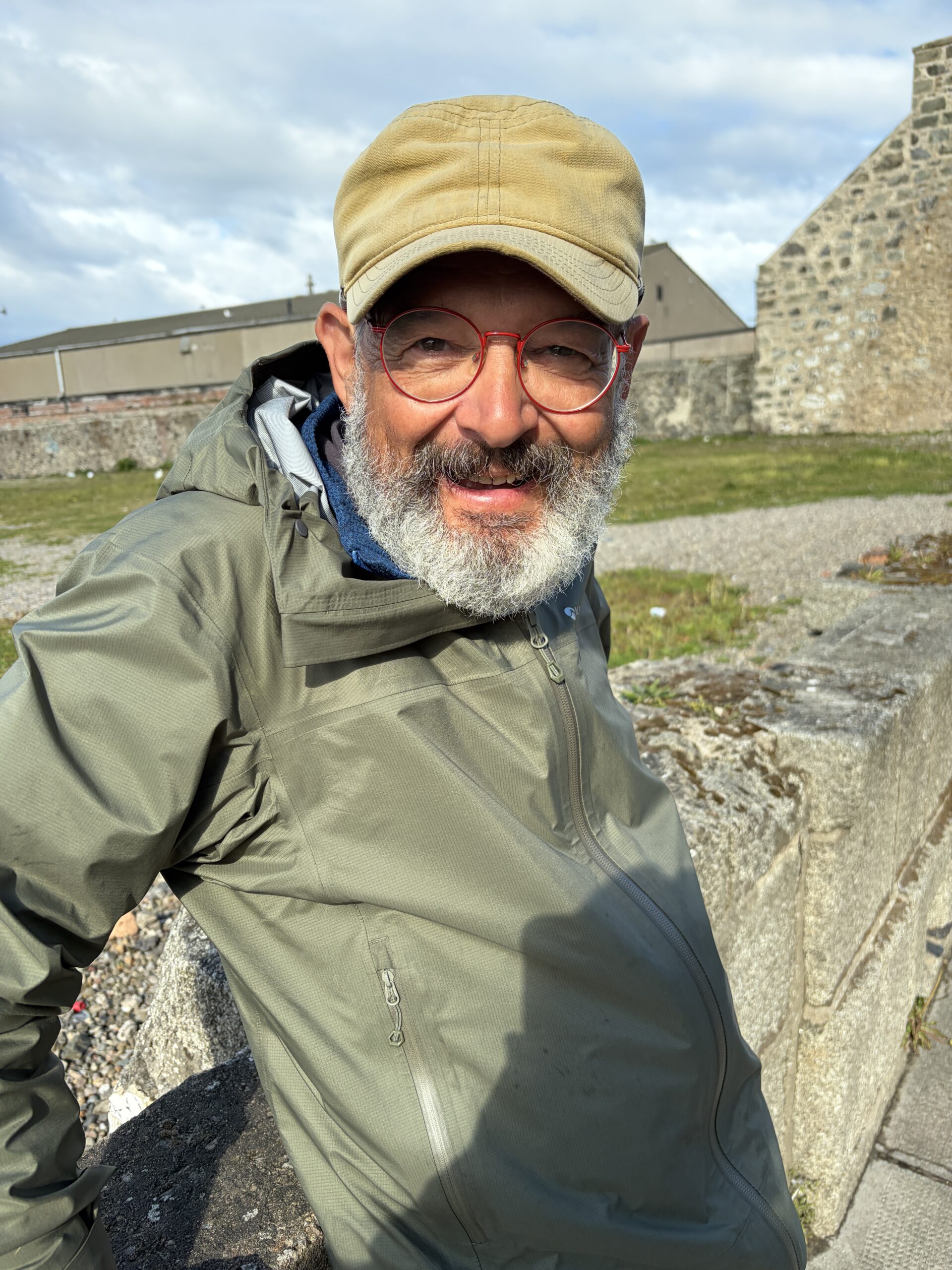
As I walked on and entered the town by chance I ran into Charlie Bain Smith. This time I had the presence of mind to get out my phone and take a picture.
Soon enough Fraserburgh’s most distinctive landmark hove into view, the Kinnaird Head lighthouse. On the right is the original one, built in 1787 on the ruins of Alexander Fraser’s castle from the 1500s. On the left is its unmanned replacement.
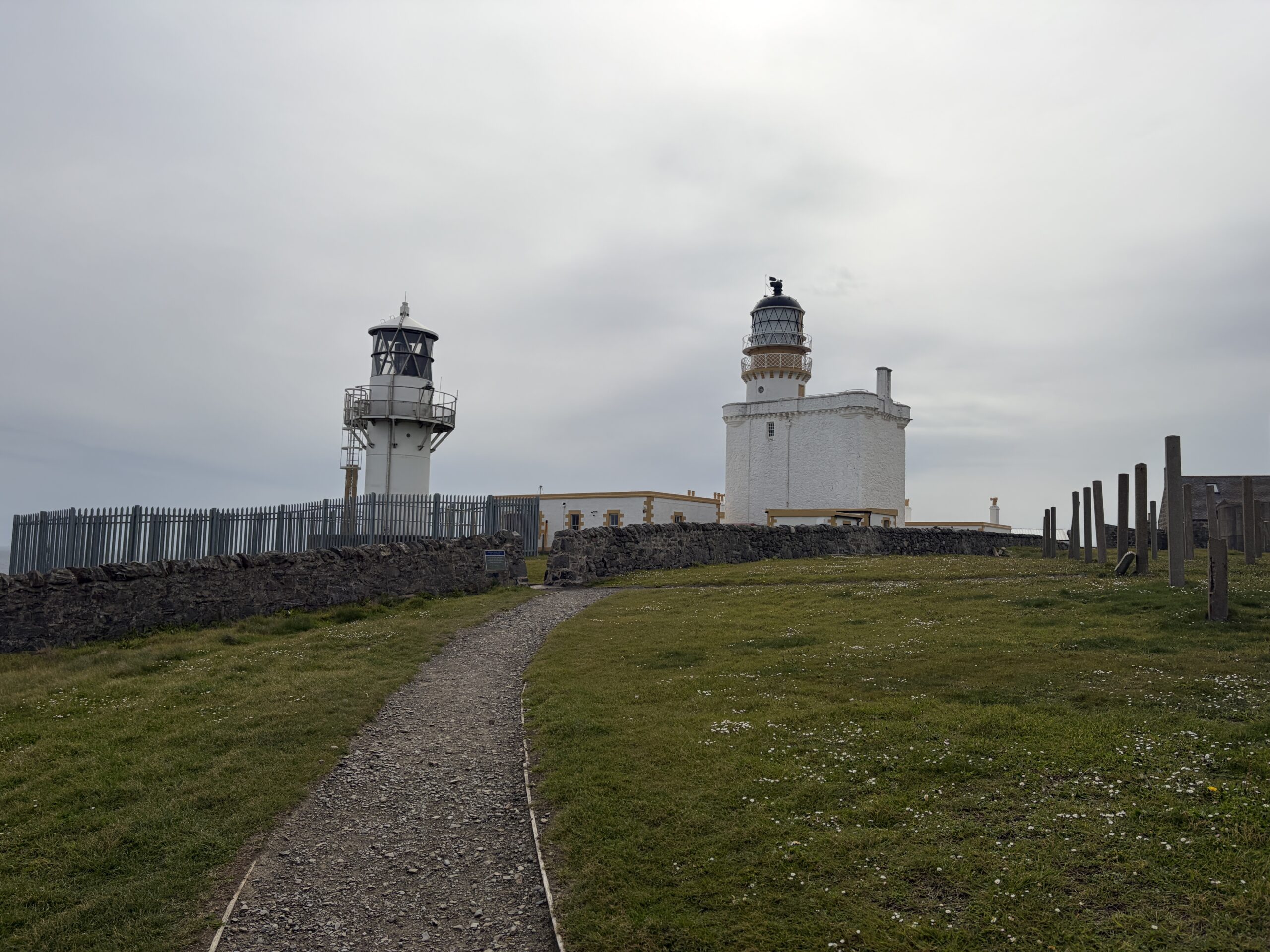
The Kinnaird Head Lighthouse was the first built by the Northern Lighthouse Board, which eventually established more than an hundred along Scotland’s coasts. It stands at the apex of a right-angle of land where the North Sea meets the Moray Firth. It’s a feature that vessels coming from Scandinavia, or sailing either way around Britain, need to see.
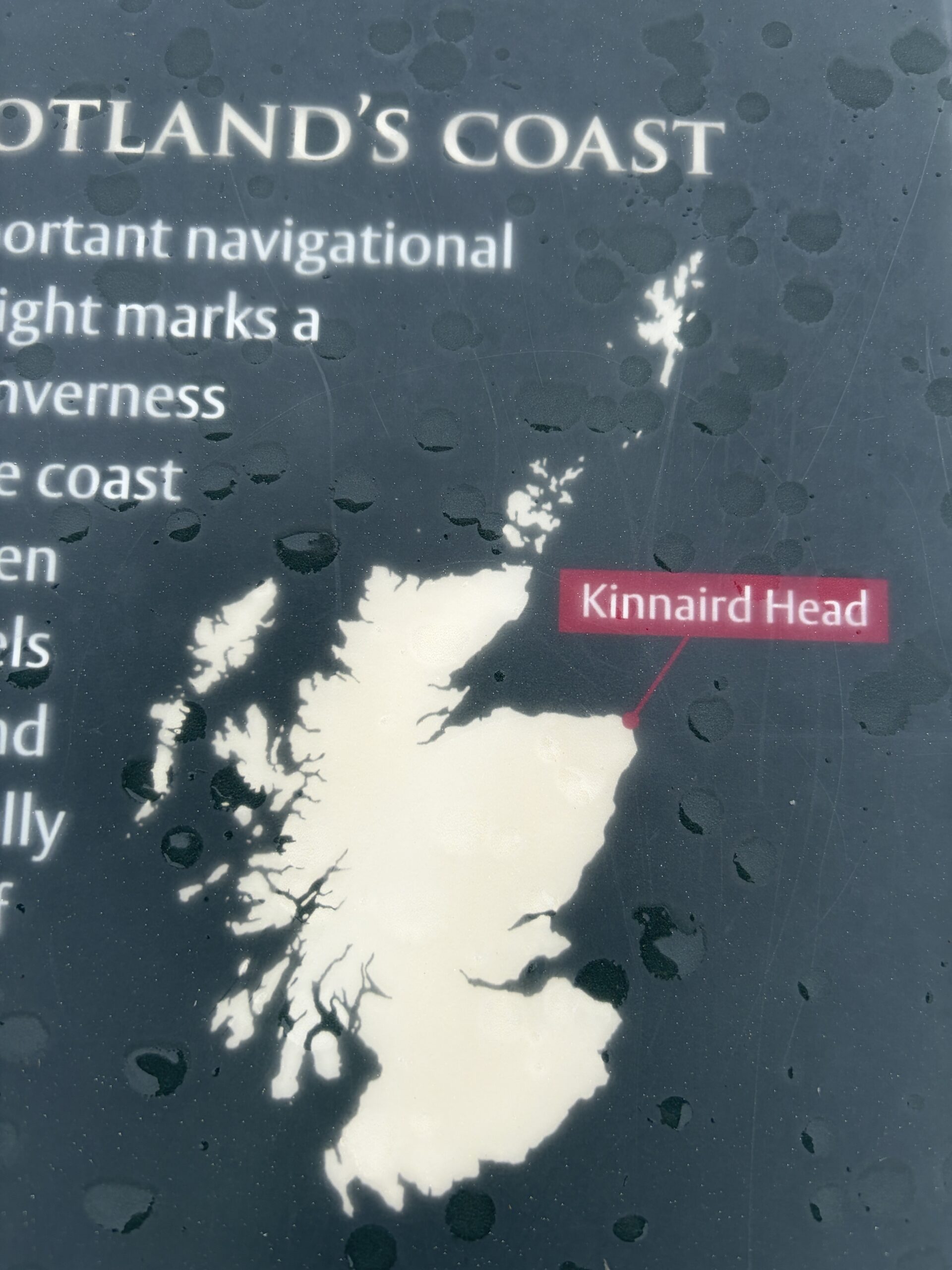
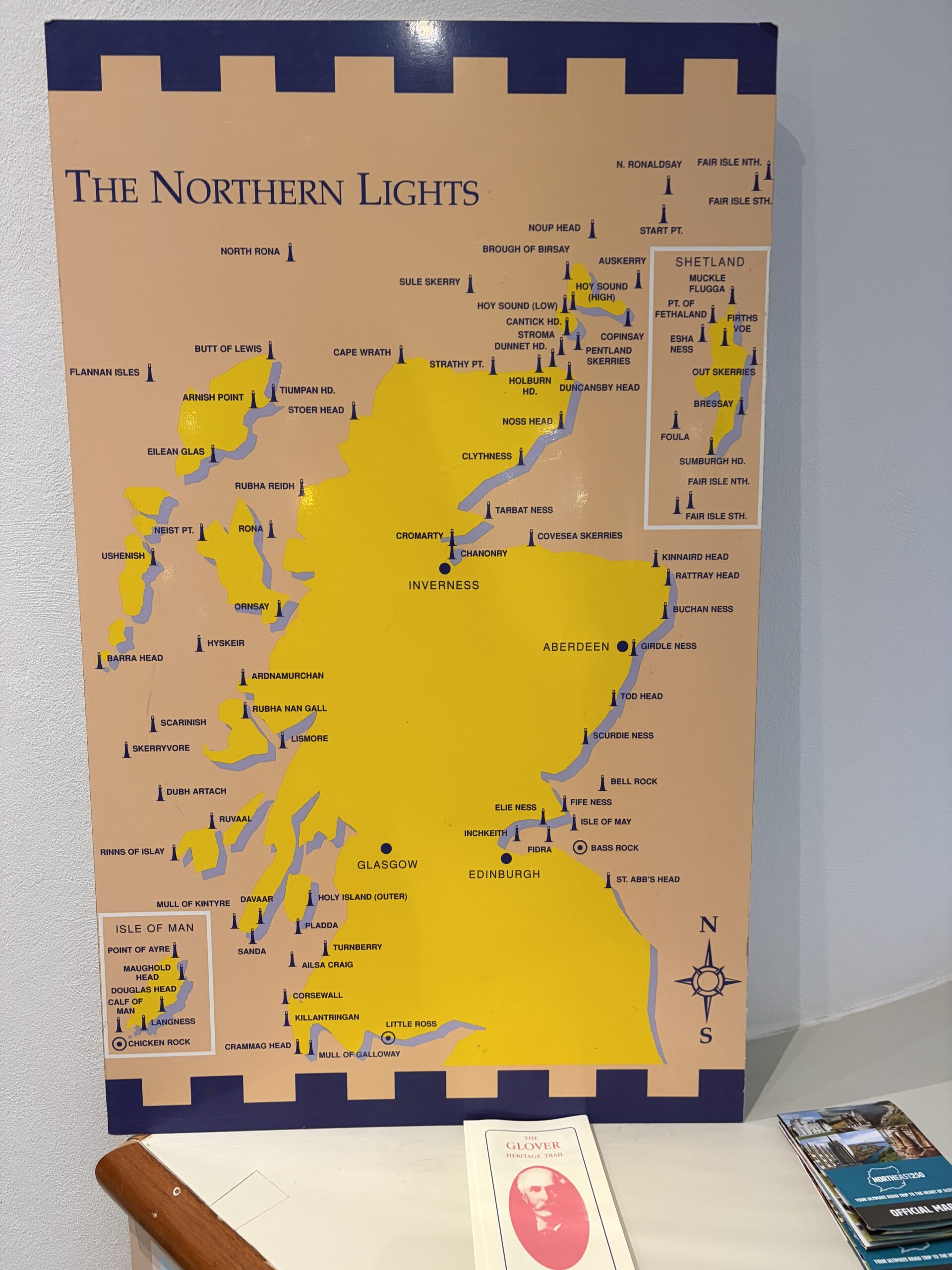
In the encounter on the sidewalk, Charlie Bain Smith had recommended the Museum of Scottish Lighthouses, which is in the original lighthouse, if I had time for one tourist stop.
I took his advice.
After a night in an hotel, I was at the museum at 10 a.m., with just enough time for a tour and a visit. At 12.20 p.m. I needed to board a bus for Montrose, a town a few hours to the south, where I had to check in and officially end my TGOC walk.
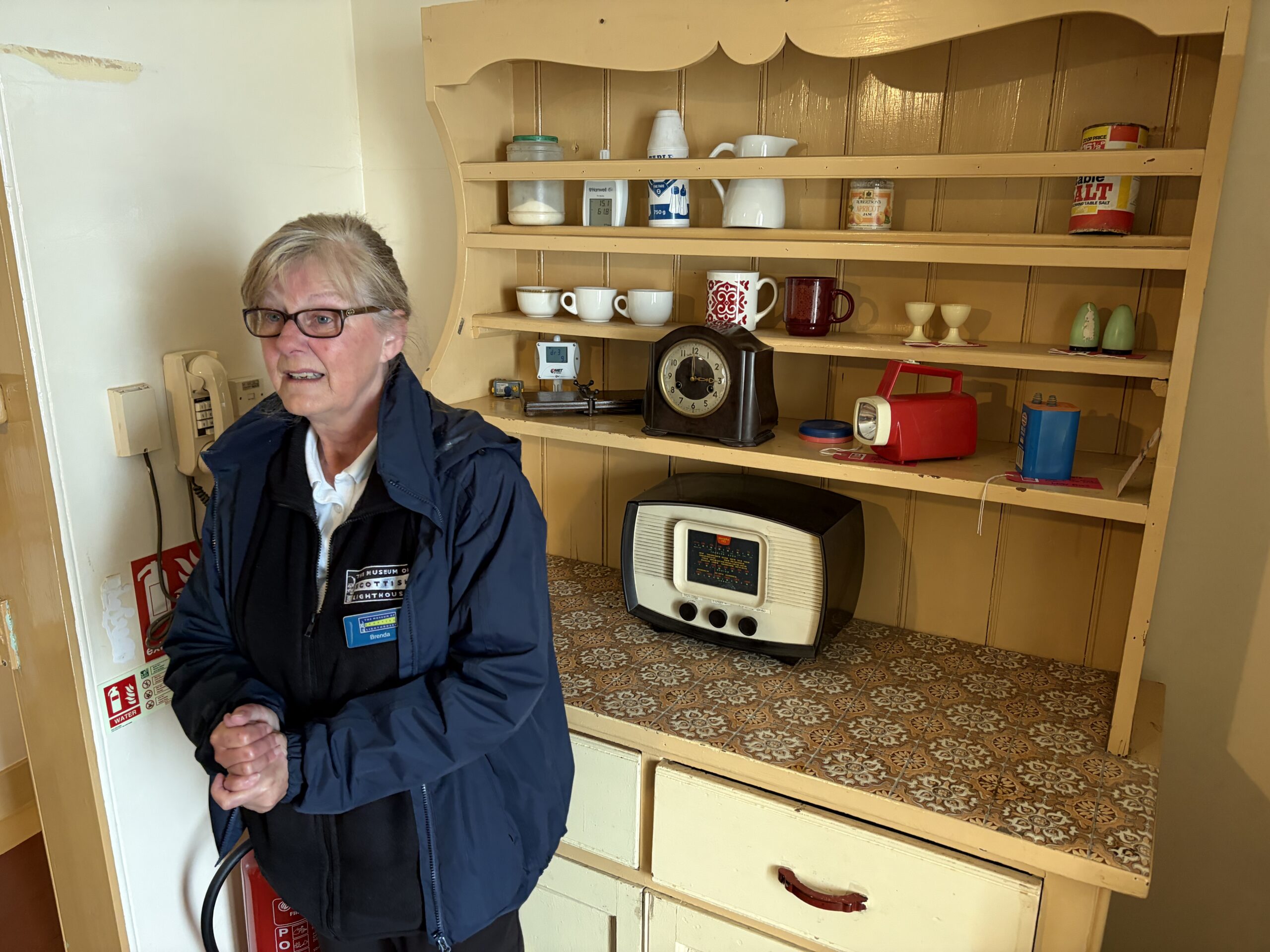
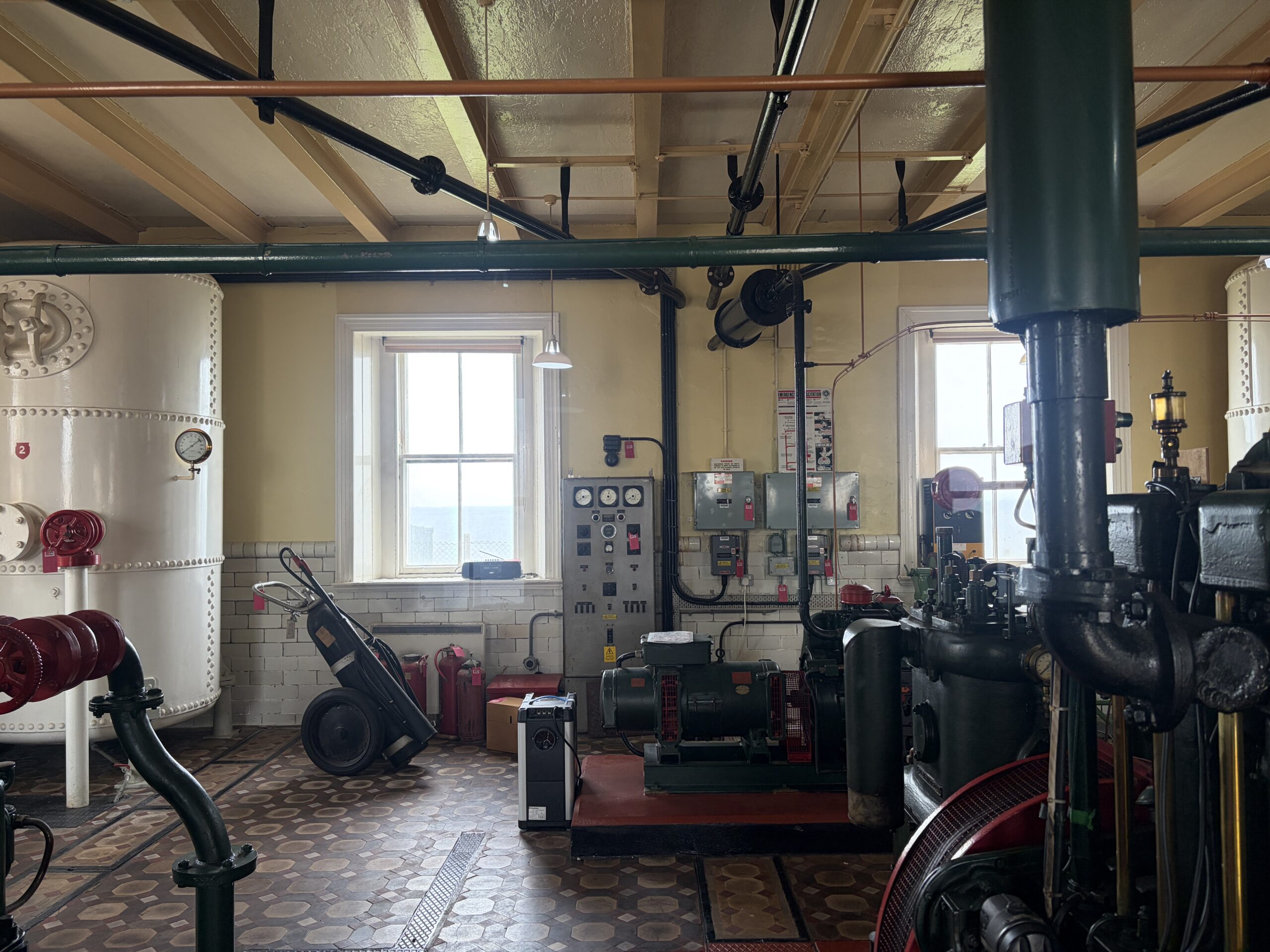
A wonderful docent named Brenda gave me and two other people a tour. This is the assistant-keeper’s quarters, left as it was in 1991 when the last one moved out.
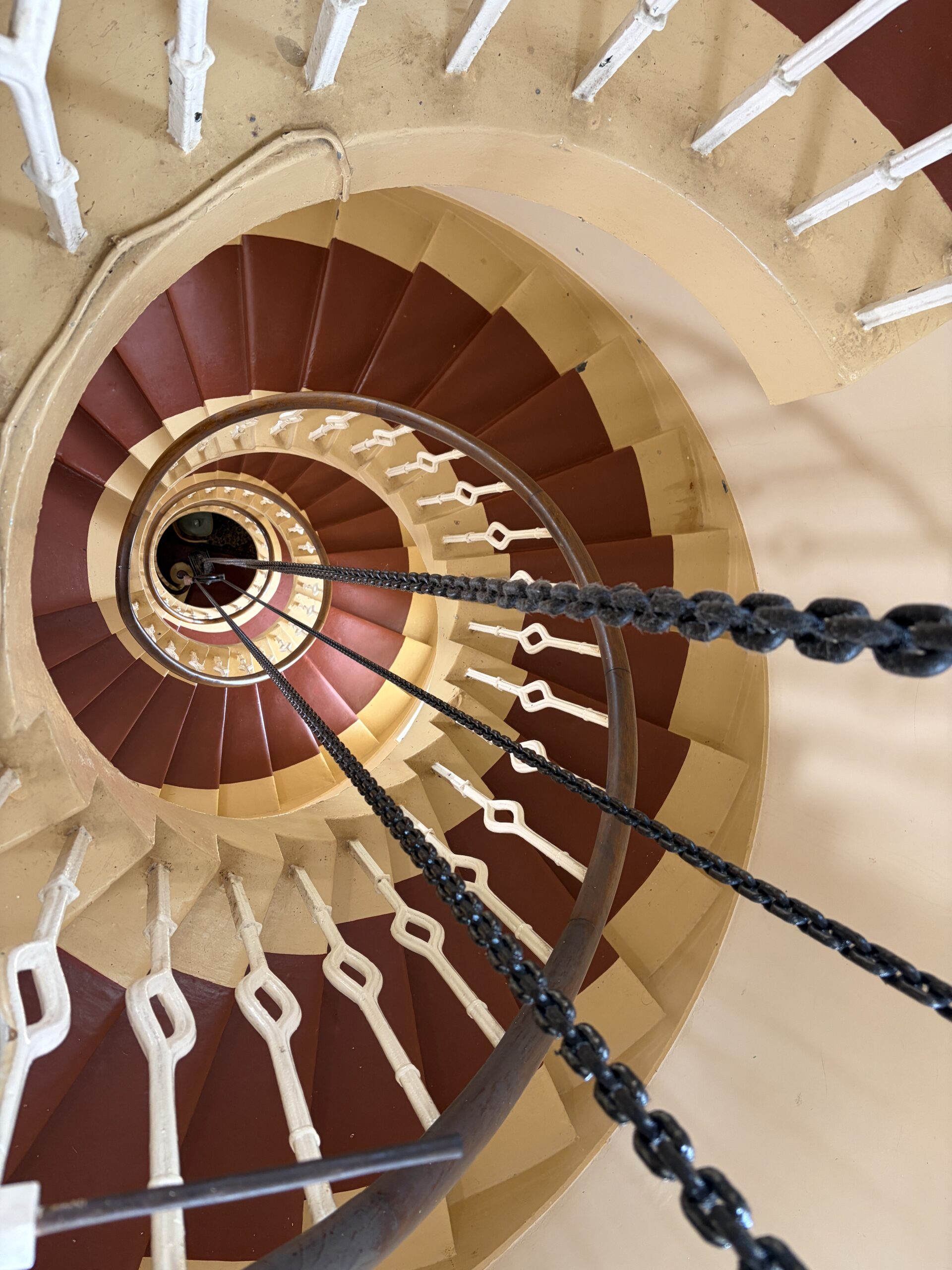
The lighthouse is a thing of precision, durability, and beauty. It’s a giant mechanical clock that also produces light and rotates (at least part of it).
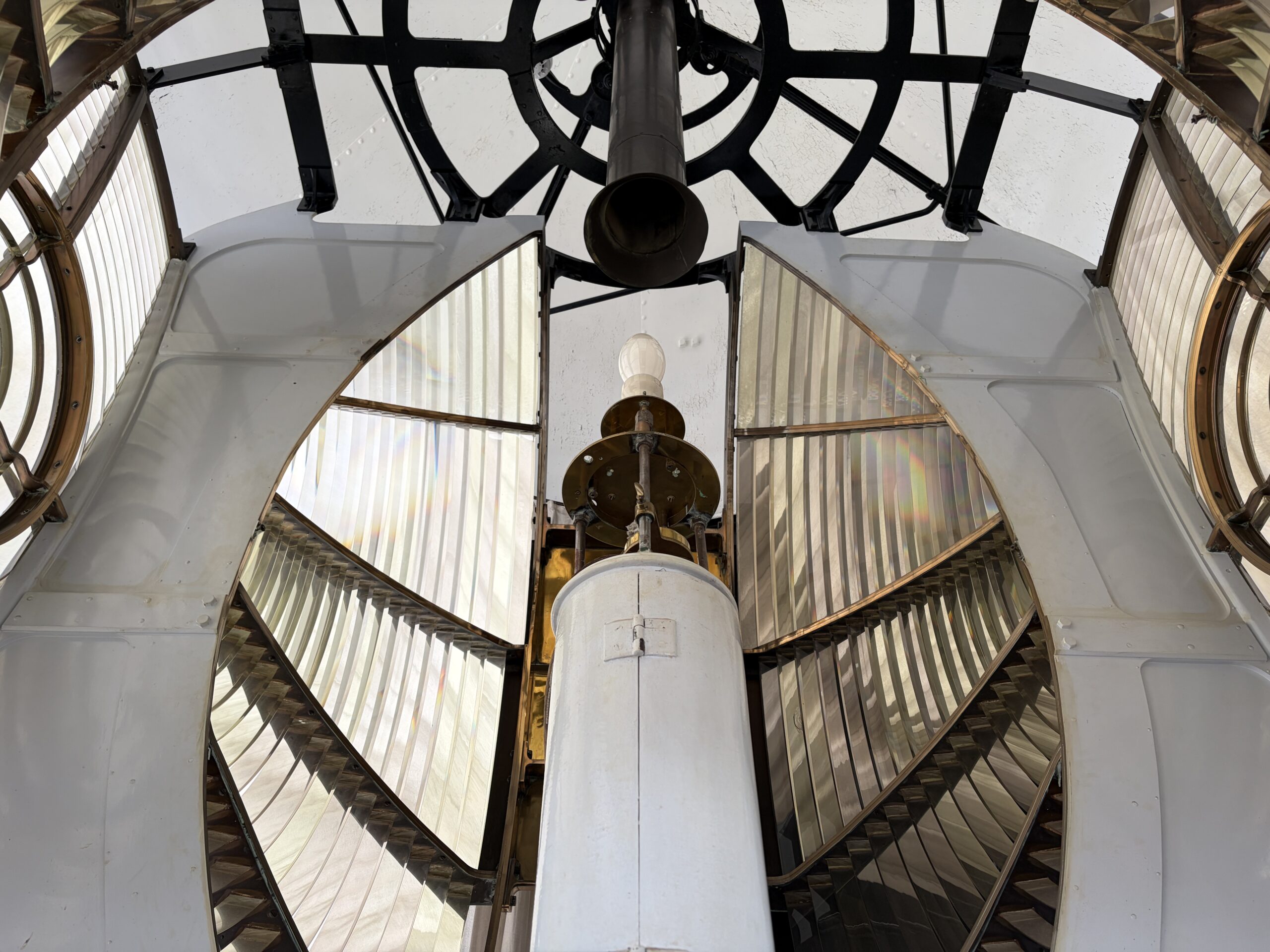
When the optical system was upgraded with a Fresnel lens, the beam could be seen 27 miles away, with one flash every 15 seconds.
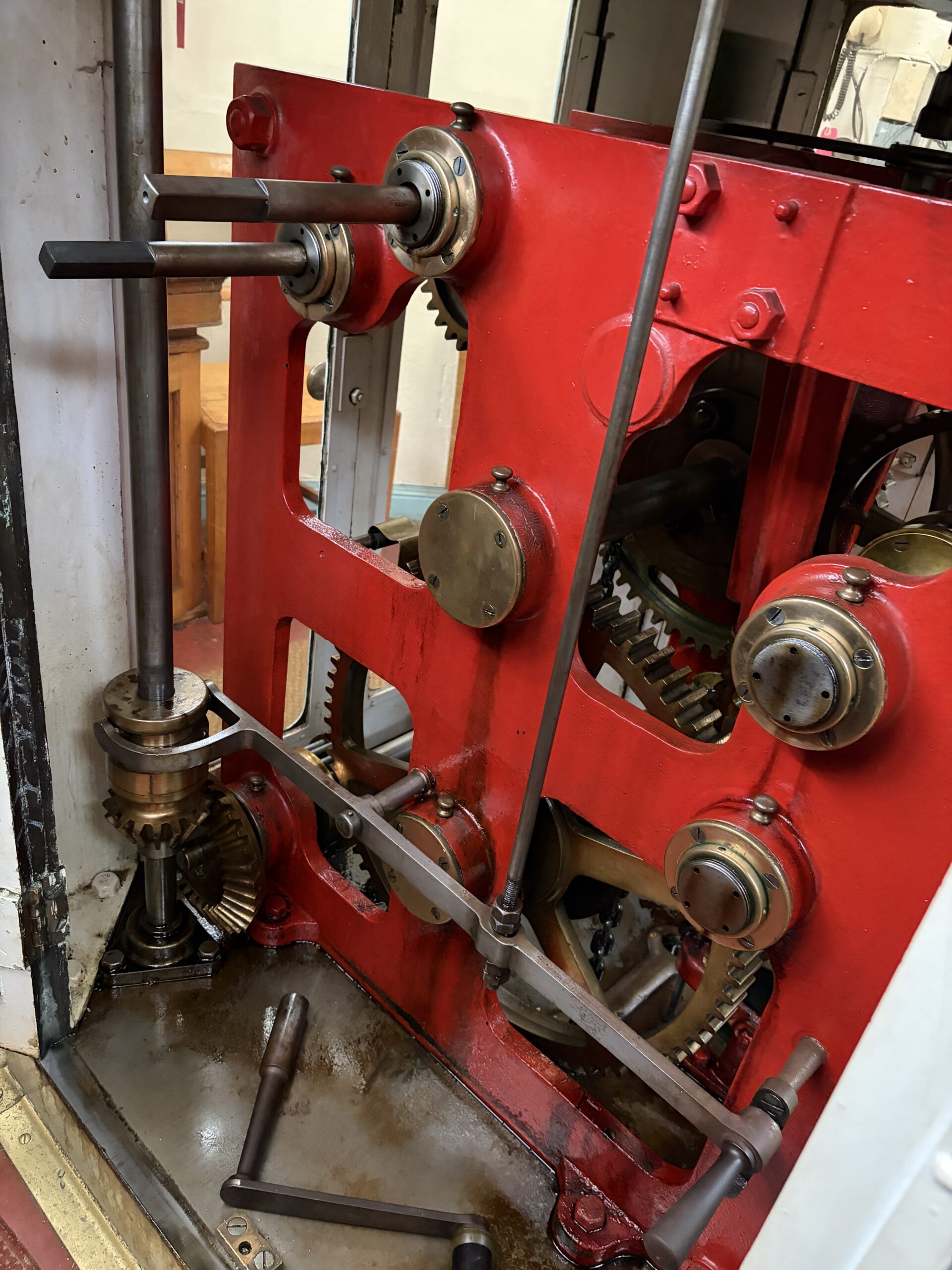
The light rotated, driven by suspended weights, as in a grandfather clock. If the keeper let the light become “standing”–not turning–he was likely to be dismissed. (There was never a woman lighthouse keeper.)
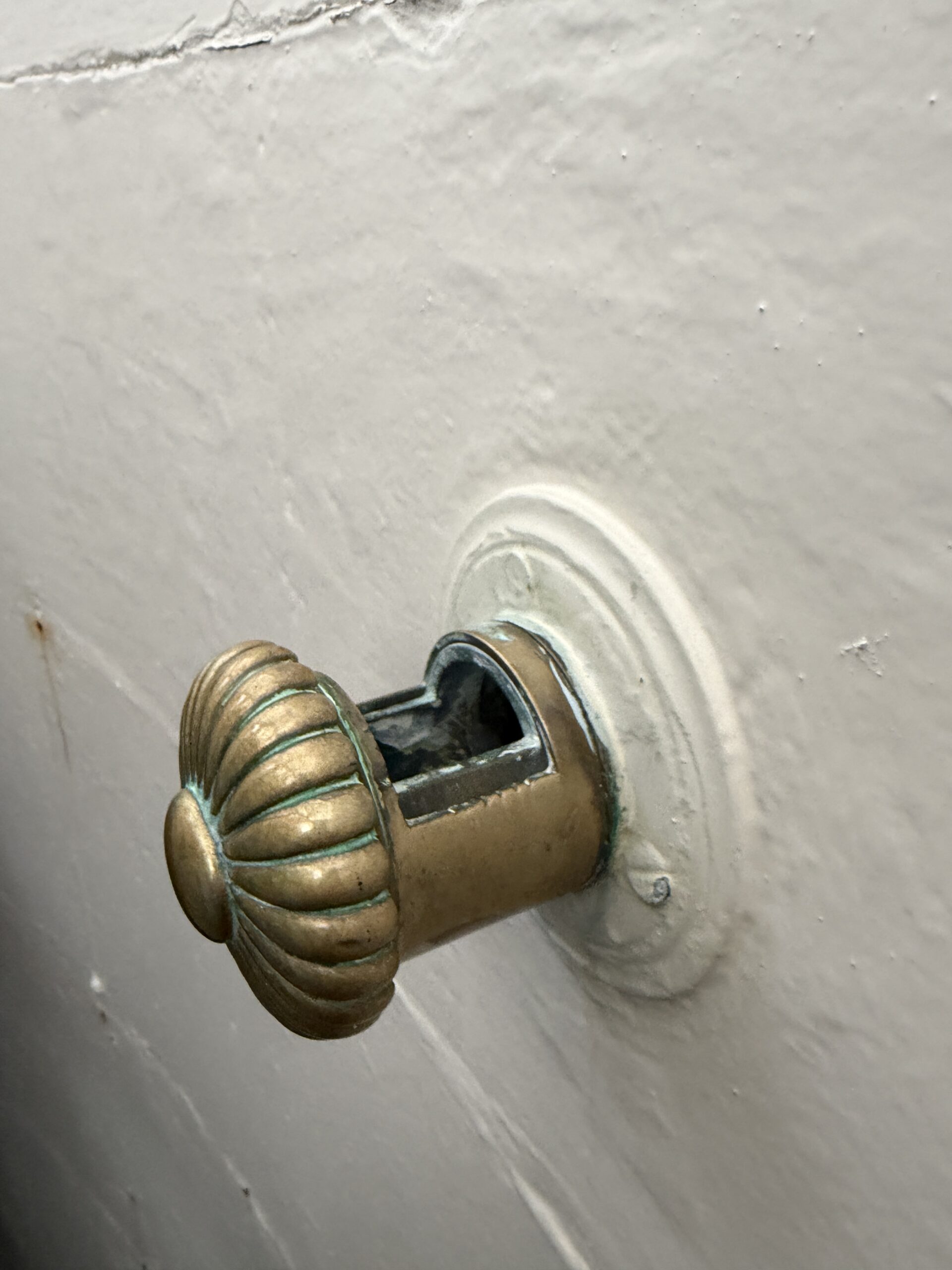
There are small adjustable vents–brass, of course–in the room with the light. They create draft for the flame and prevent the keeper from being overcome by kerosene fumes and toxic gases.
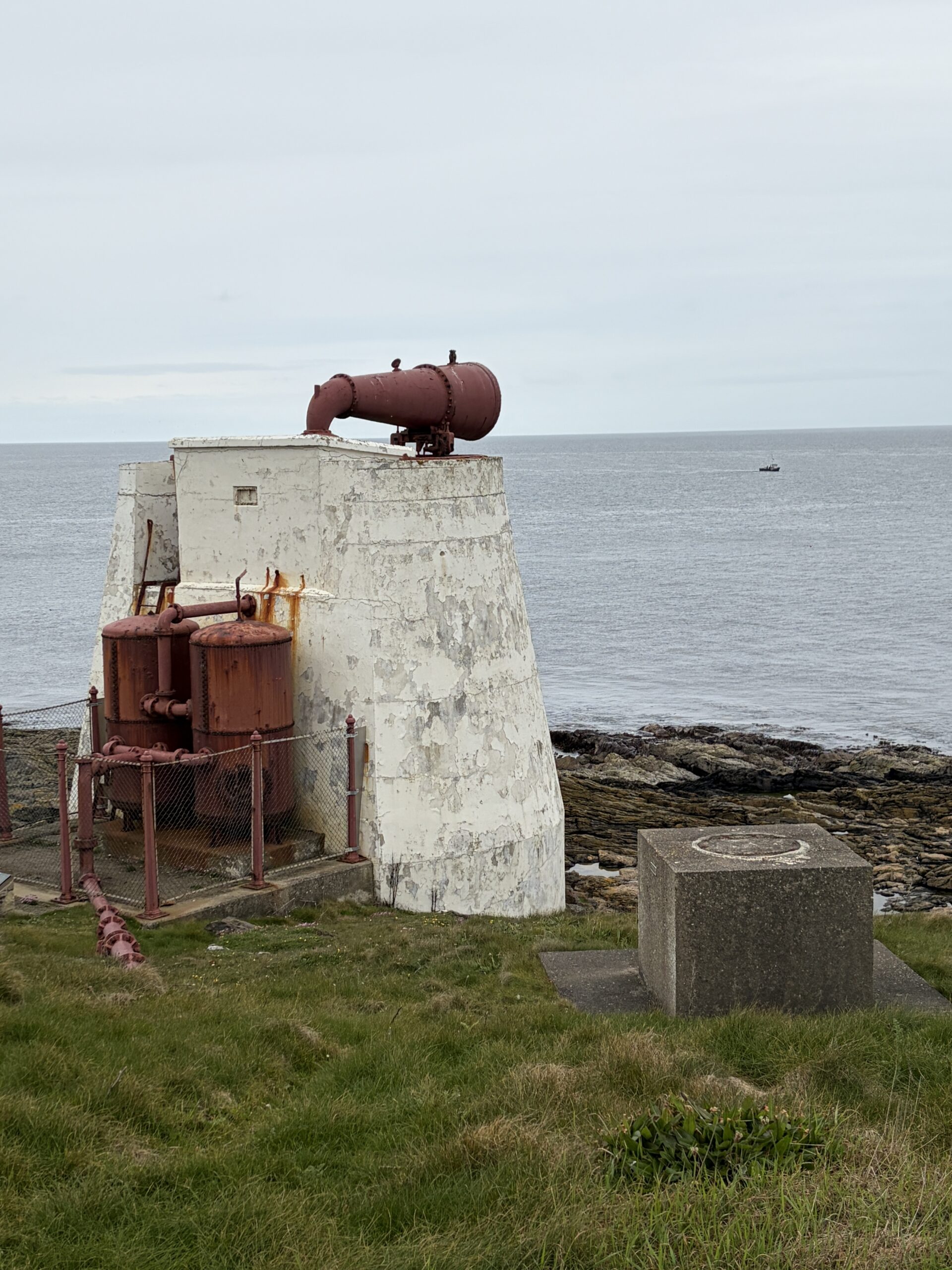
On the ground is a building dedicated to creating the pressurized air and timing for a foghorn. It gave a seven-second blast every 90 seconds in foggy weather. It operated from 1903 to 1987.
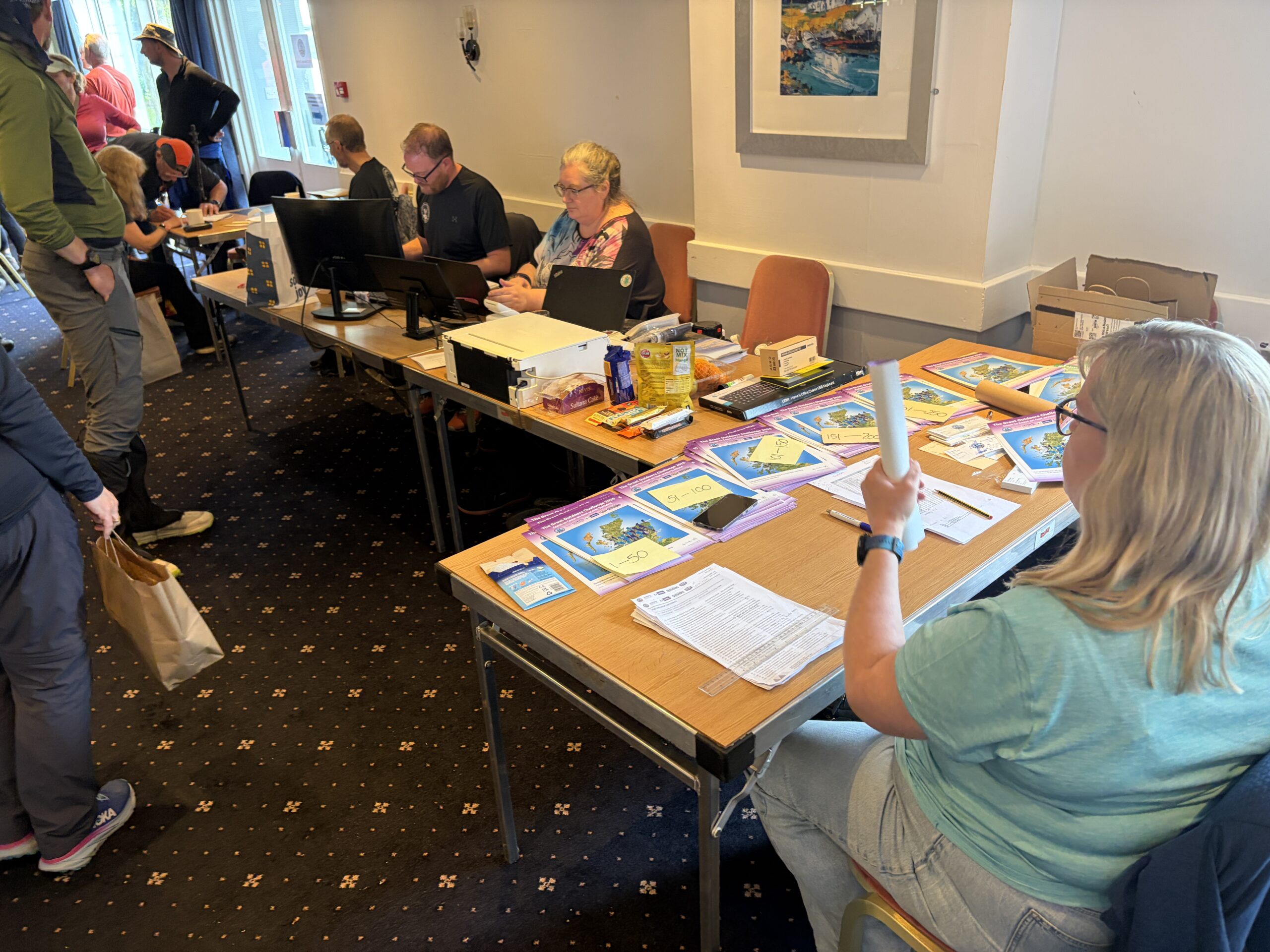
In Montrose, I went to the hotel that housed Challenge Control, checked in, signed the roster, and collected my bag of swag (tee shirt, mug, pin).
There were two things left to do.
The first was to attend the banquet for Challengers finishing that day. There were banquets the day before and the day after for people finishing then.
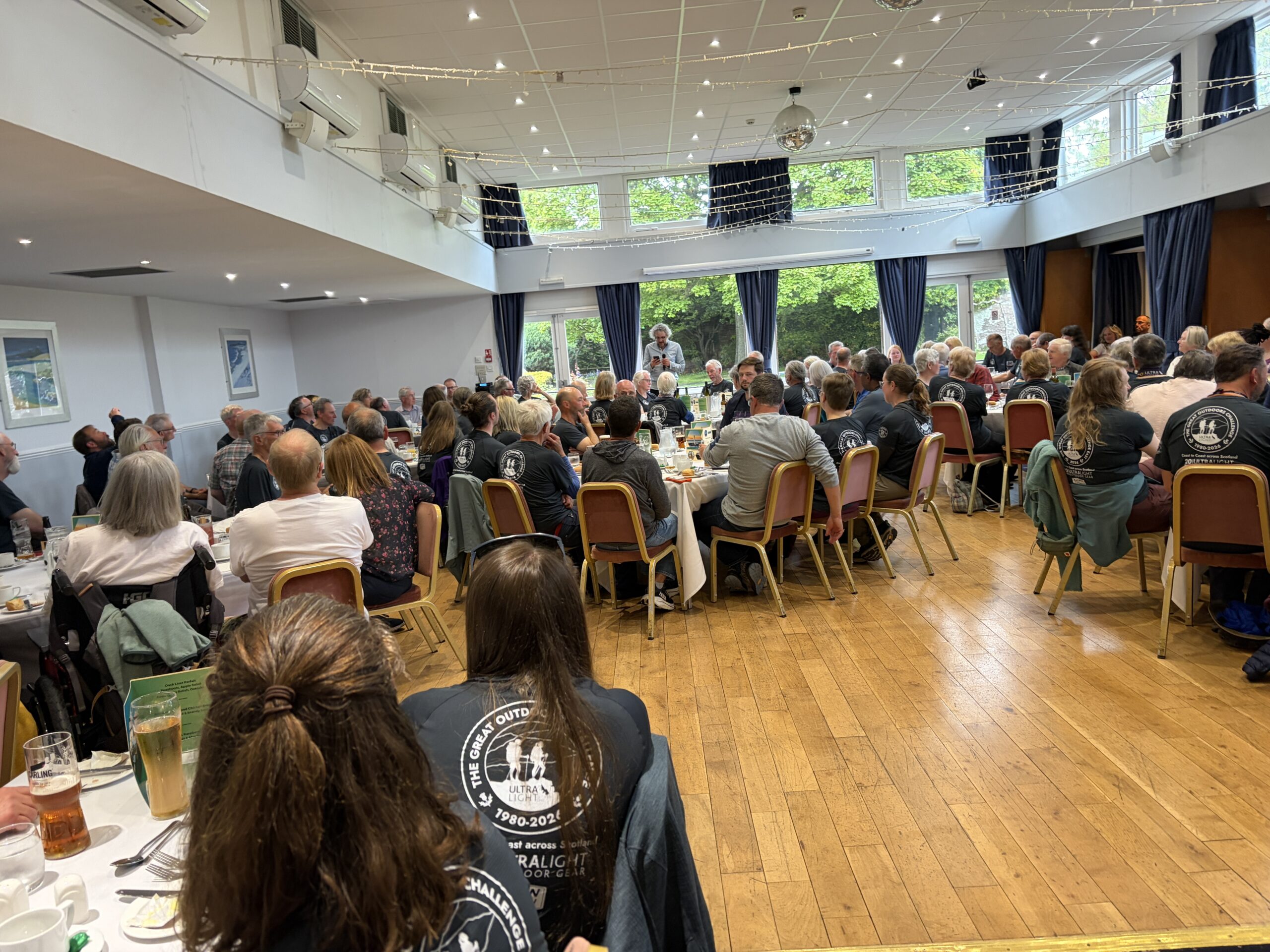
It’s an event of great revelry and storytelling. One of the organizers gave a few statistics. There were 341 starters; 21 countries were represented; the youngest walker was 22; the oldest first-timer was 78; the fastest crossing was six days.
I was at a table with several young Dutch people. The one next to me, Kaas, turned 30 on the Challenge. He summitted seven Munros in one day and was snowed on part of the time.
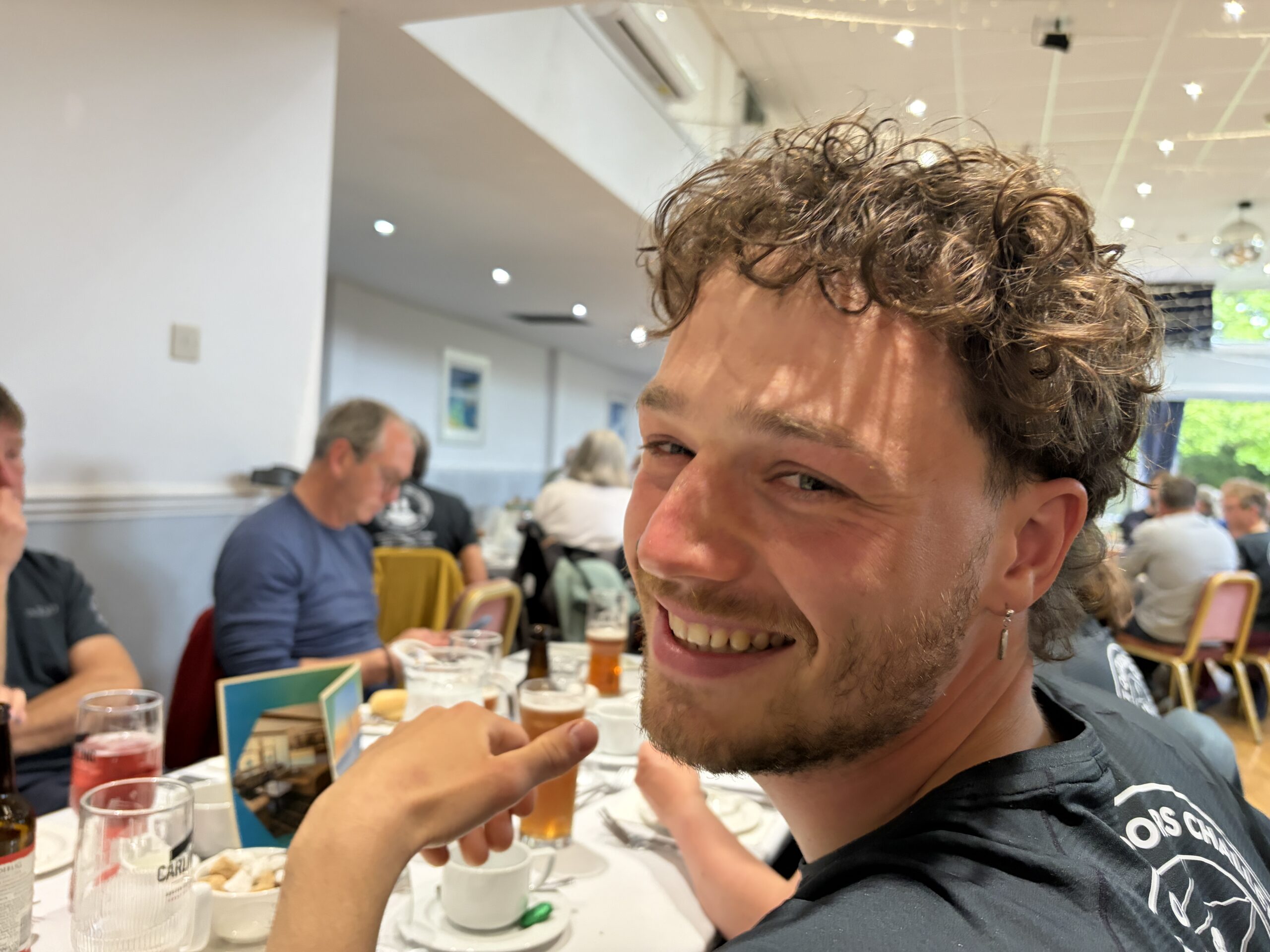
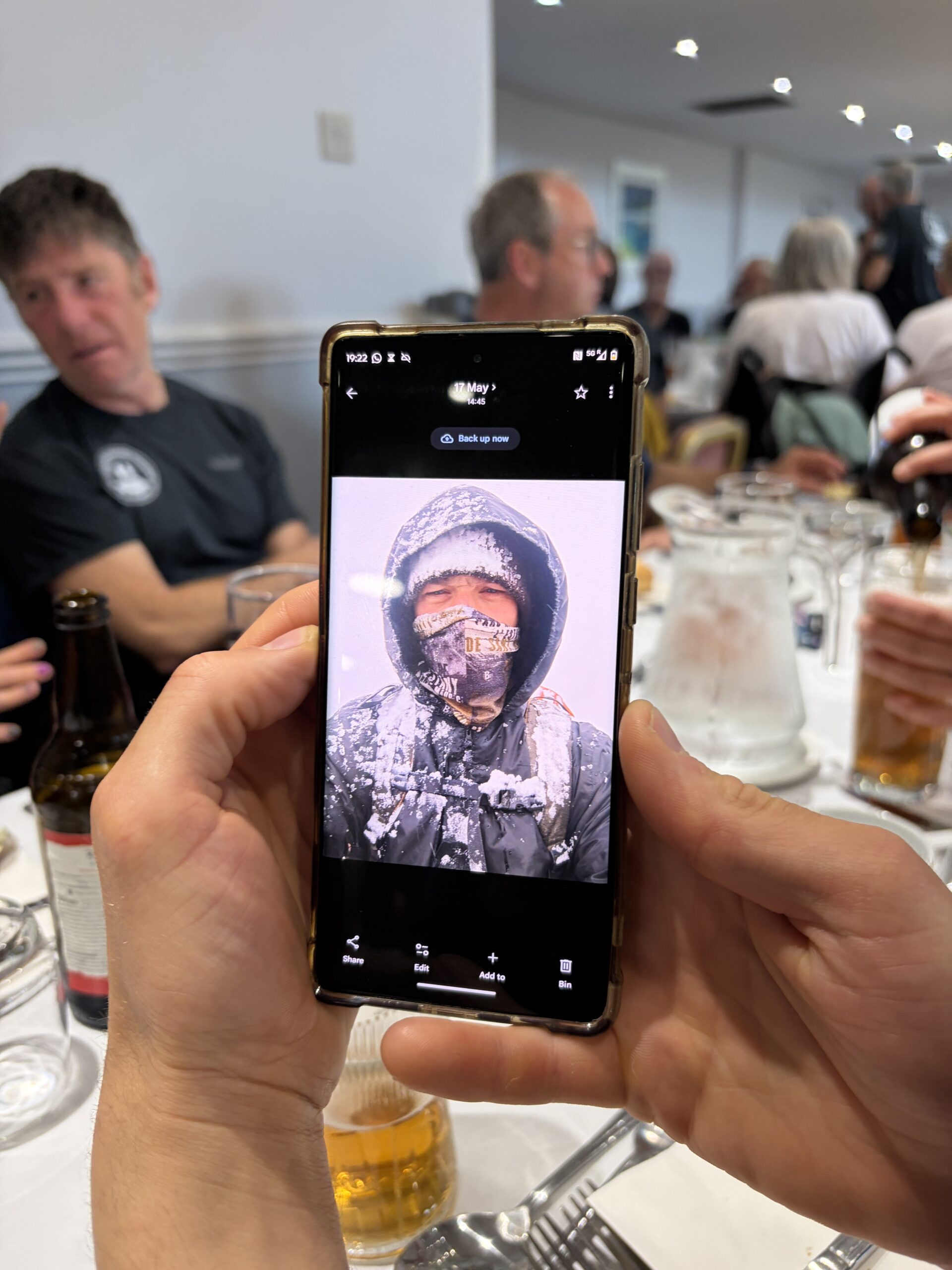
Across from me were Duncan and Charlie, and Duncan’s wife, Cham. It’s nice to see relatives who seem to enjoy each other’s company so much.
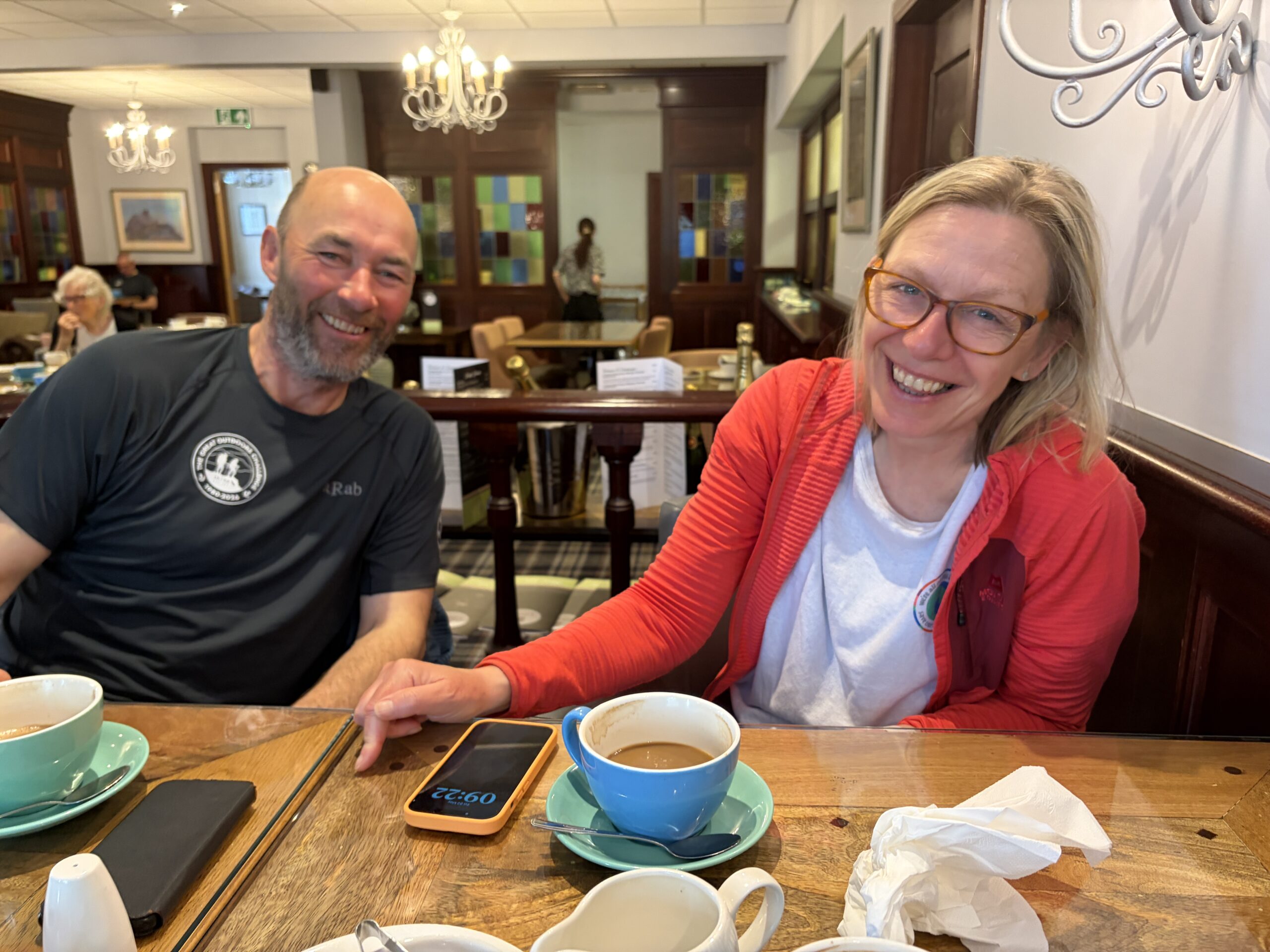
I had breakfast the next morning with Graeme and Liz, with whom I’d camped one night two years earlier. I’d given them a spare bag of gorp, which they really liked, so I’d packed an extra one, confident I’d see them again. They didn’t look a day older.
But before breakfast, I did the other thing left to do.
I walked a half-mile to the beach to wade into the North Sea. The Great Outdoors Challenge is serious about this act of pedal intinction; your crossing isn’t over until you’ve performed it.
The beach is a vest-pocket patch of sand between rocks. A woman was on the beach. When I got close I recognized her. She was Emma Warbrick, whom I’d met on the long train ride from Glasgow to Mallaig before my first Challenge, in 2014. She remembered me too, but more for something else.
Halfway across she twisted an ankle and wasn’t sure she could go on. I did an exam and determined it wasn’t broken or unstable, got out my kit of analgesics, and prescribed her some. She said I’d consulted something on an iPad. (I have a digital copy of the Special Forces field medical manual on it.) I had forgotten this encounter.
“I don’t think I could have made that crossing without you,” she said.
I was gratified to hear this. The Challenge is a self-indulgence, even if a self-punishing one. Someone on this walk asked me: “Are you raising money for charity?” “No,” I said. “I’m just trying to make it across.” So, it was nice to hear I’d been of help in a previous one.
“I’ll leave you to the ritual,” Emma said, and left the beach.
Some of you may wonder if I will do the Challenge again? I ask myself that, too. It was hard this time, even on a route that had less climbing than many of my previous ones, and no days longer than 18 miles.
I said “No” two years ago. I’m more sure now that’s the right answer. But I am glad I came back one last time.
I took off my shoes and stepped into the sea.
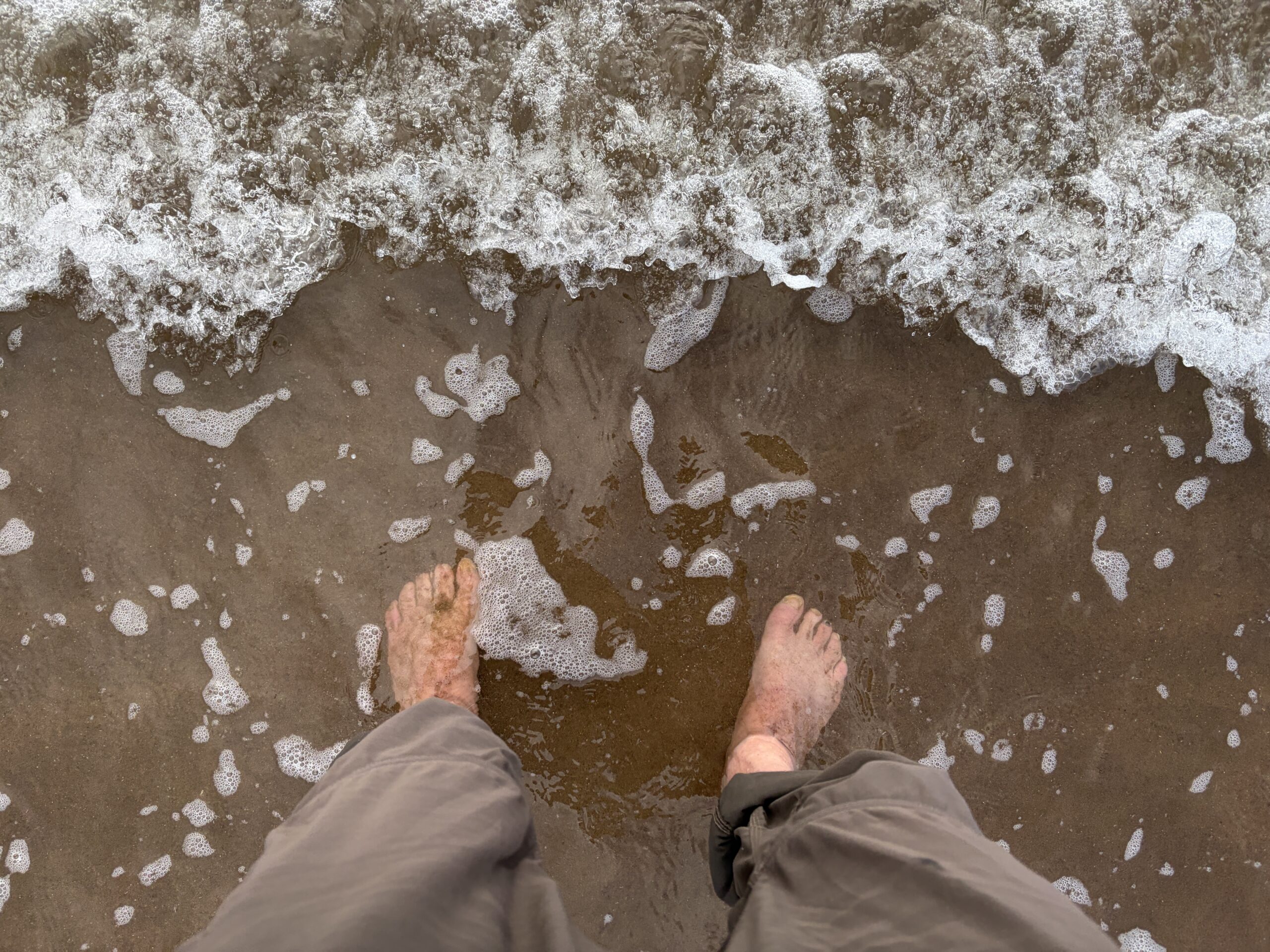
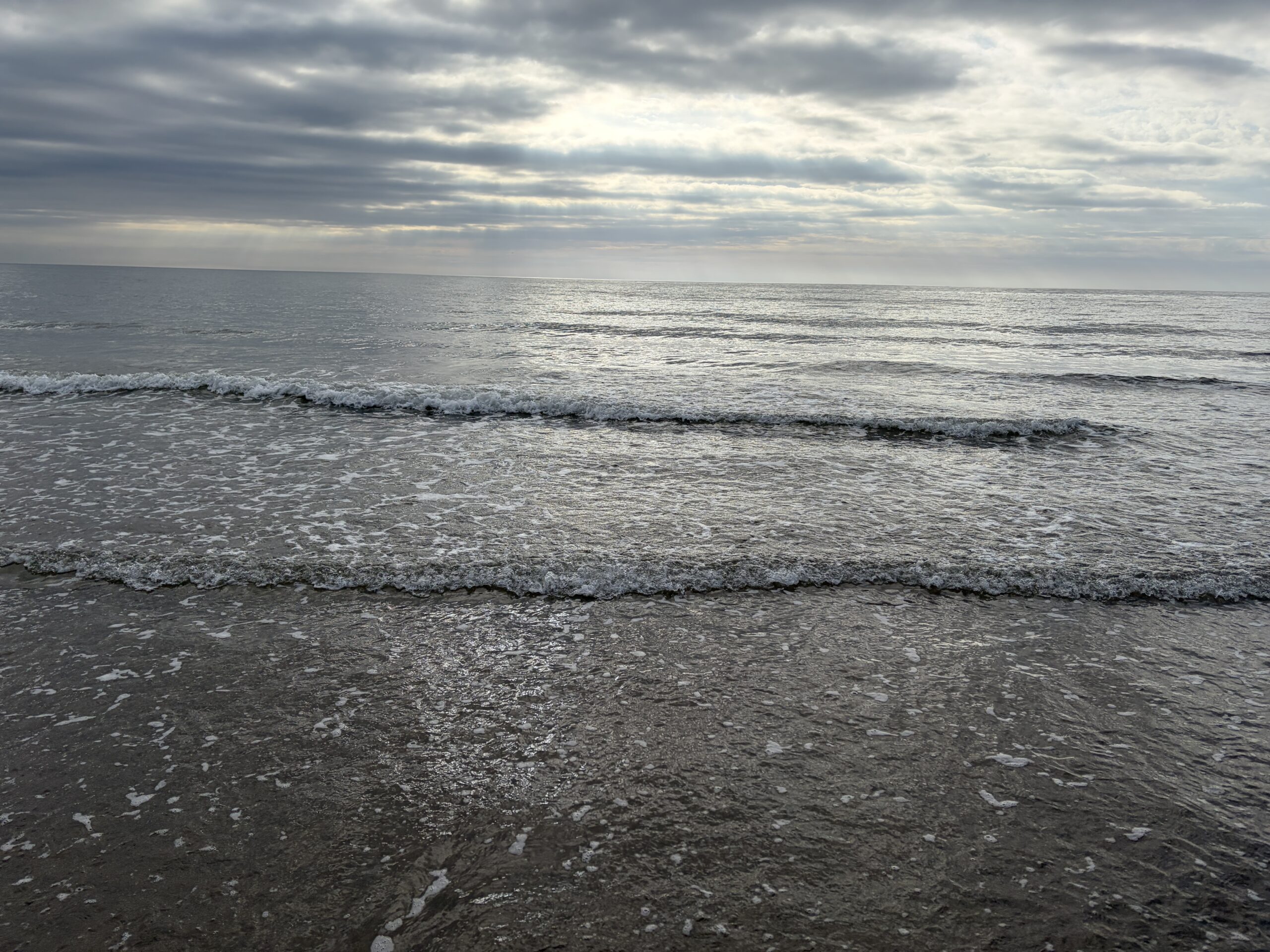
Oh, the people you’ve met. The things you’ve seen. You did it!
Well done. Your feet are looking good.
You made it! Congratulations. I’d say a massage is in order. See you soon. 💕
Congratulations (chased by great admiration and a dollop of envy).
Thanks so much for your endurance (!) – and for another inspirational account.
Hi Dave, happy to see your adventuresome curiosity is alive and well through your wonderful writing. As it happens, curiously, yesterday I discovered a letter you’d written years (and years) ago. Maybe we’ll talk soon. Onward!
Good work David! I thoroughly enjoyed reading of your travels. Kind of tempting. Maybe if I decide to try it after all in a couple of years we can rendezvous. I know — this was the “last time”…