In the National Piping Center’s gift shop in Glasgow there are mugs for people who like to think about all the places spittle can emerge from bagpipes–while drinking their tea.

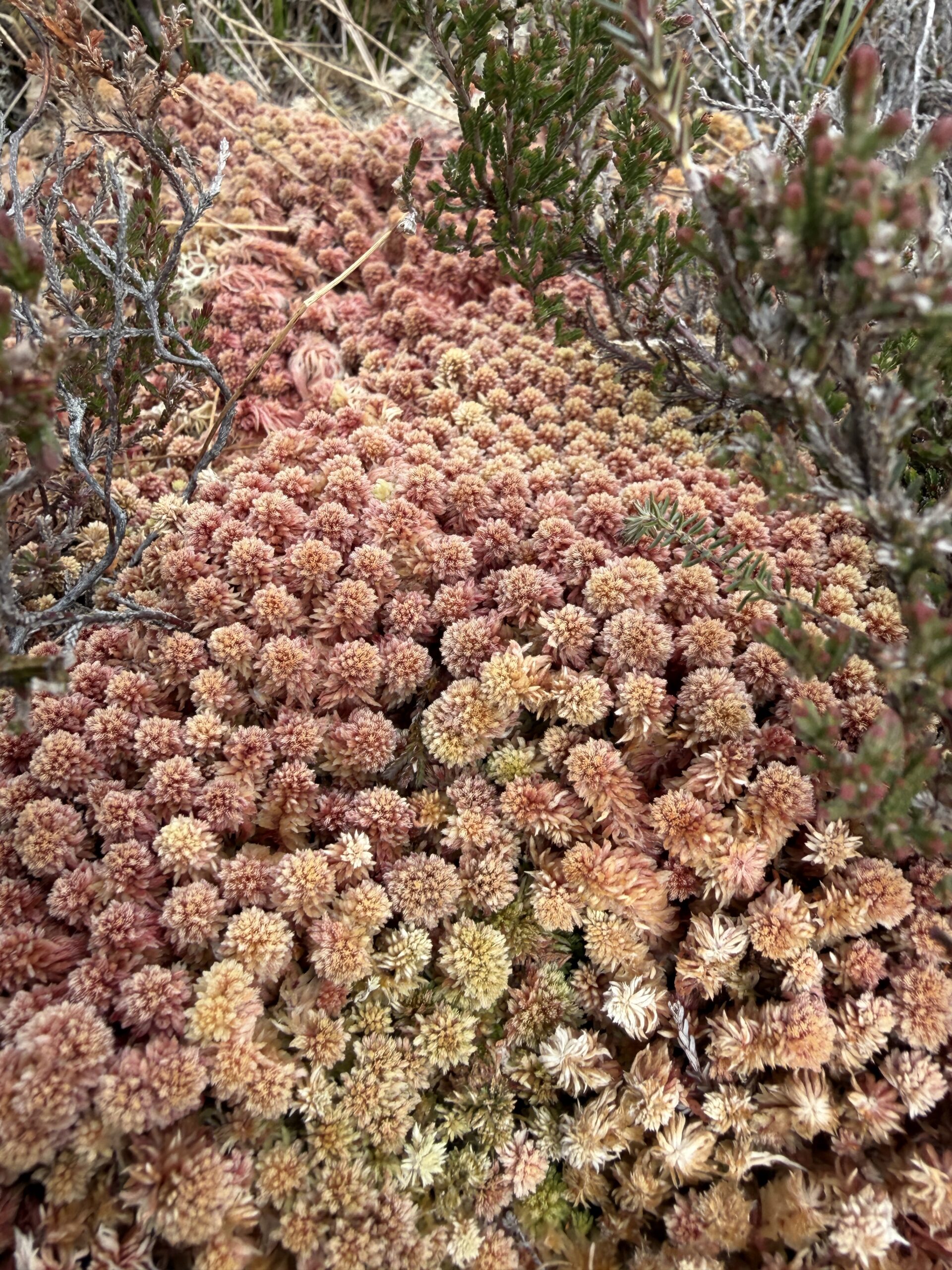
Up close Scotland is beautiful too.
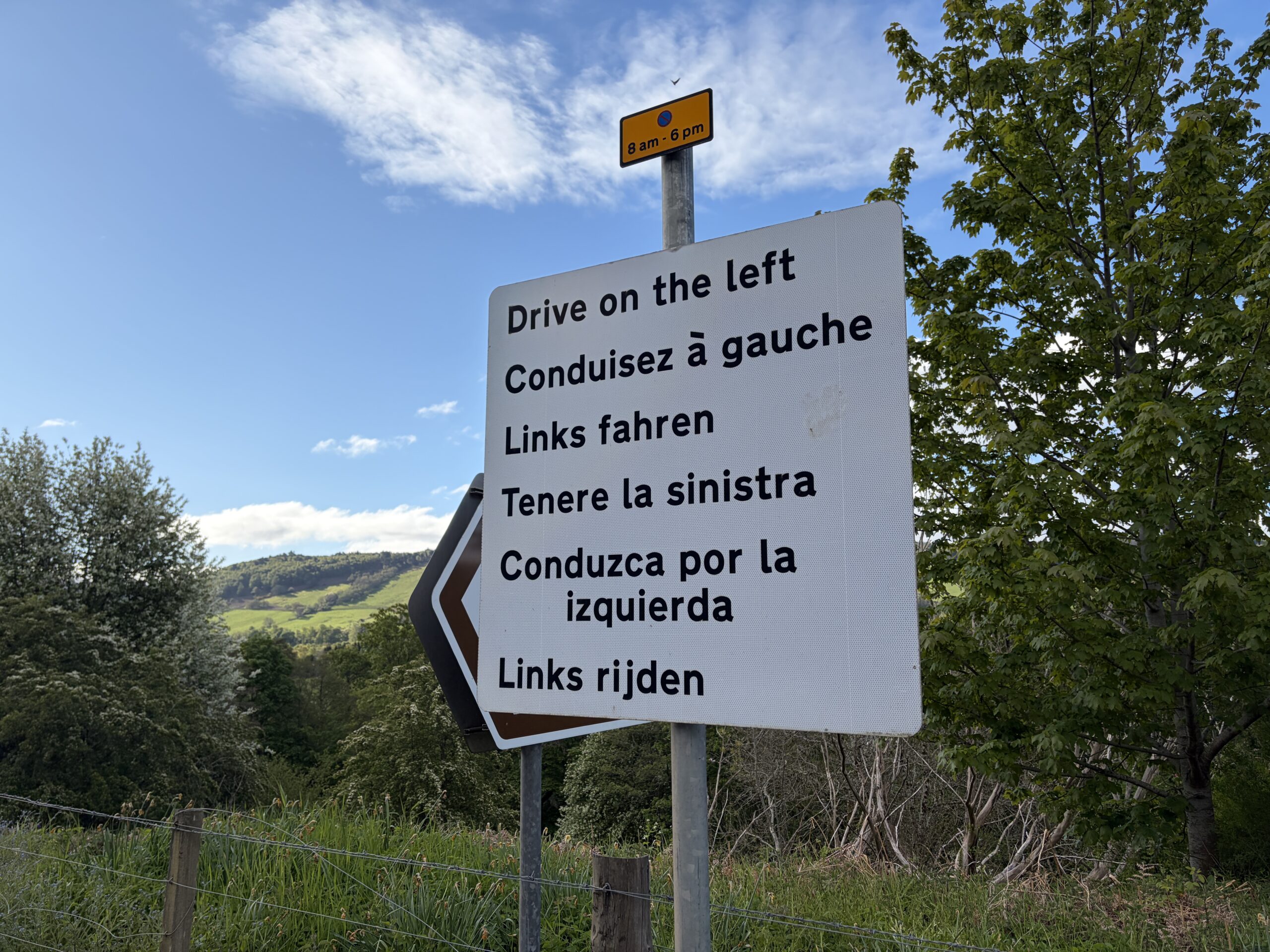
No need to put it in Gaelic.
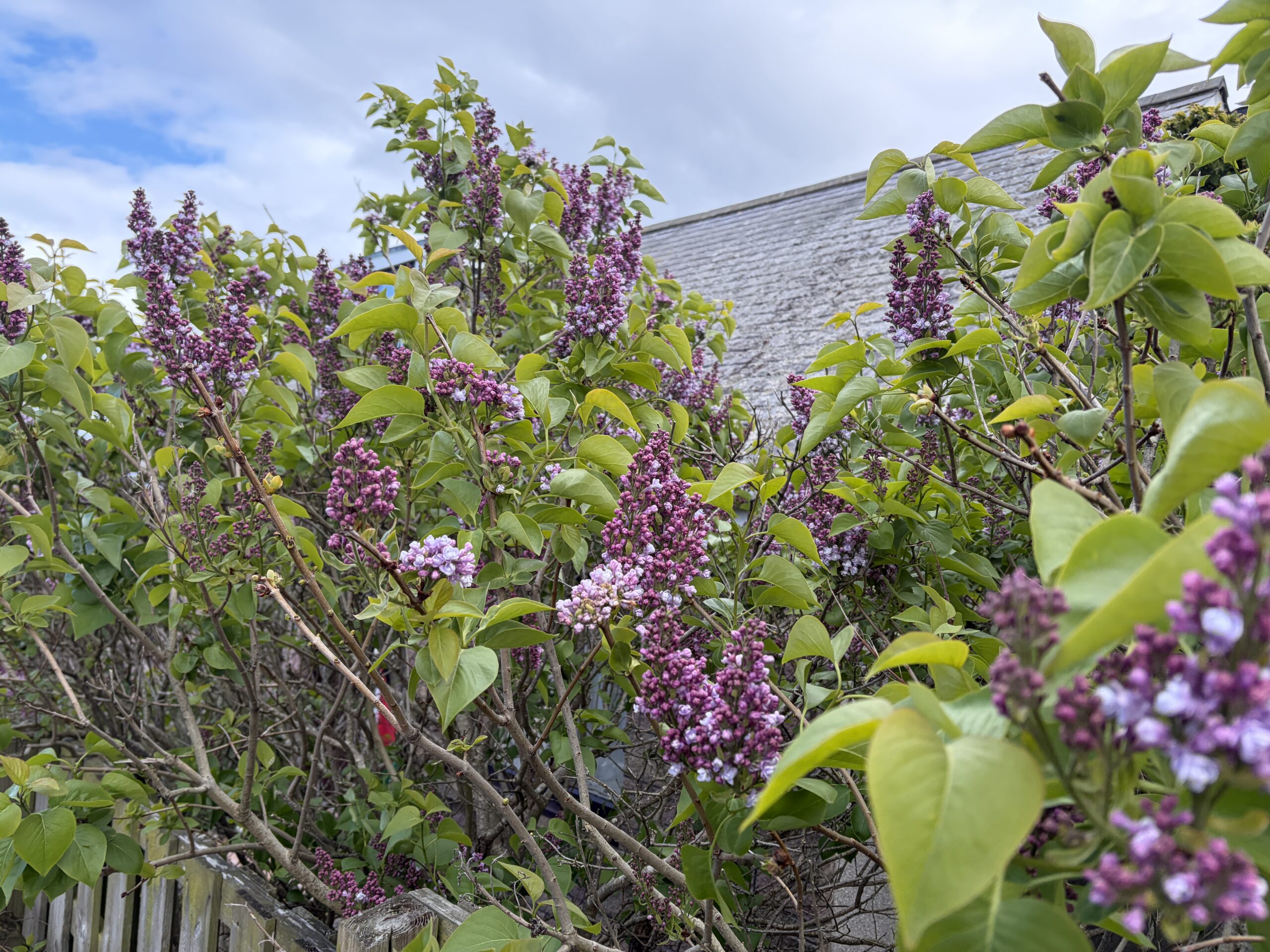
Lilacs not fully in bloom on May 15.
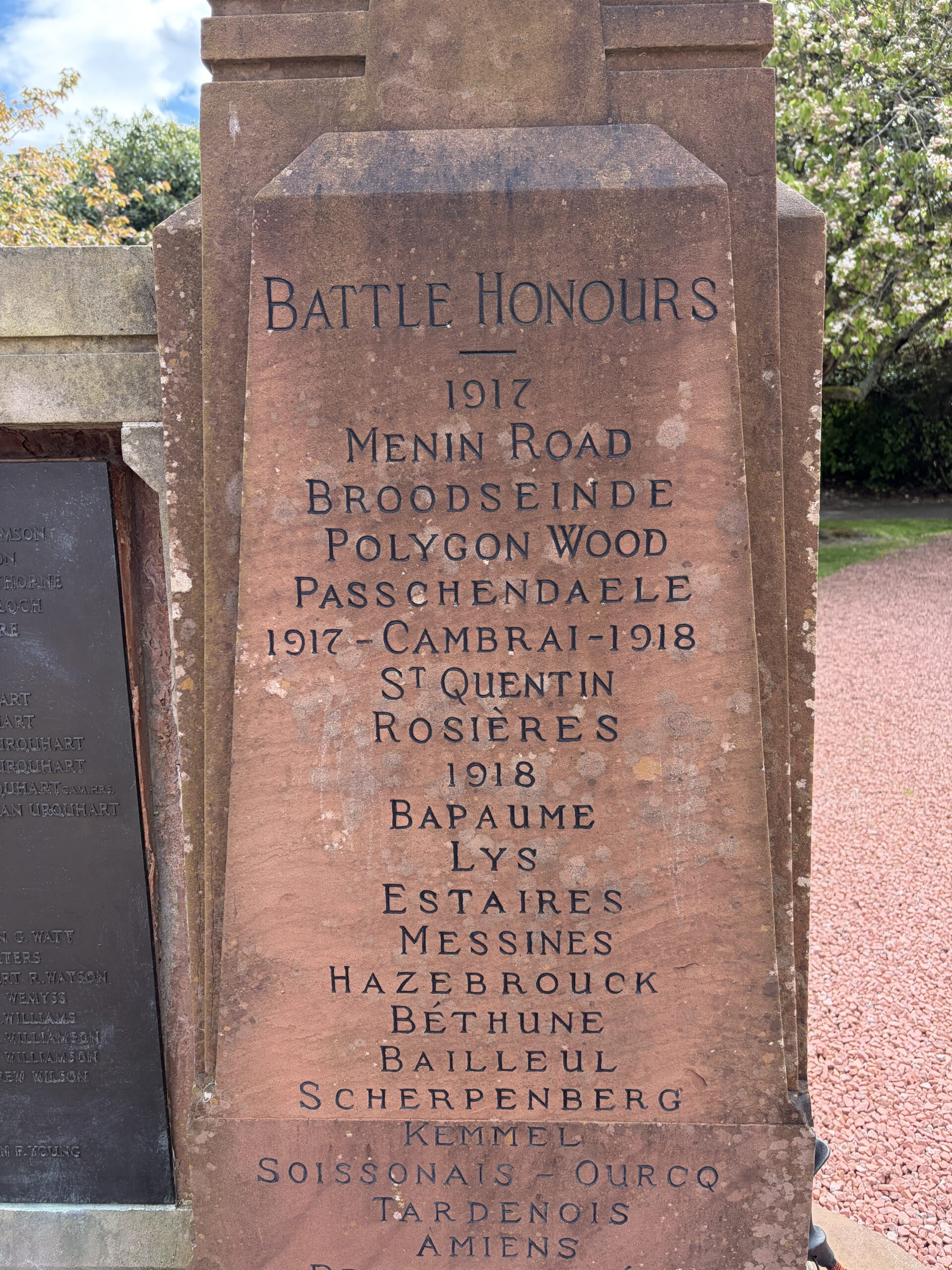
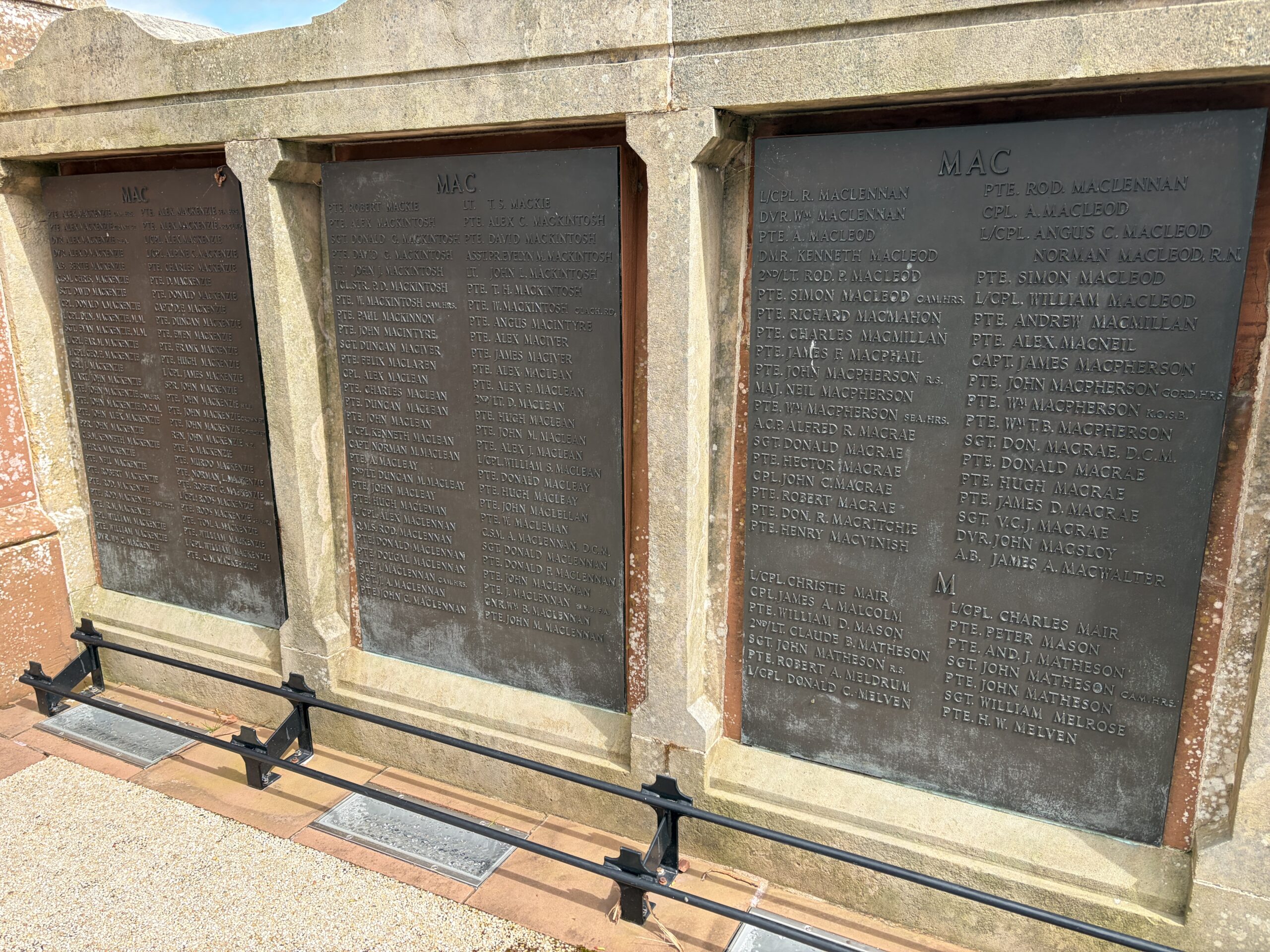
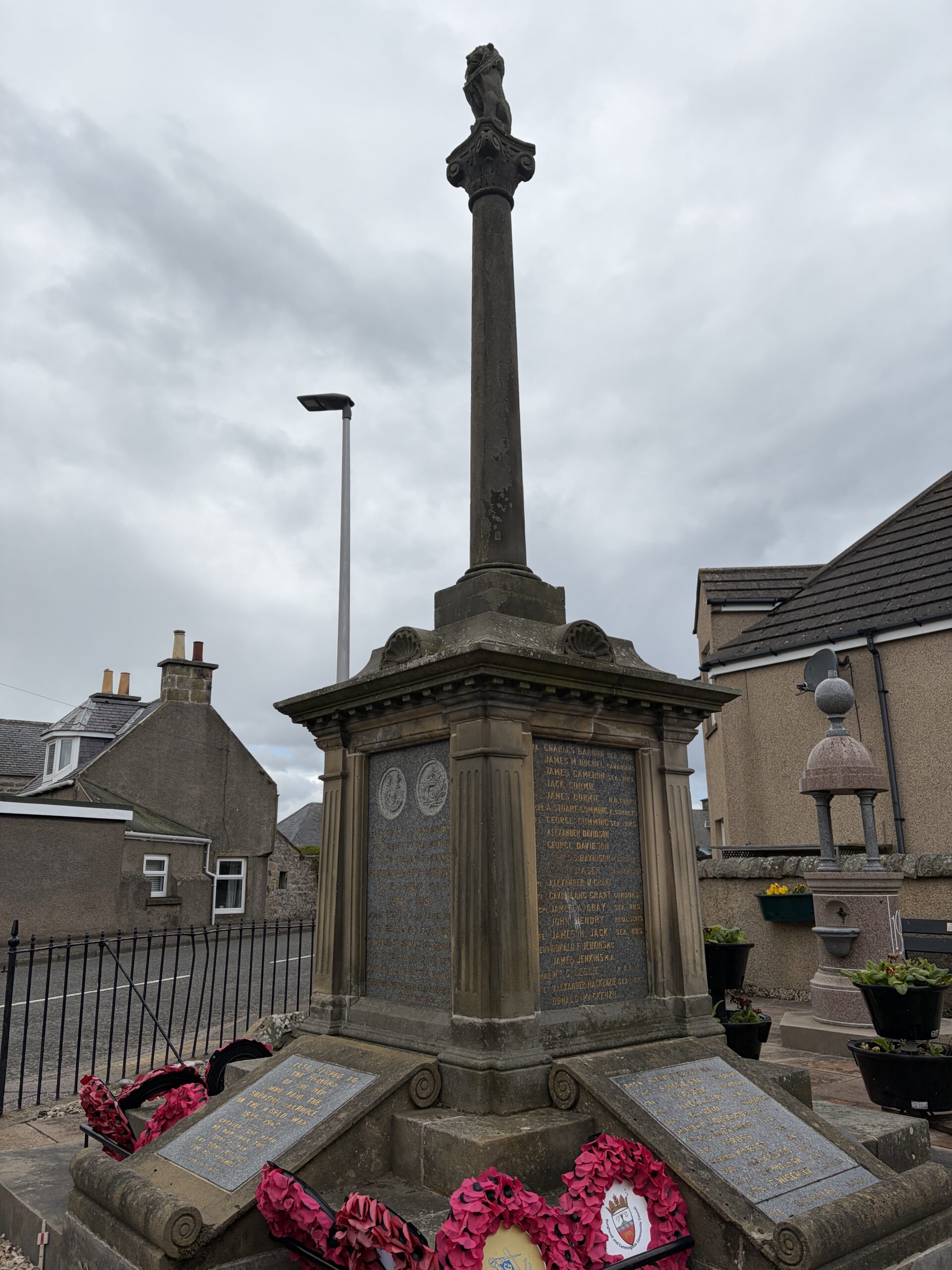
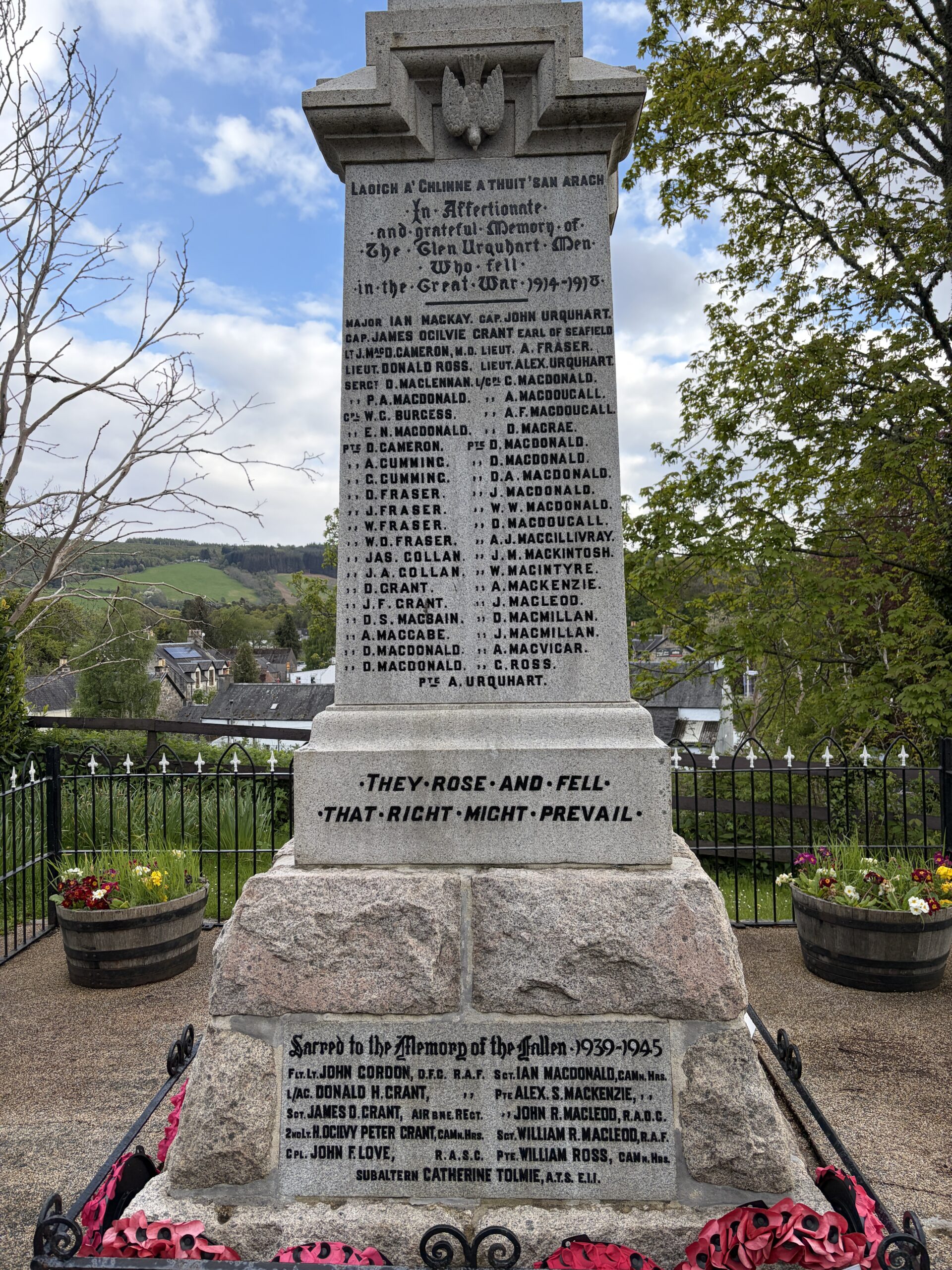
I find the Great War memorials in every town and village moving in a way that’s undiminished by time. I once saw one with two names on it in a hamlet of four houses.
The first two below are from Inverness. It lists every violent encounter no matter how small. It lists all of the city’s war dead. There are three panels for whose last name begins with “Mac.”
May no death go unremembered!
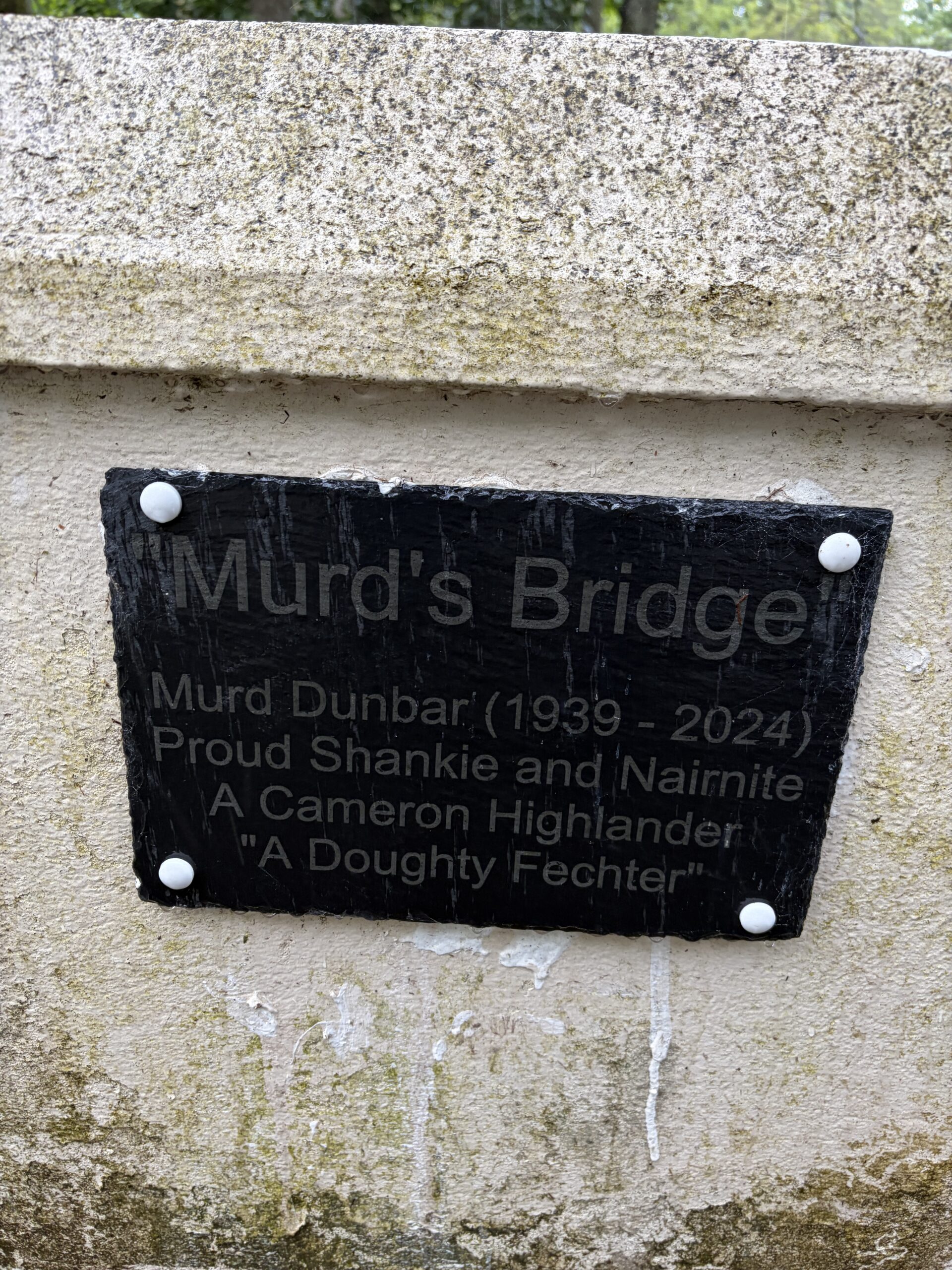
“Shankie”: a surname that’s also a nickname for a person with distinctive legs. “Fechter”: a fighter or champion.
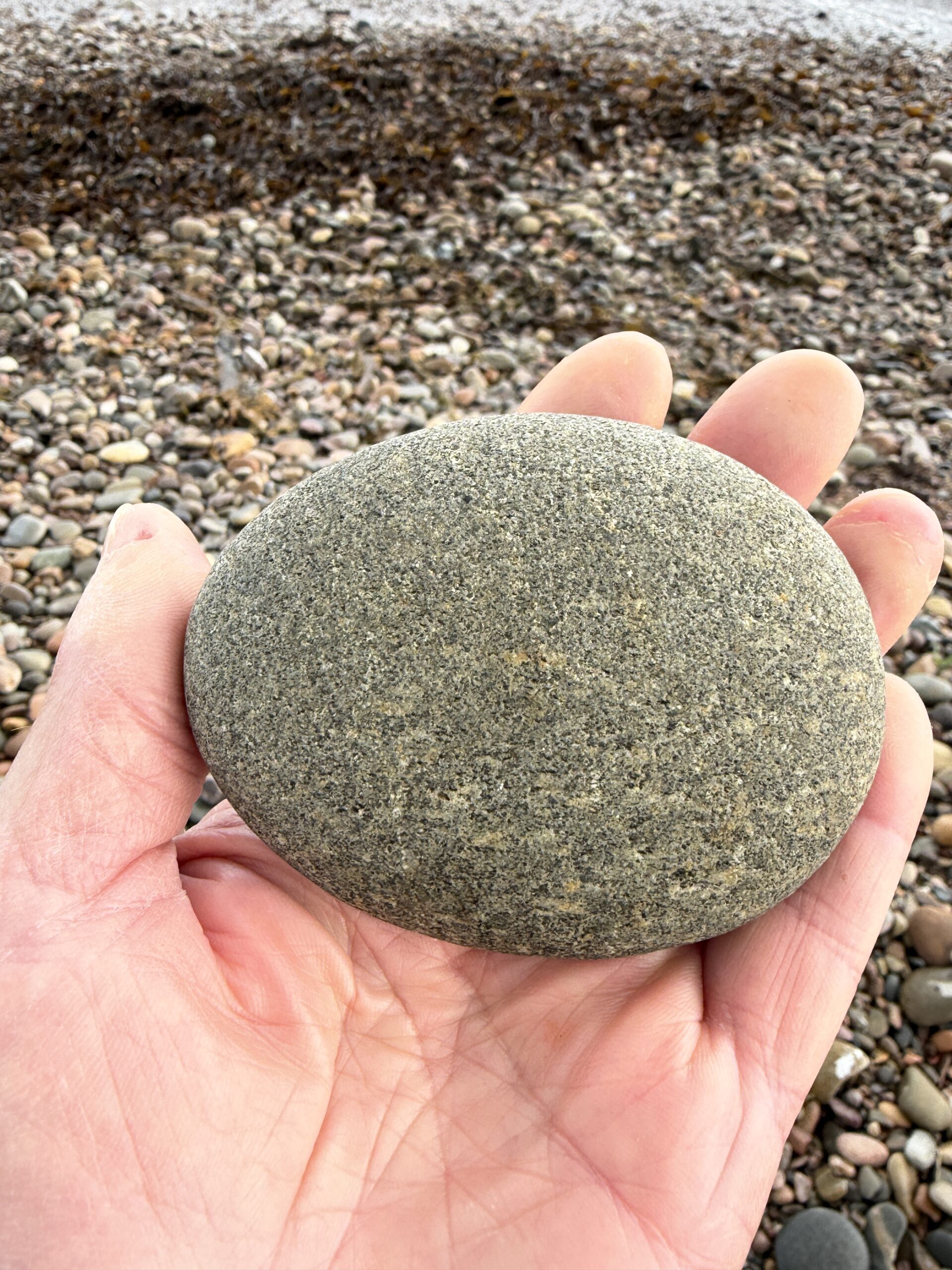
One could spend all day admiring the billions of wave-polished stones on the Moray Coast. This one exemplifies nature’s preference for ellipses over circles (which holds even for the orbits of celestial bodies.) I was tempted to take it and some of its perfect sisters. But I do have a few personal Challenge rules, one of which is: “Carry no rocks.”
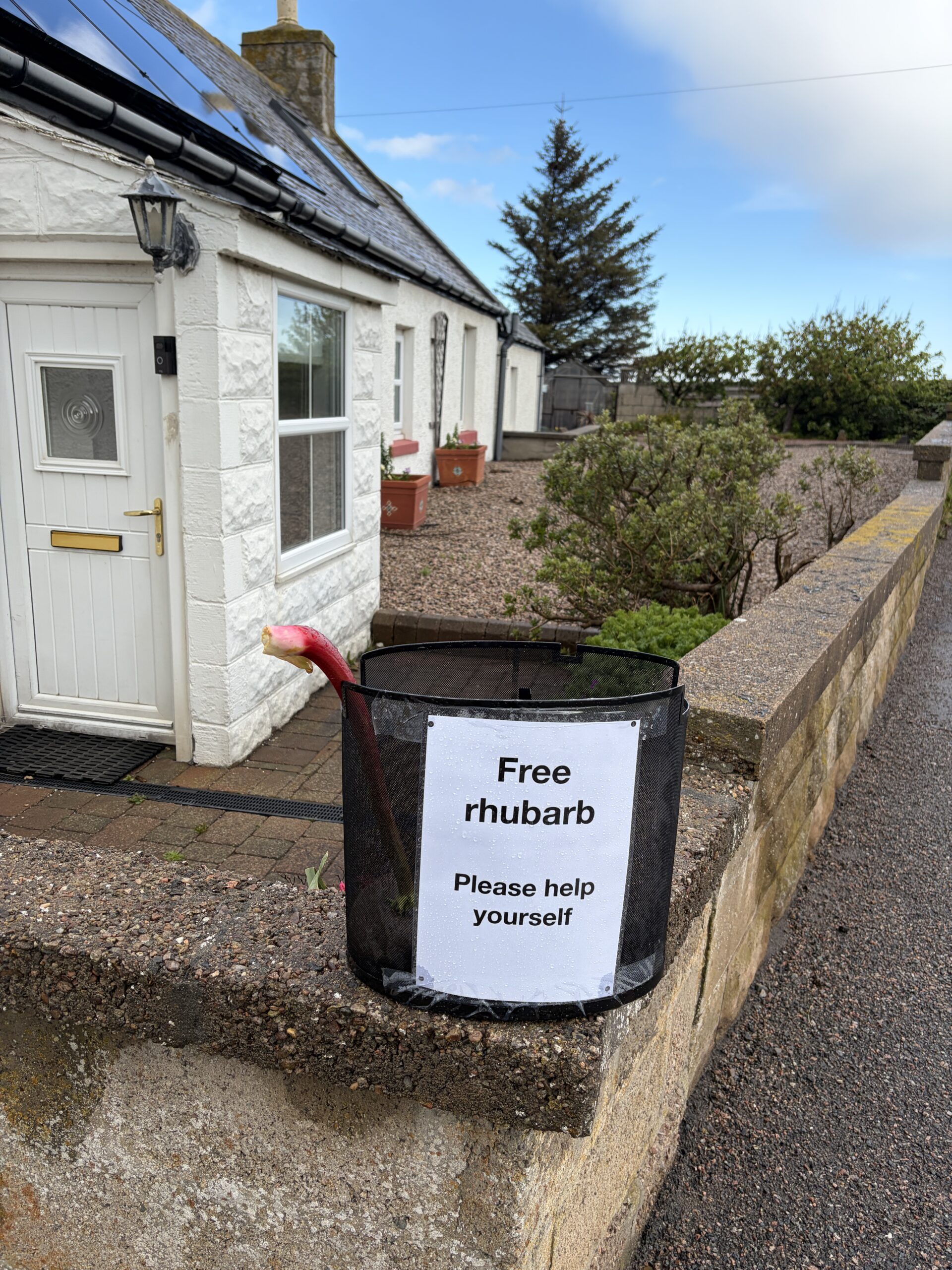
Nobody likes to take the last cookie either.
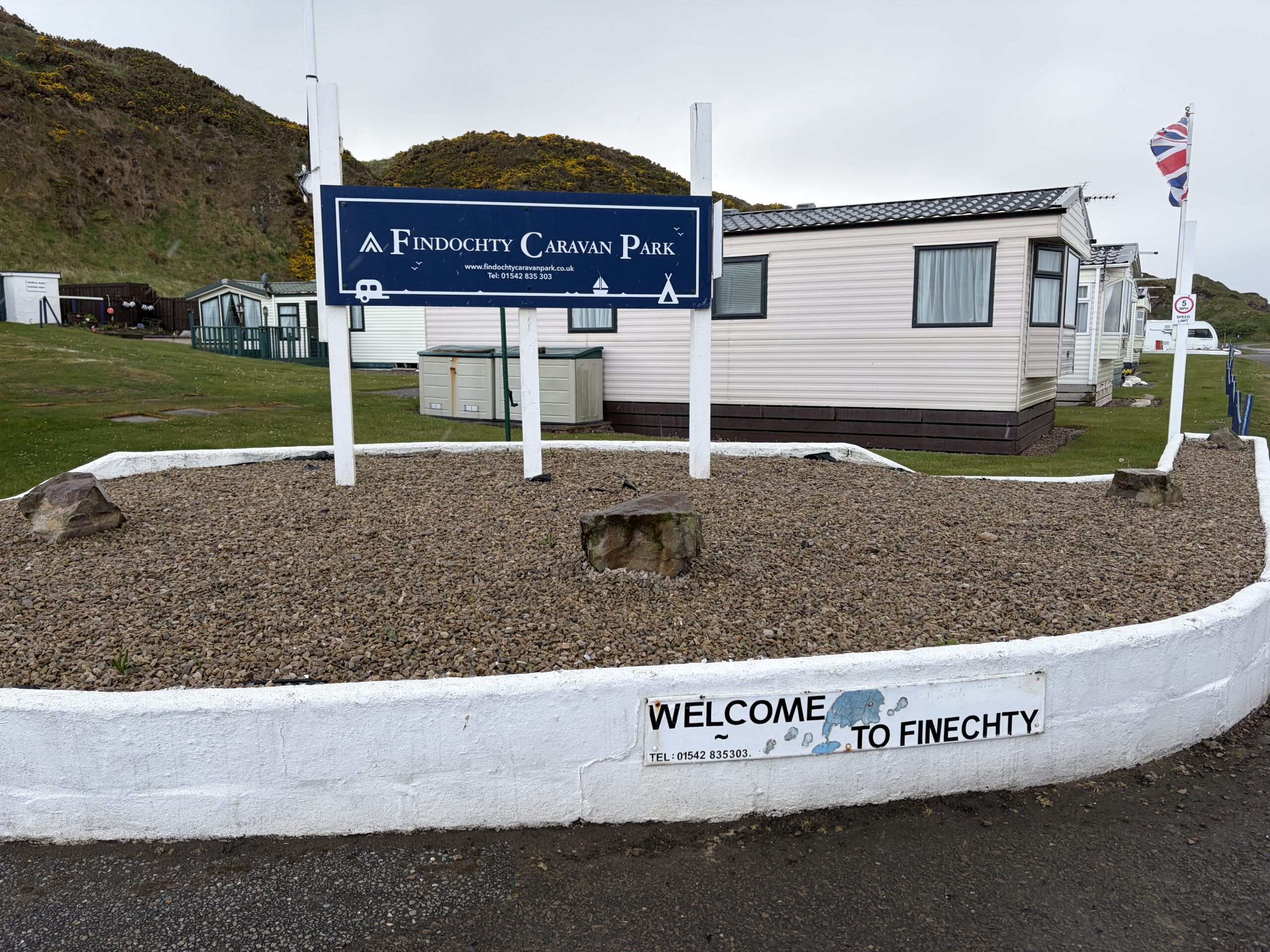
“Findochty” is the name, “Finechty” is how it’s pronounced.
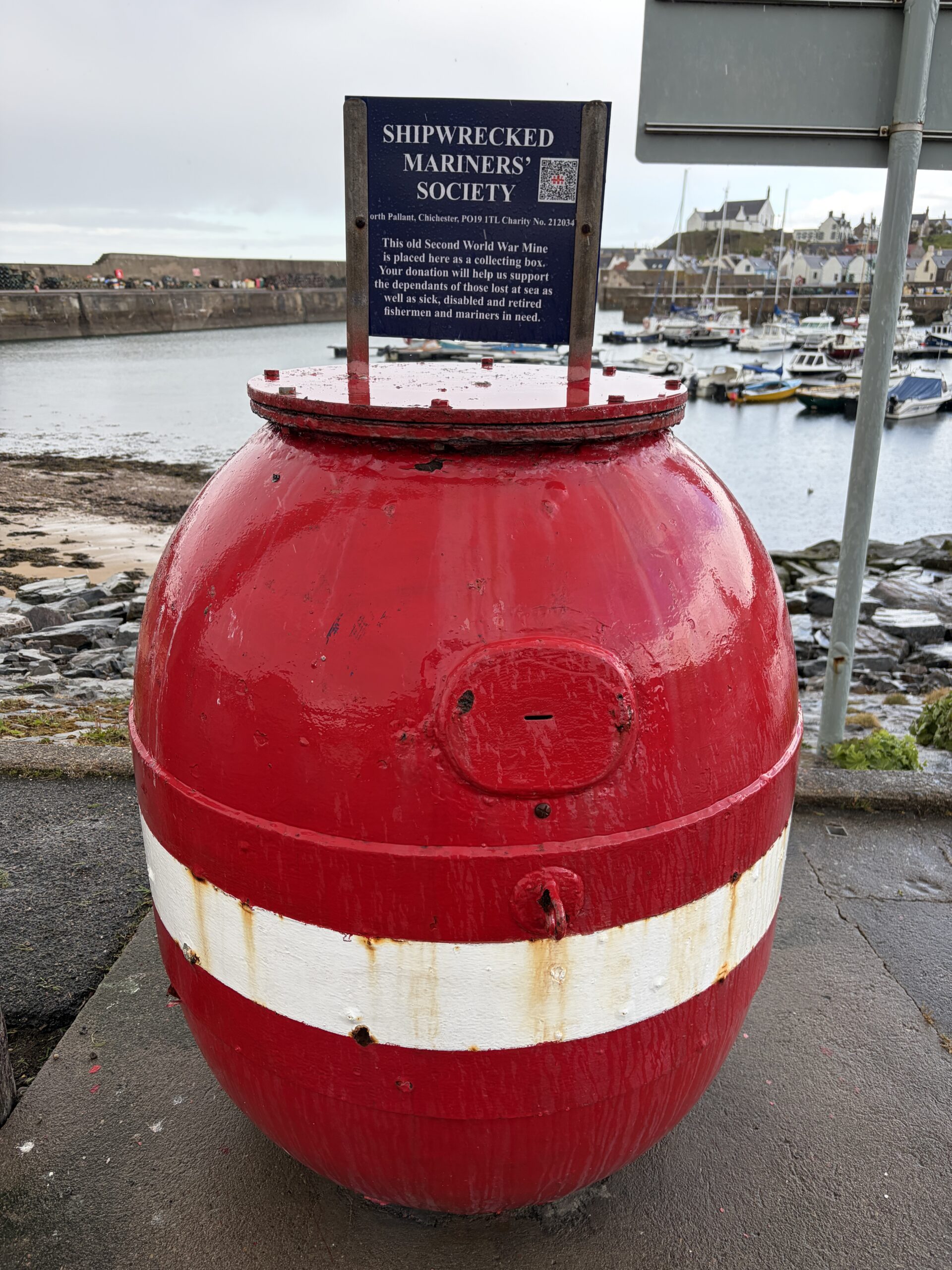
This is from back when change amounted to something.
Cleaners wanted indeed!

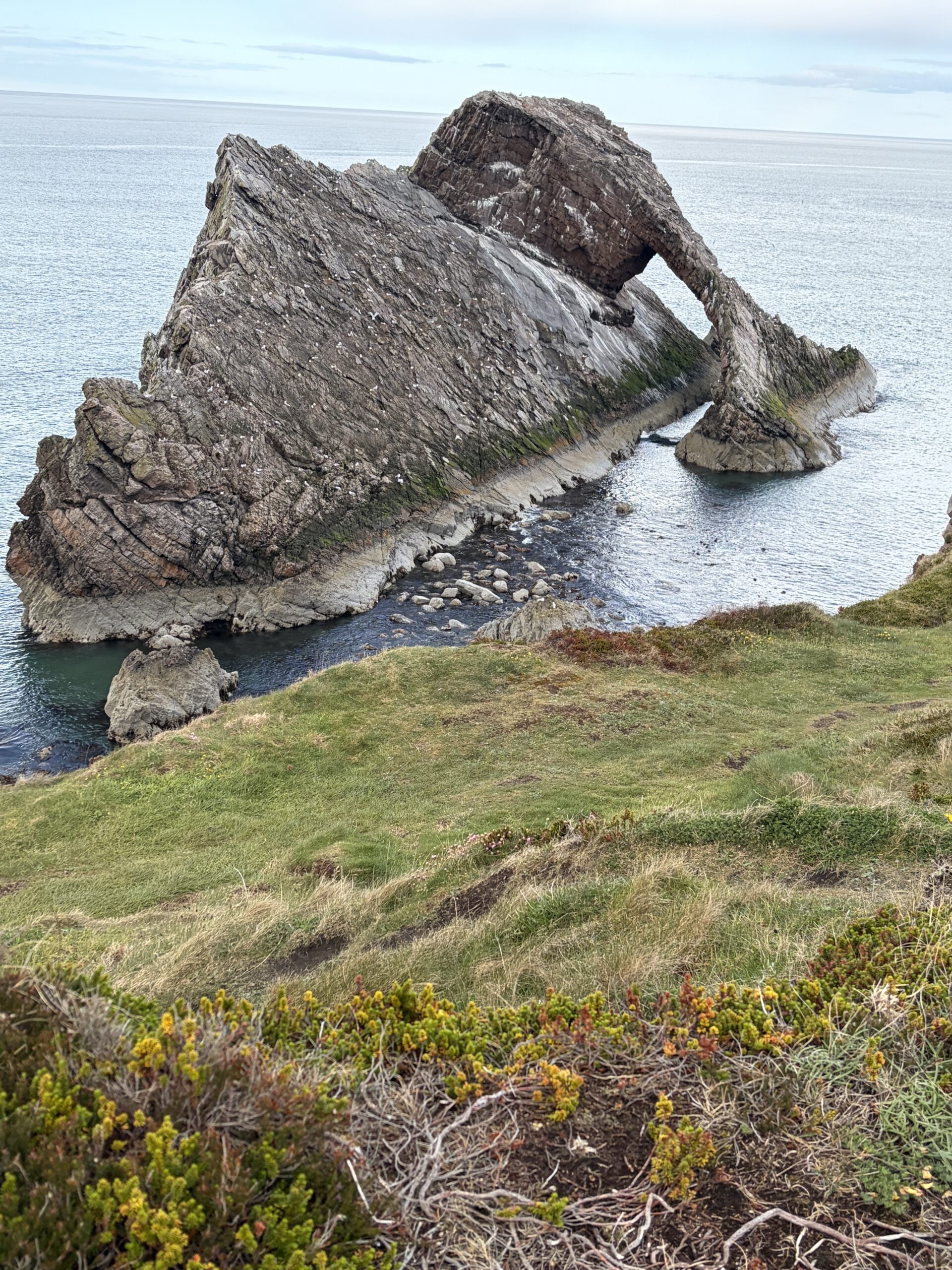
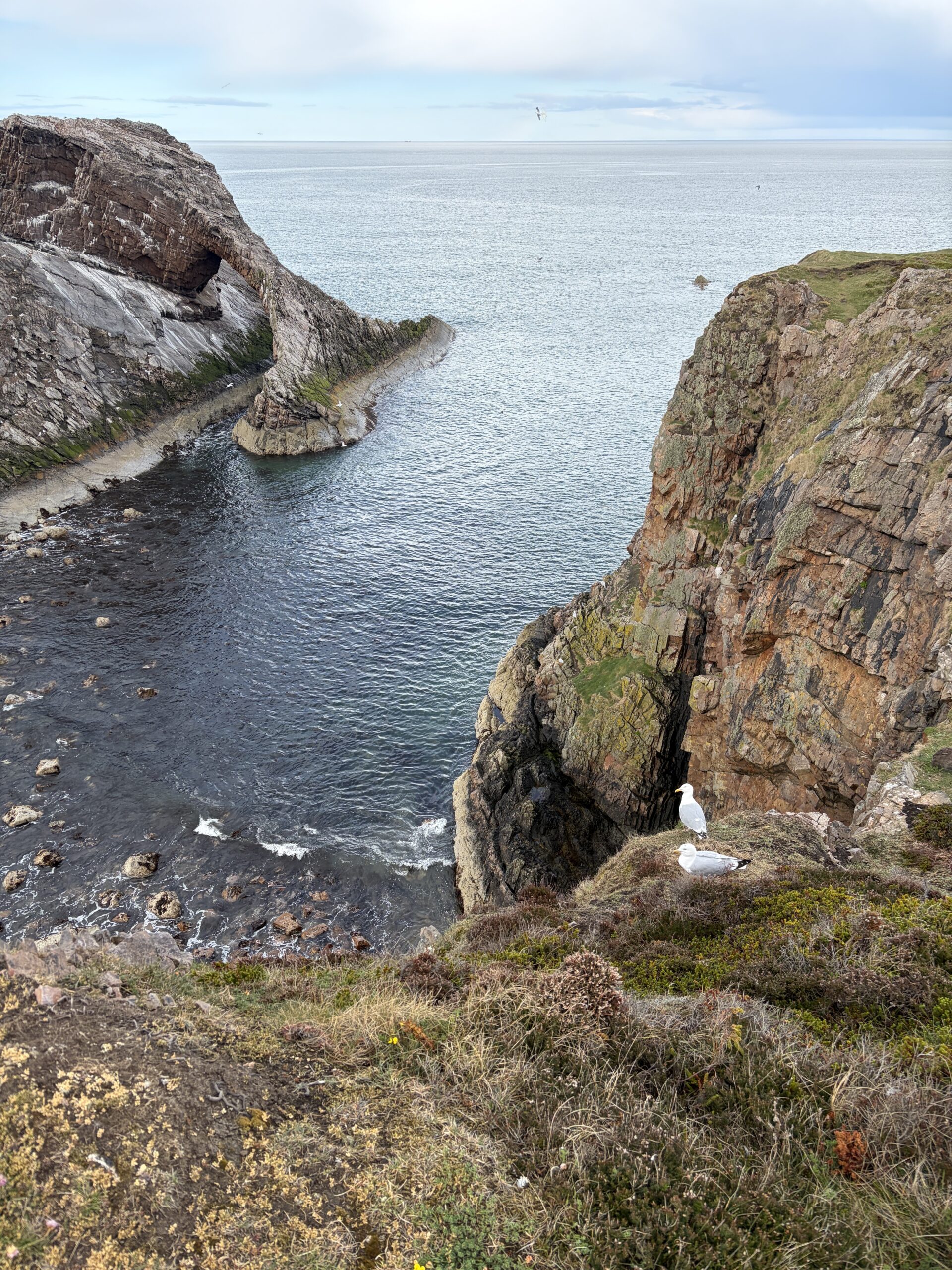
The white specks on Bow-Fiddle Rock are nesting pairs of seagulls. The couple below the path have no competition and a great view.
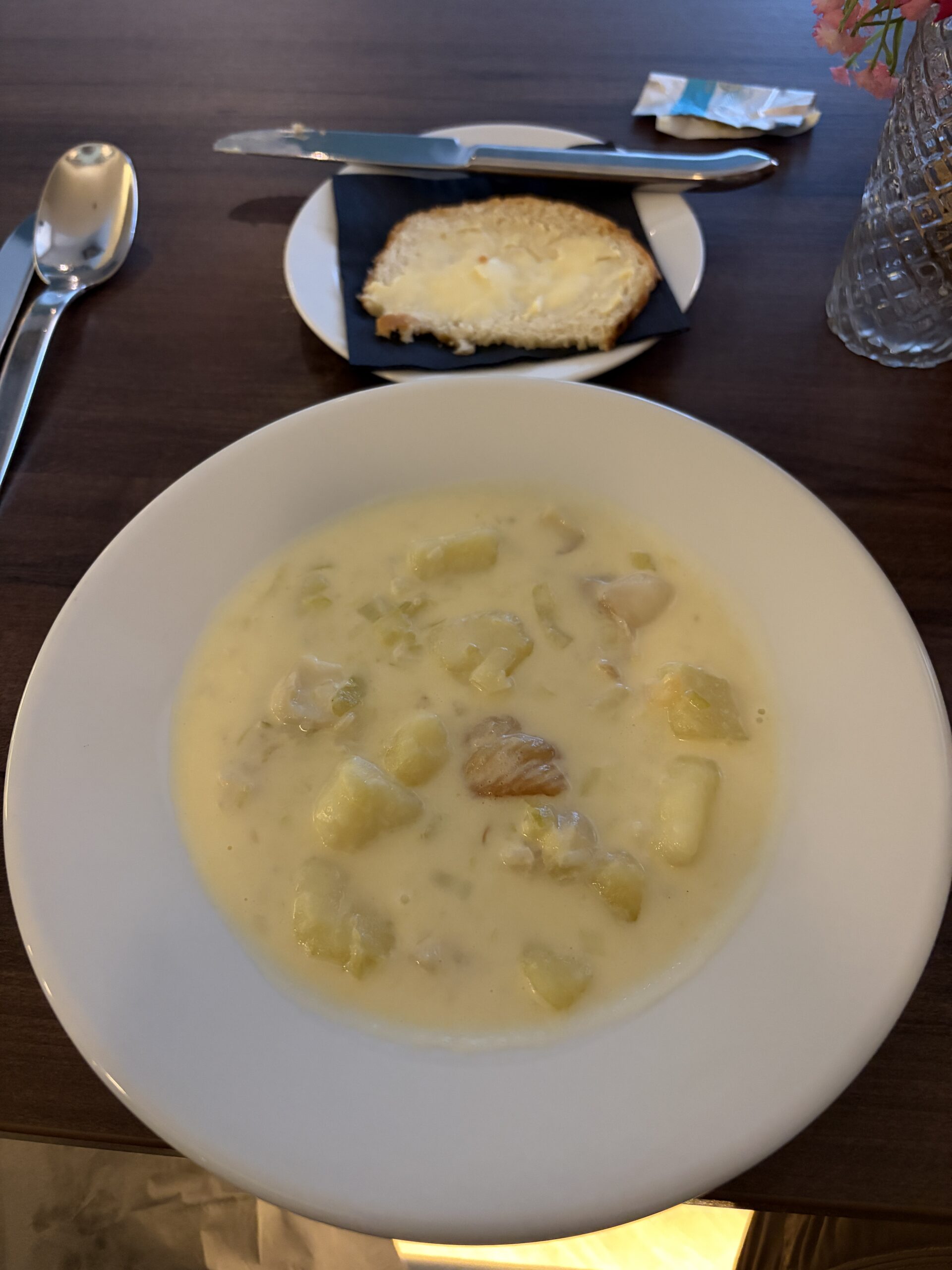
Scotland is justly famous for many things, but with national dishes named “Cullen skink,” “haggis,” “bacon buttie,” and “black pudding,” cuisine is not likely to be one of them. However, I spent a night in a hotel in Cullen and ordered its eponymous dish, which is a chowder of smoked haddock, potatoes, and onions. It was tasty.
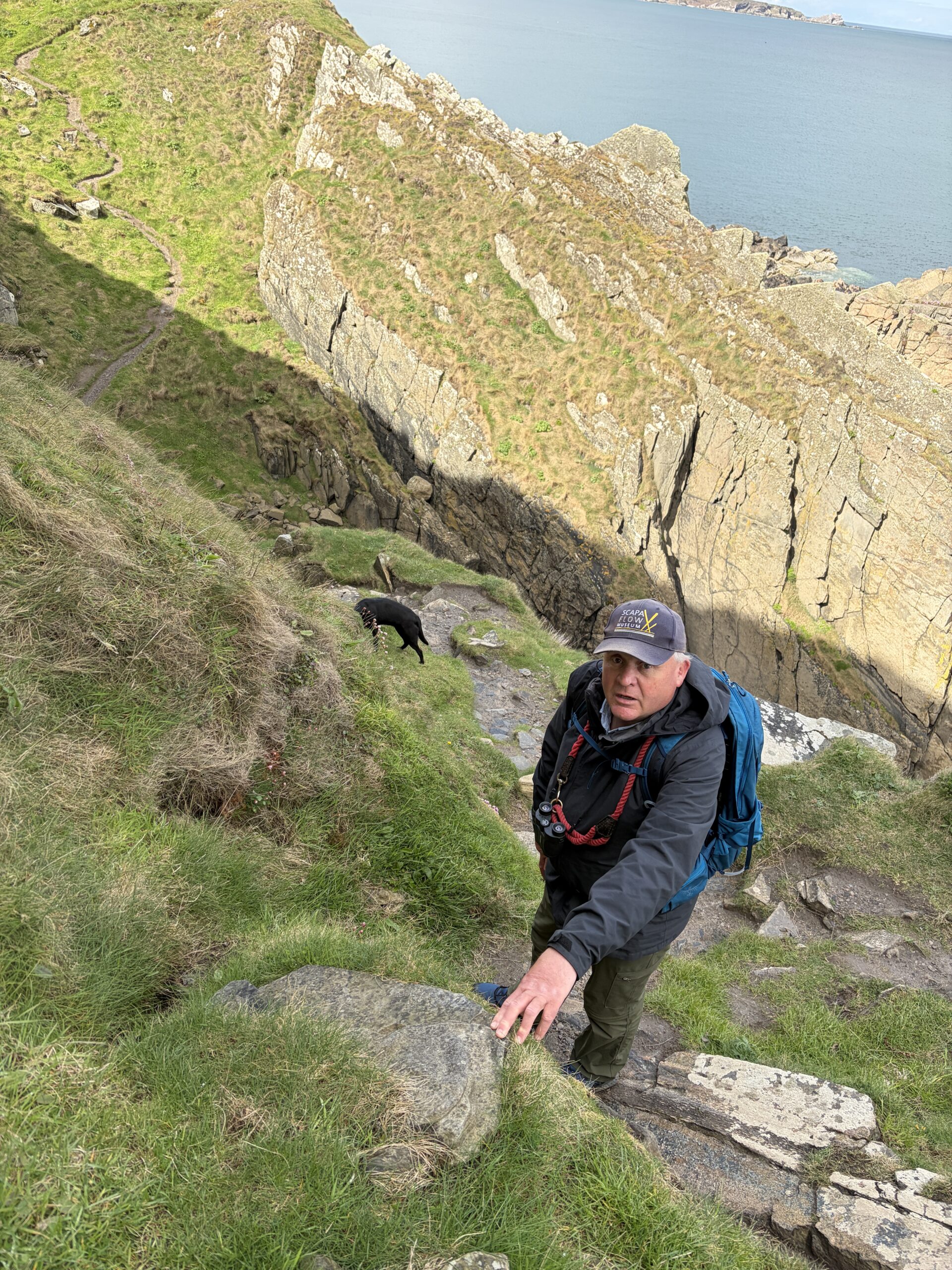
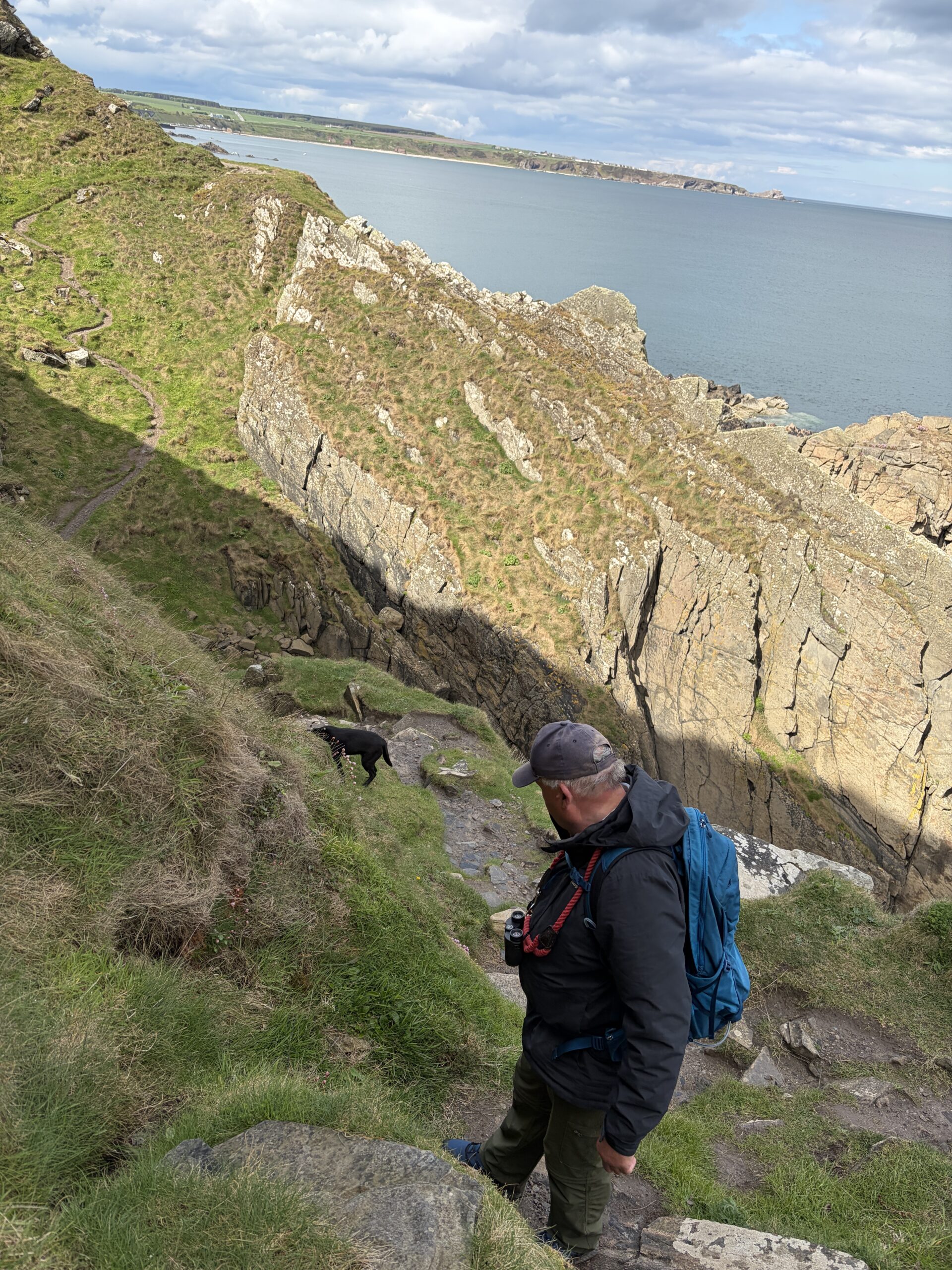
You can learn a lot about someone when talk is an excuse for a break on a difficult climb or tricky descent.
This is Ronald Barr, a native of the Shetland Islands who’s an expert in U.S. military history. He got a doctorate in history at Louisiana State University under Charles Royster, a historian who won the Bancroft Prize and the Lincoln Prize. Barr lived in Takoma Park, Maryland, for a year while he had a fellowship at the Library of Congress. He taught at the Army War College in Pennsylvania before spending his career at universities in the U.K. Once a week, he walks with his dog from his home in Portsoy to Portknockie–a distance of about five miles–where he spends the afternoon lawn bowling.
He is a digital subscriber to The Washington Post, although he said he’s “not very happy with what Bezos has done with it recently.” Then he added: “Frankly, I’m not very pleased with what’s happening in the United States either. It’s not the country I knew.”
I asked him how he gets back home after these weekly treks.
“The bus. The odd driver complains, but most are good with the dog.”
Then it was time for him to continue down and me to continue up.
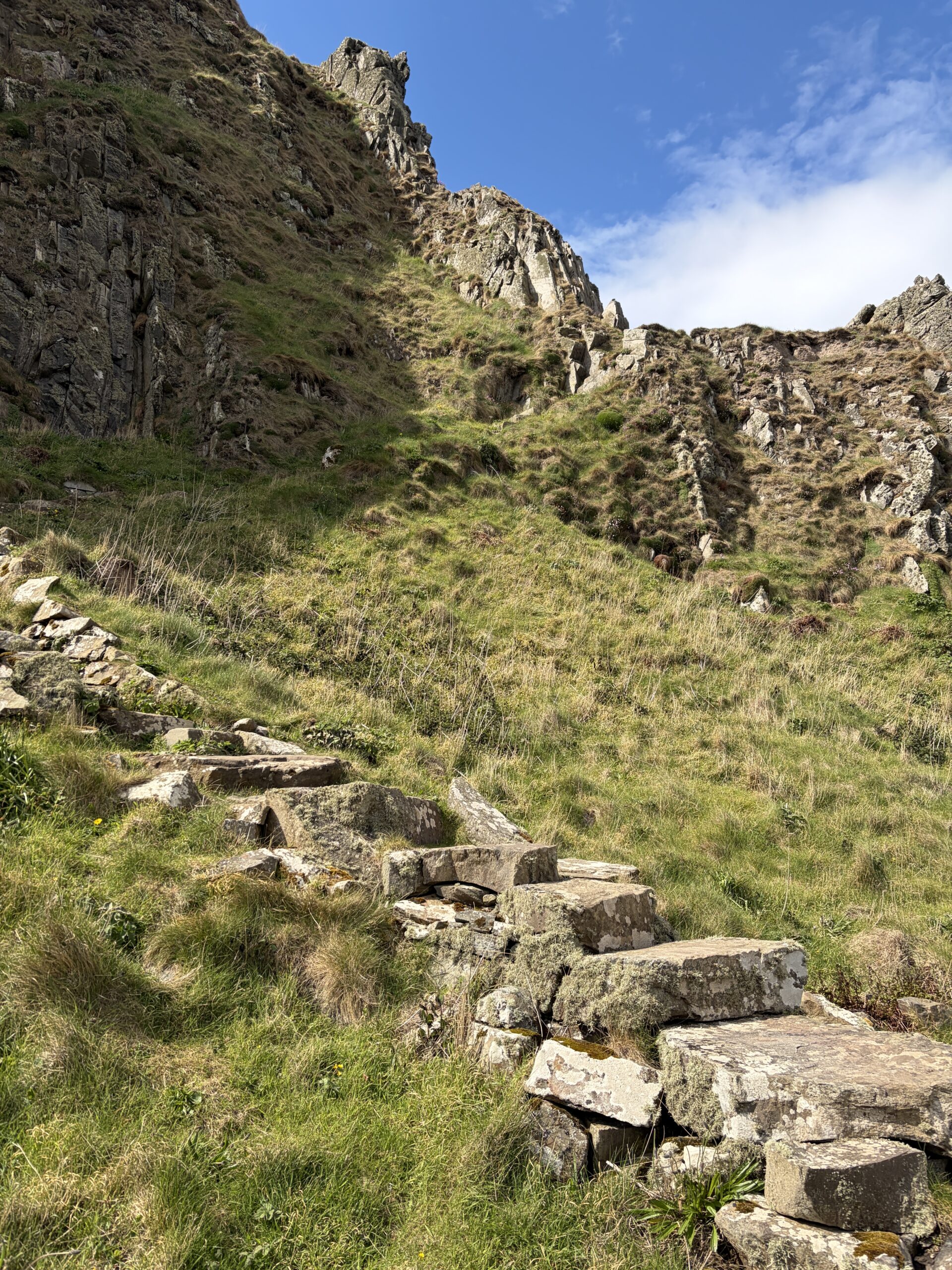
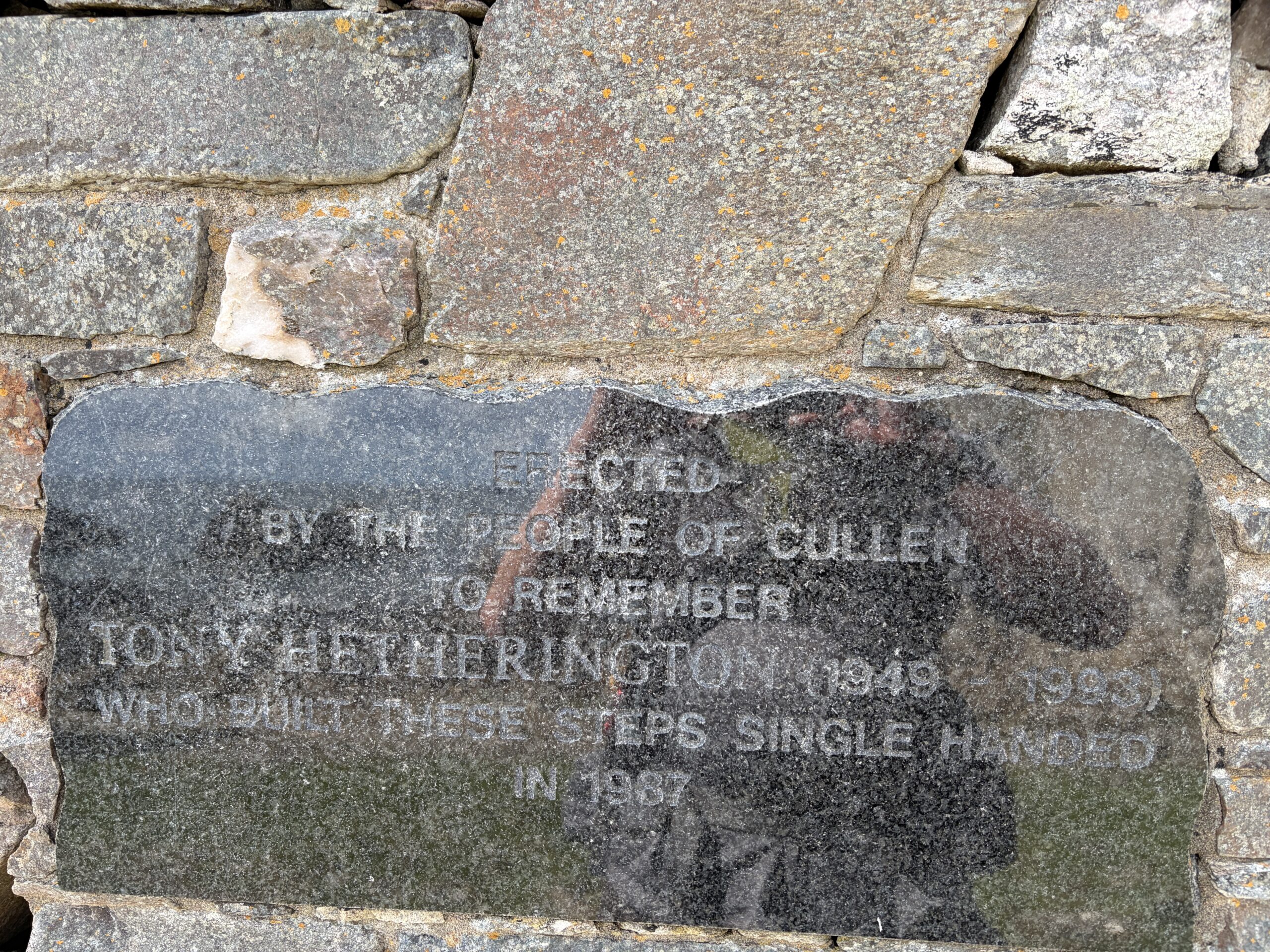
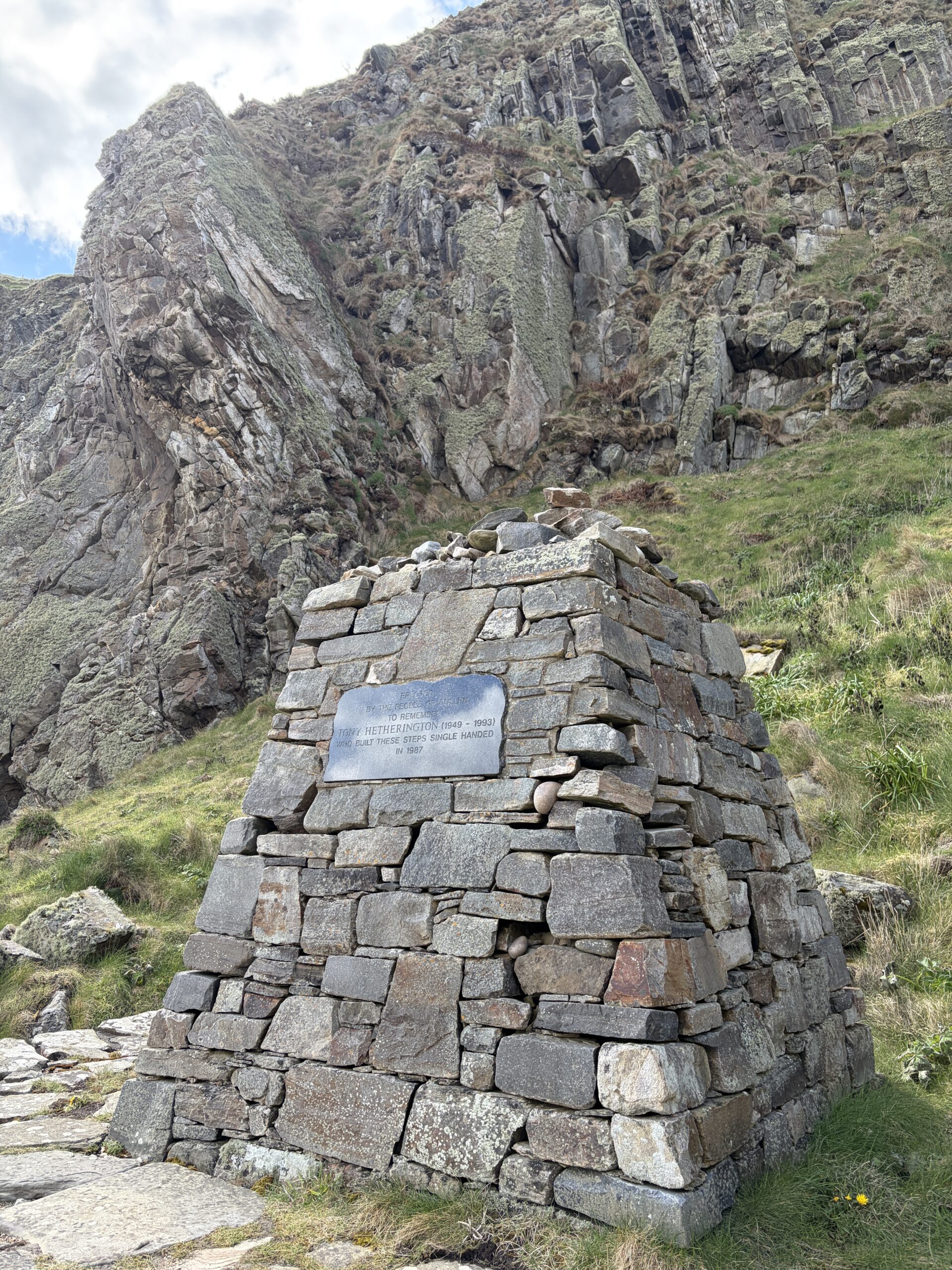
Most path builders are anonymous. This one thankfully is not.
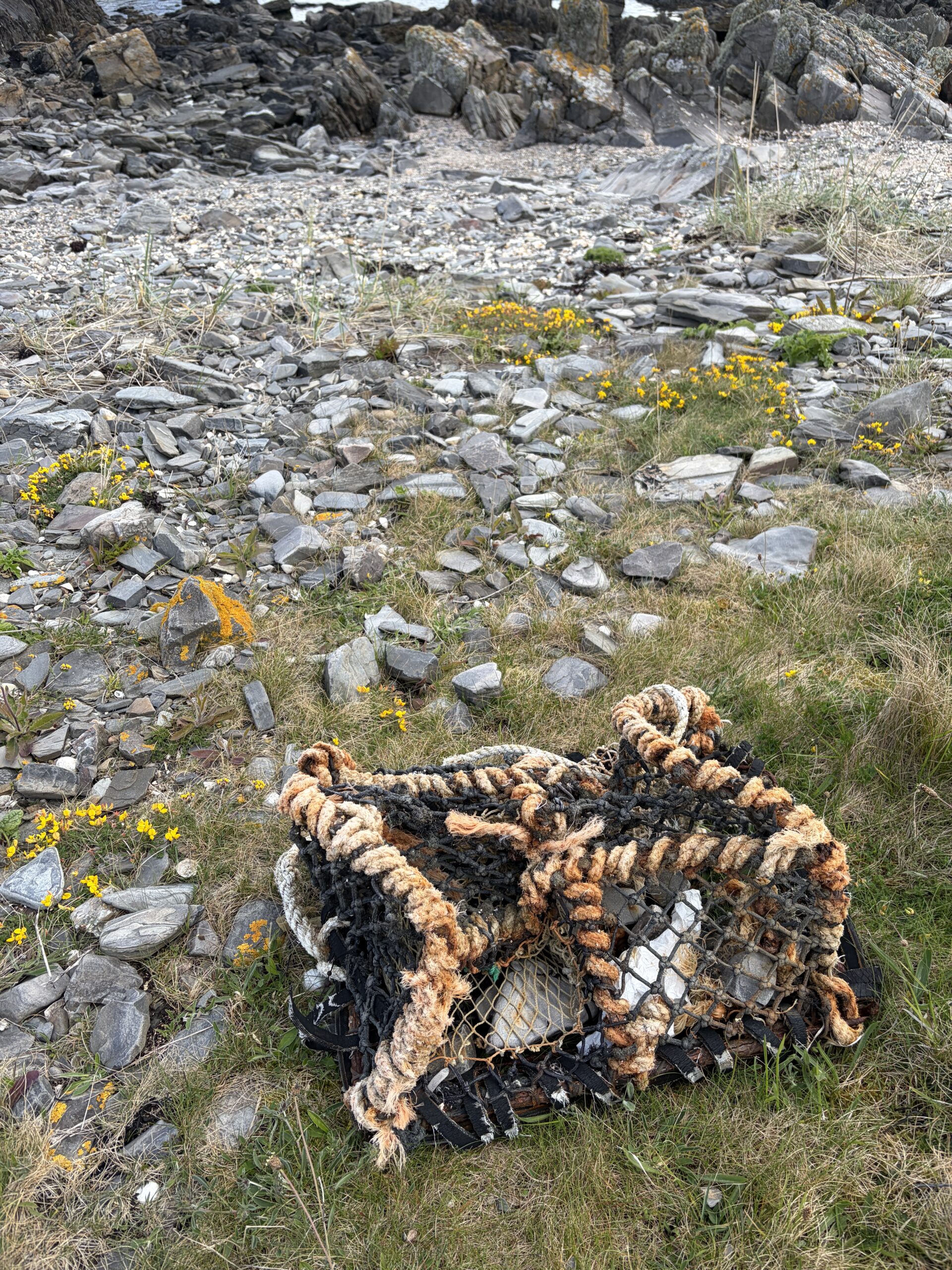
With echoes of Maine, lobster traps wash ashore.
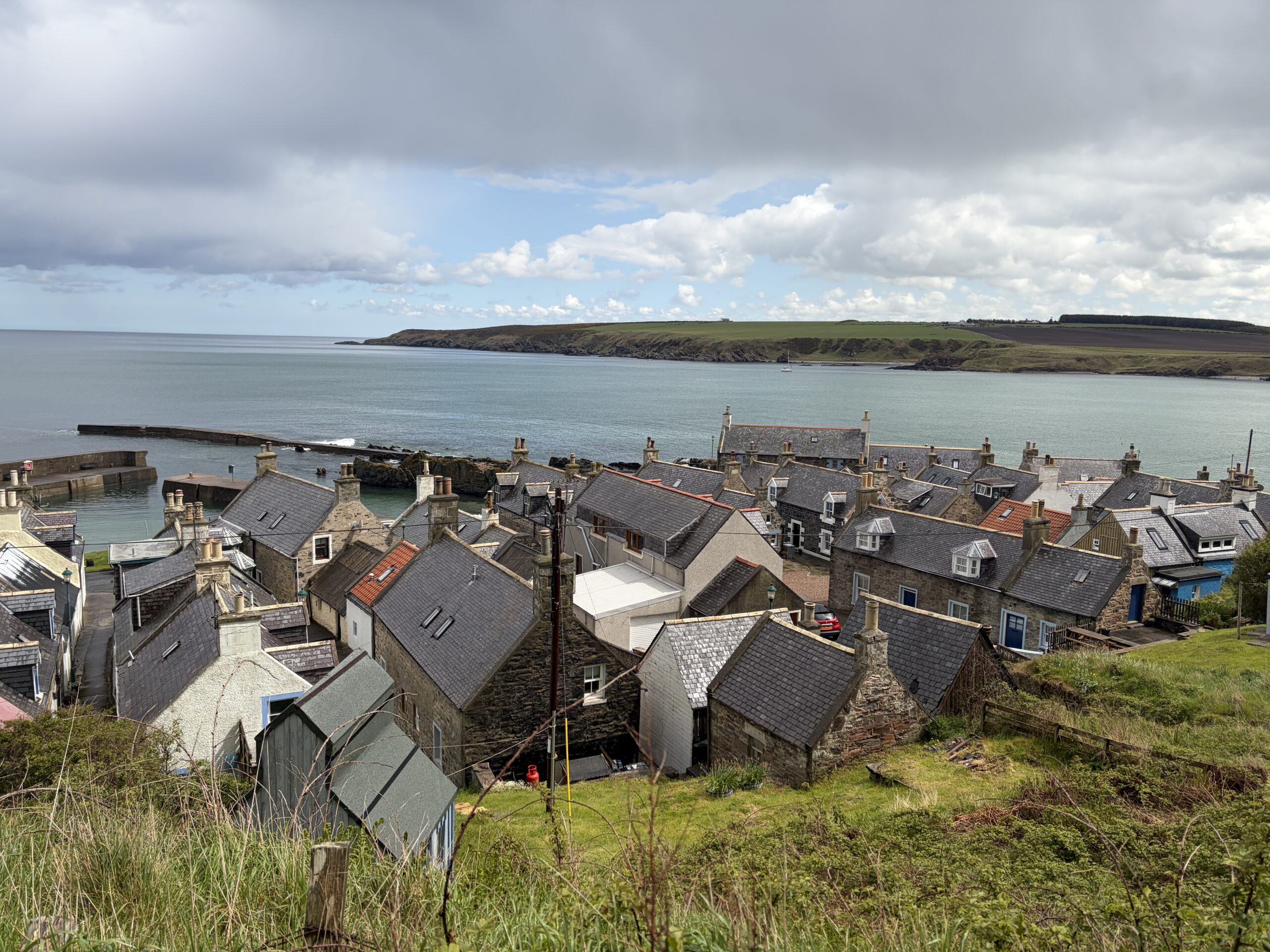
The crowded village of Sandend, in the middle of almost nowhere.
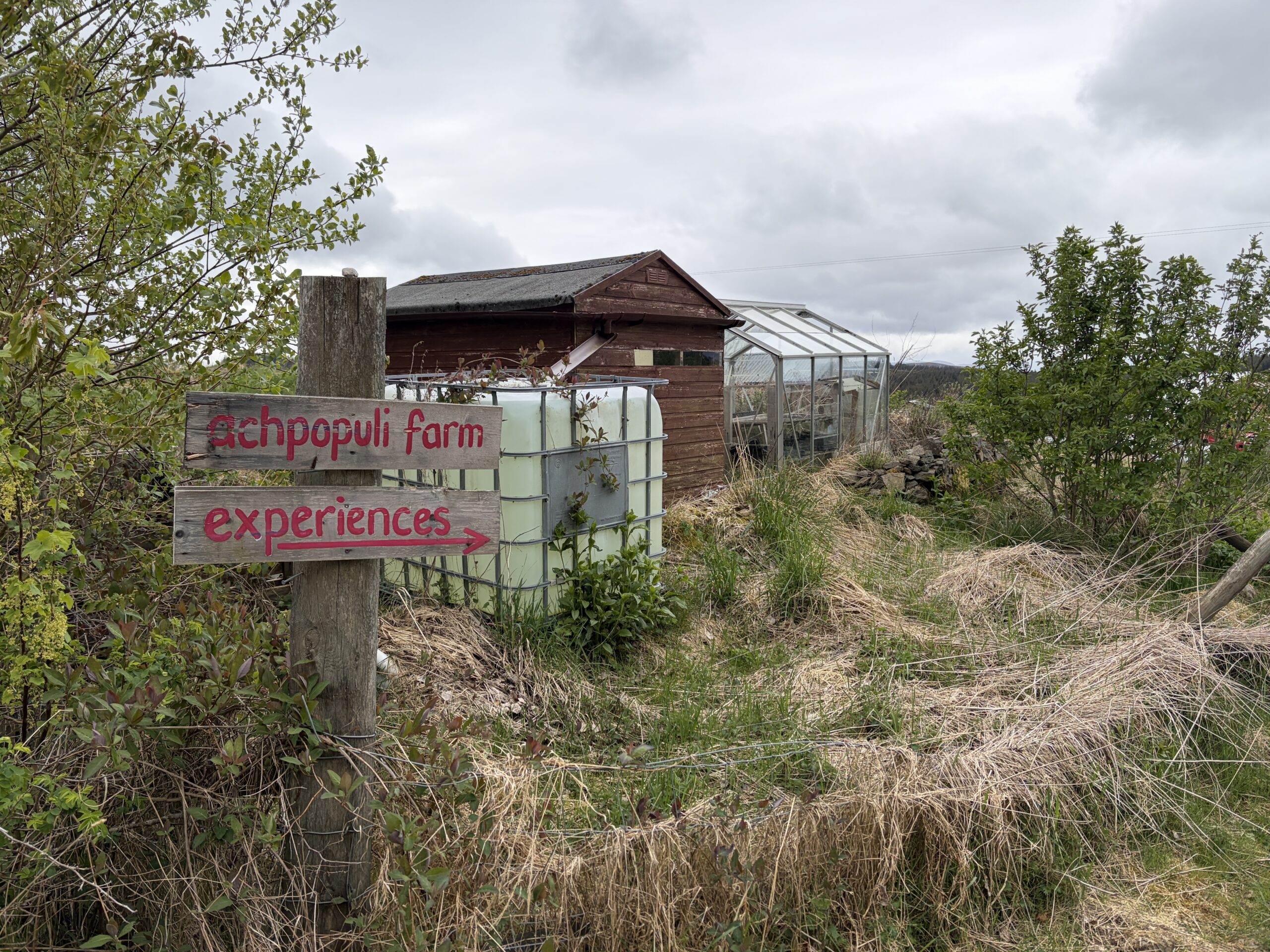
Which way to “expectations”?
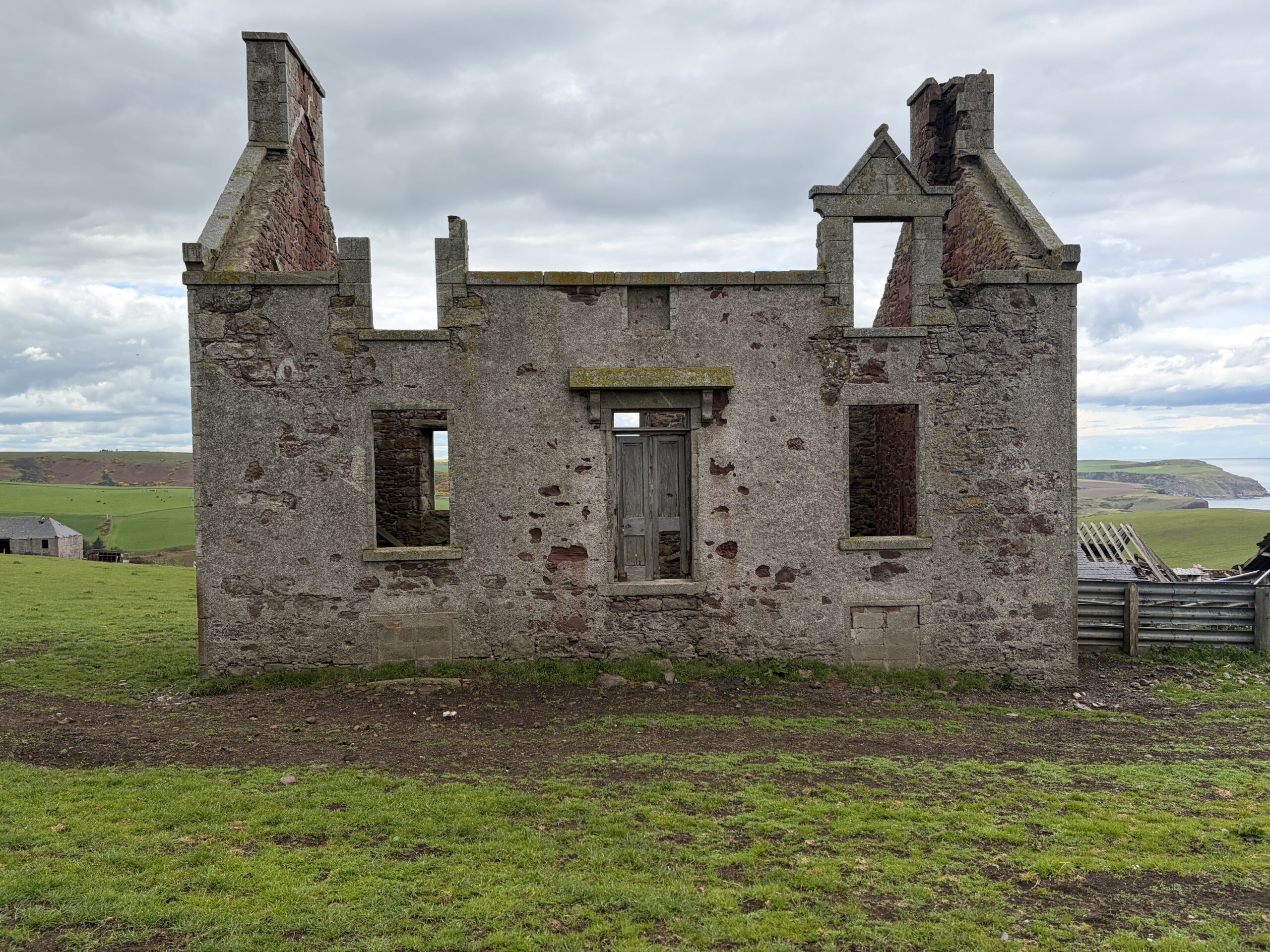
A ruined farm near New Aberdour.
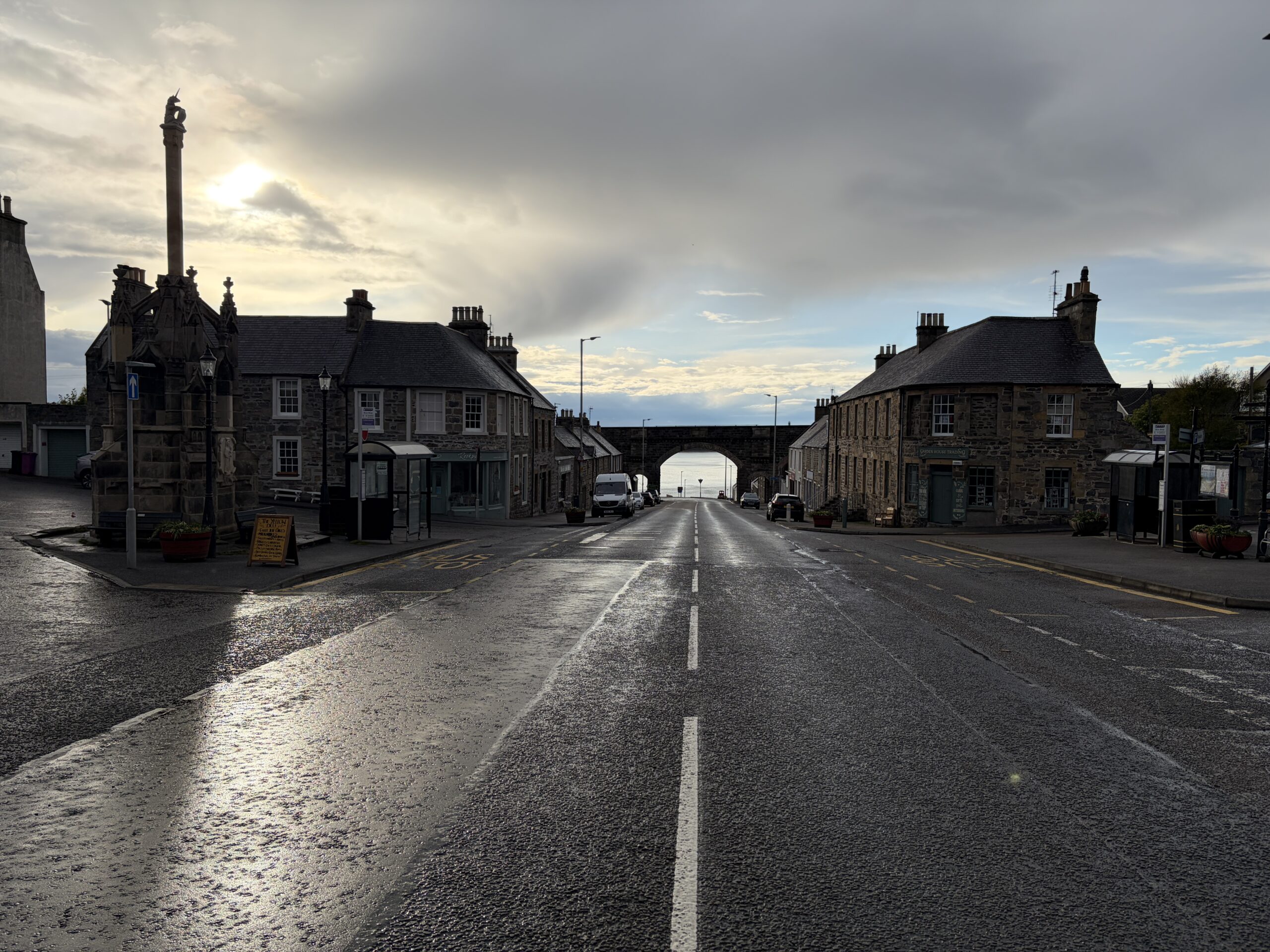
A straight shot in Cullen.
Hey, It looks like I am the first one to comment. First, congratulations on completing the walk again! Second, thanks for sharing some great pictures and brief snippets about the walk. Third, you threw me for a loop with the term “pedal intinction.” Me, I just dip my toes in the water. When I Googled the term, it is apparently used almost exclusively in a religious sense, referring to dipping the host in the chalice of wine. Out of curiosity, is it also a medical term? Anyway, sorry to be late in commenting, but my life has gotten rather busy in Mexico of late.
Fresh out of expectations. Mick Jagger has taken them all.